It’s the RAM-pocalypse.
The Highlights
- This AMD gaming PC will run many games at 1440p.
- Despite ridiculous RAM prices, it’s still possible to build a great DIY system.
- Reasonably-priced pre-built PCs are worth considering.
- DIY Build Cost: $1917
Table of Contents
- AutoTOC

Intro
This guide will help you make smart decisions to build an upper-midrange gaming PC for just over $1900 at the start of 2026. The pricing and availability of memory (RAM) is currently terrible, which harms buying power relative to a few months prior. Given that reality, we’re doing our best to keep overall cost as manageable as possible.
Since we’re aiming slightly above average with this build, we’re factoring in a slight focus on aesthetics. A DIY PC from this guide will look clean and be capable of strong gaming performance at 1440p. This system will be able to play ARC Raiders, Elden Ring, Battlefield 6, and Path of Exile 2 on high settings, and even approach competitive-tier frame rates with lowered graphics settings or by pairing the build with a 1080p monitor instead.
Credits
Part selection, Writing
Jeremy Clayton
Specs Overview & Part Choices
Writer’s note: This is an extremely challenging time to build a new PC from scratch. The challenge comes almost entirely from absurd pricing on RAM. Prices exploded because memory manufacturers are diverting huge portions of their supply to “AI” companies and their insatiable demand to deploy as many “AI” datacenters as humanly possible – almost quite literally. Read our “RAM: WTF?” article and watch our Micron video for detail on the current situation and the DRAM cartel.
Currently, buying a pre-built gaming PC in the sub-$2000 price range is sometimes objectively a better deal than building one DIY. Not only is that sad, it also won’t stay that way for long. System Integrators (SIs) are more resilient to volatility in supply than individuals, but are by no means immune. Pre-built prices have and will continue to rise.
Because of this, we’ll point out one or two high-value pre-built gaming PC options in the conclusion that align with our own part list.
We’re including a few of our “best of 2025” picks in the part list. We’re also avoiding cheaper, feature-poor options to make a solid platform that can be used and upgraded for years. If you’re going to build a PC in this market, you might as well get the most out of it.
$1917 AMD Gaming PC Build List - January, 2026
| PC Part List | Component Name | Links to Part | Link to GN Review |
| CPU | AMD Ryzen 7 7800X3D | Amazon Newegg | See 7800X3D data in our 9800X3D review. |
| GPU | GIGABYTE Radeon RX 9070 Gaming OC 16GorXFX - Swift AMD Radeon RX 9070 OC 16GB | Amazon (Prime only) Best Buy | Read our RX 9070 review. |
| Memory | See Memory/RAM section for options | ||
| Motherboard | ASRock B850M Pro RS WiFi White | Amazon Newegg | |
| Case | Fractal Meshify 3 RGB | Amazon | GamersNexus Best Cases of 2025 |
| CPU Cooler | SK700 AM5 Air Cooler | Amazon | GamersNexus Best CPU Coolers of 2025 |
| Power Supply | ASRock Steel Legend White Edition SL-850GW | Amazon Newegg | |
| Storage | Silicon Power 2TB UD90 NVMe M.2 SSD | Amazon Newegg |
Component prices and availability can change daily. We’ve done our best to ensure compatibility between these specific parts; do your own checks if considering alternatives.
OS, Upgrade Options, & Recommended Extras
| Add-On Parts List | Part Name | Links to Part | Notes |
| Operating System | Microsoft Windows 11 Home | Newegg | Consider trying Linux, especially if using an AMD GPU. See our Bazzite Linux benchmarks. |
| Monitor | Acer Nitro XV272U W2bmiiprx - 27" IPS 1440p 240Hz | Amazon | High-refresh-rate 1440p monitors have become valid options on a midrange budget. |
| Mouse | Razer DeathAdder V3 HyperSpeed Wireless Gaming Mouse | Amazon | A high-performance, lightweight gaming mouse. |
| GPU | ASUS PRIME GeForce RTX 5070 12GB | Amazon (Prime only) Newegg | Usually a slight downgrade from RX 9070 but may be worth it if you want/need NVIDIA. |
PC Parts List
In each section below, we’ll cover each component individually to let you know why we picked it. If we’ve benchmarked the part in the past, we’ll include a brief summary of performance. We’ll also name alternates and upgrades along the way.
CPU / Processor
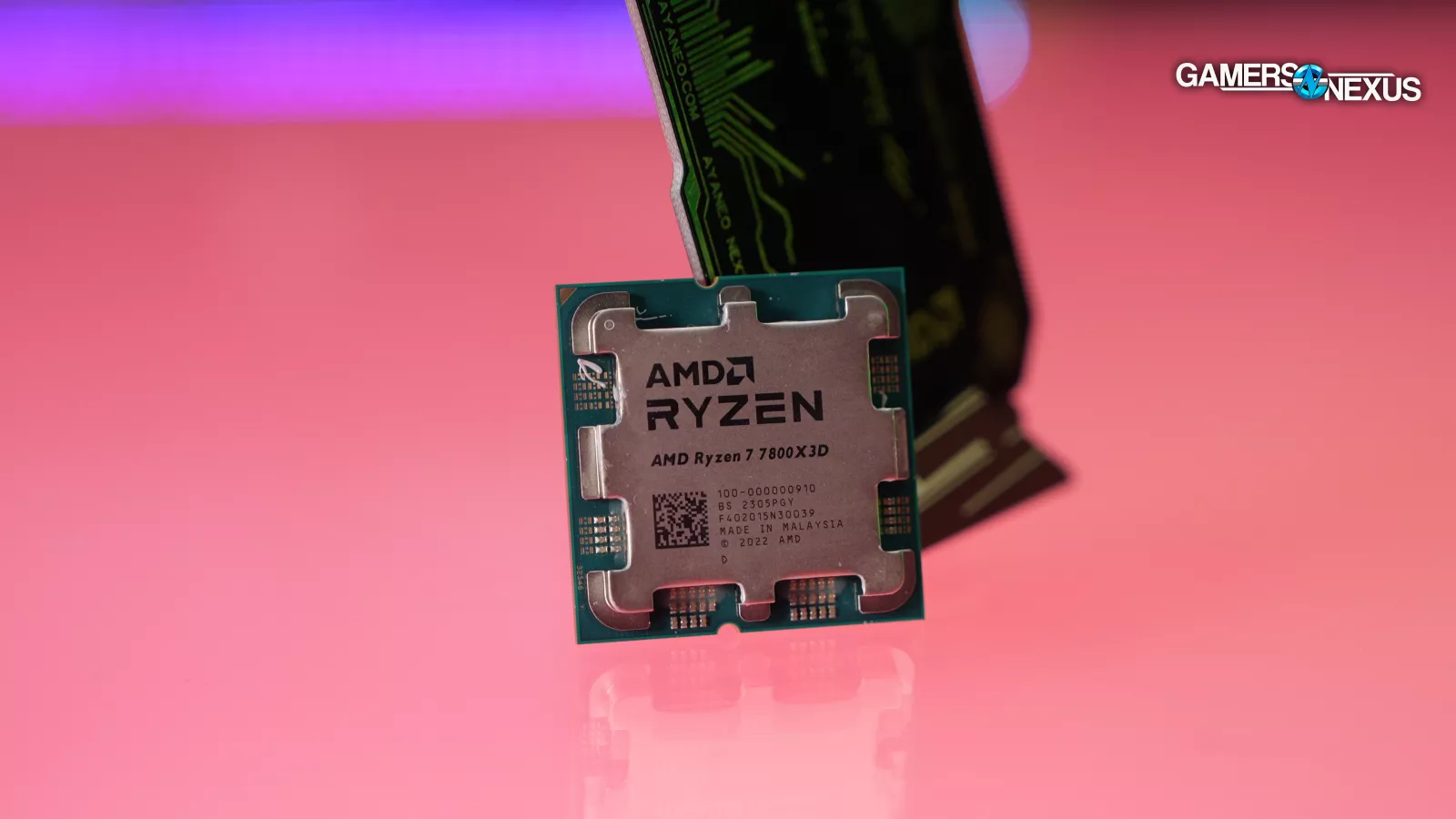
The CPU for this build is the AMD Ryzen 7 7800X3D. This previous-generation CPU competes closely with the field of current-generation counterparts, often near the top of the chart in gaming benchmarks. We found it available in new condition from a third-party seller on Newegg. We normally don’t recommend buying from third-parties, but in this case, the 7800X3D is at least shipped by Newegg.
In our Stellaris simulation time benchmark, the 7800X3D tied the Intel Ultra 9 285K (with faster DDR5-8600 memory) and the AMD R9 9950X.
In Total War: Warhammer III, the 7800X3D sits as barely second place to the more expensive 9800X3D, and above other Zen 5 CPUs like the 9700X.
GPU / Video Card
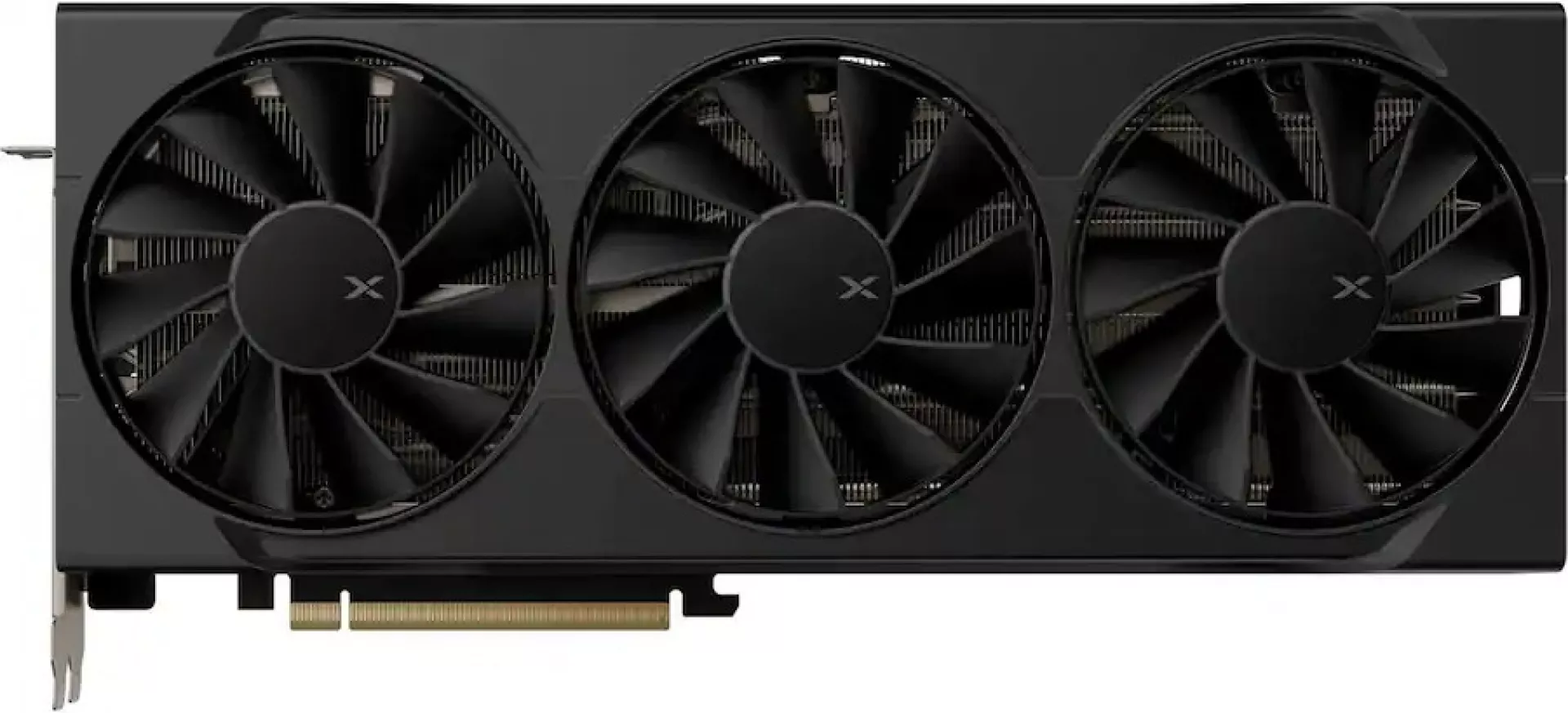
The GPU we’ve selected is the AMD Radeon RX 9070. This is one of the best value graphics cards in 2026, and it’s available for about $536-$550 at the time of writing. The GIGABYTE Gaming OC RX 9070 and the XFX Swift OC RX 9070 were tied for price when we looked. Note that the GIGABYTE 9070 on Amazon listing requires a Prime subscription to buy.
Looking at a couple charts from our RX 9060 XT review shows the RX 9070 as just behind the more expensive RTX 5070 Ti in Dragon’s Dogma 2 at 1440p with ray tracing, and tied with the base RTX 5070 in Dying Light 2 at 1440p without RT. The RX 9070 and RTX 5070 trade blows depending on the game, making the choice mostly a question of which is least expensive at a given time.
If you want to set your sights a little lower, or need to make room for the exorbitant cost of memory, consider the RX 9060 XT instead. The 9060 XT costs significantly less at about the $300 mark, but remains capable in most gaming scenarios at 1080p.
Memory
Memory is the most difficult part of this build to make a recommendation on. In the simplest terms, no DDR5 we found is worth buying right now as compared to a few months ago. The best possible path is already having RAM from a former build. The next best thing is having a friend who will cut you a deal. Short of those circumstances, read on.
We can’t change the facts of this RAM shortage, unfortunately, so we’ll list some of the “better” options. Sarcasm intended.
32GB has been the de-facto standard for a while now, but maintaining that standard hovers around the $300 mark. Some of the cheapest 32GB options we found were Crucial’s Pro OC DDR5 in 6000MT/s and 6400MT/s variants. We’d have liked to recommend RAM from a company that’s still going to exist, but price wins for now.
Check out our video “WTF Just Happened? | The Corrupt Memory Industry & Micron,” where we covered Micron’s announcement of shutting down Crucial. Crucial was Micron’s own house brand for RAM and SSDs, but was cast to the wayside in favor of filling larger orders to “AI” customers.
Since prices are so insane, builders may be forced to return to 16GB of total system memory. These kits aren’t better value per gigabyte, but cost less in absolute terms at roughly $200. Examples include this Kingston FURY Beast 5600MT/s kit, and this Patriot Viper Venom 6000MT/s kit.
You can get away with slower speed memory on AMD Ryzen X3D CPUs, because their overall performance is less reliant on memory speed than their standard counterparts like the 9700X and 9600X.
Motherboard
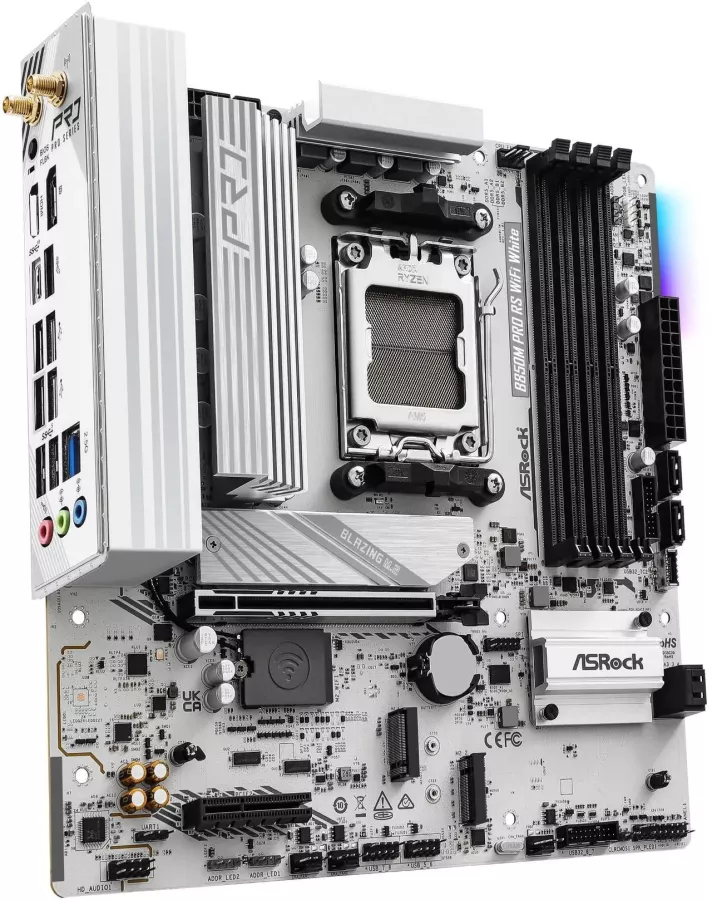
The ASRock B850M Pro RS WiFi White motherboard fits this build well. The B950M Pro RS is priced well compared to its competition at $140, and features 7x rear USB-A ports, 1x rear USB-C port, built-in Wi-Fi 6E, and support for 3x M.2 SSDs (one of which is PCIe Gen5). This motherboard also should support CPU upgrades from AMD for the foreseeable future.
Case
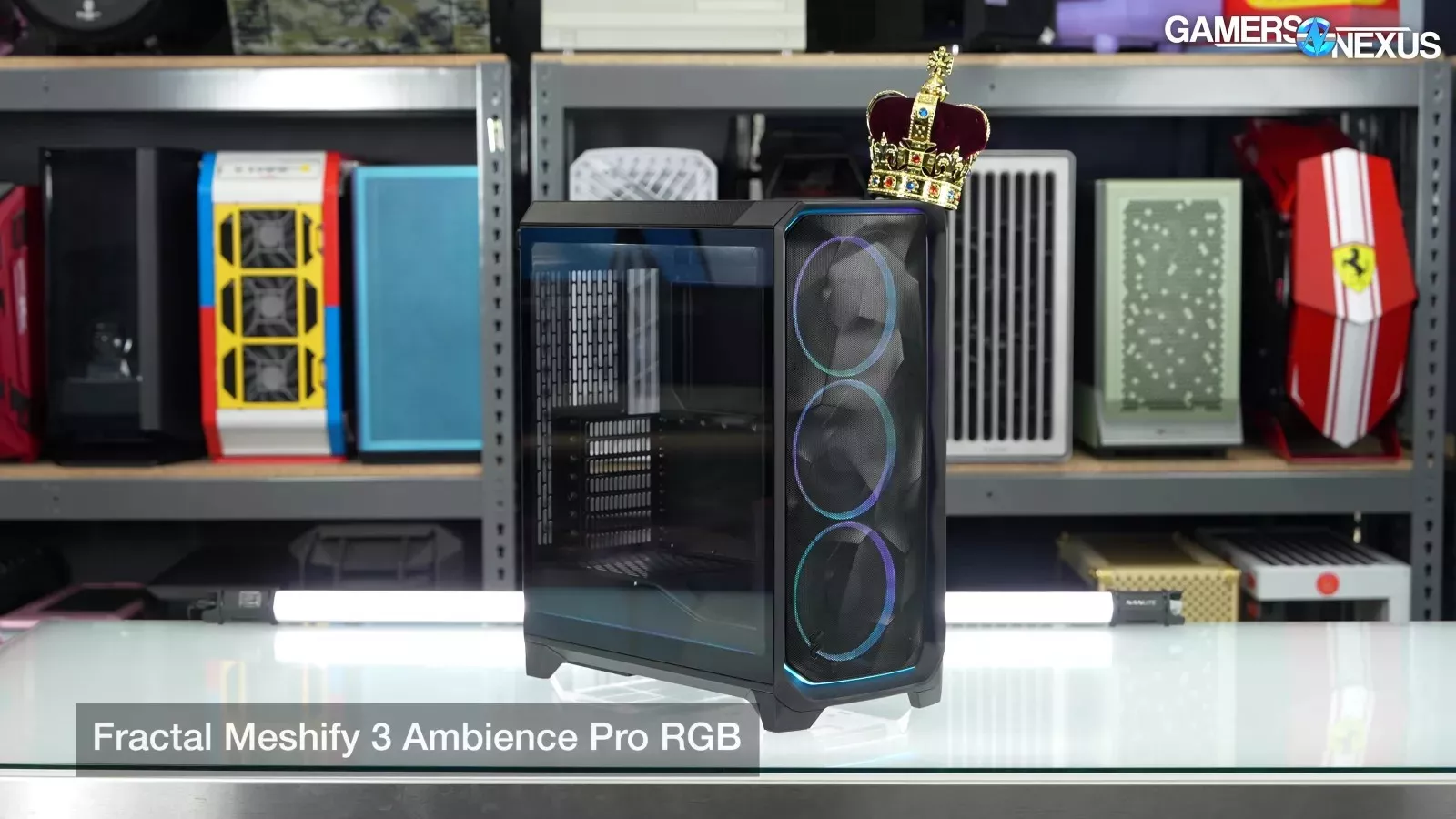
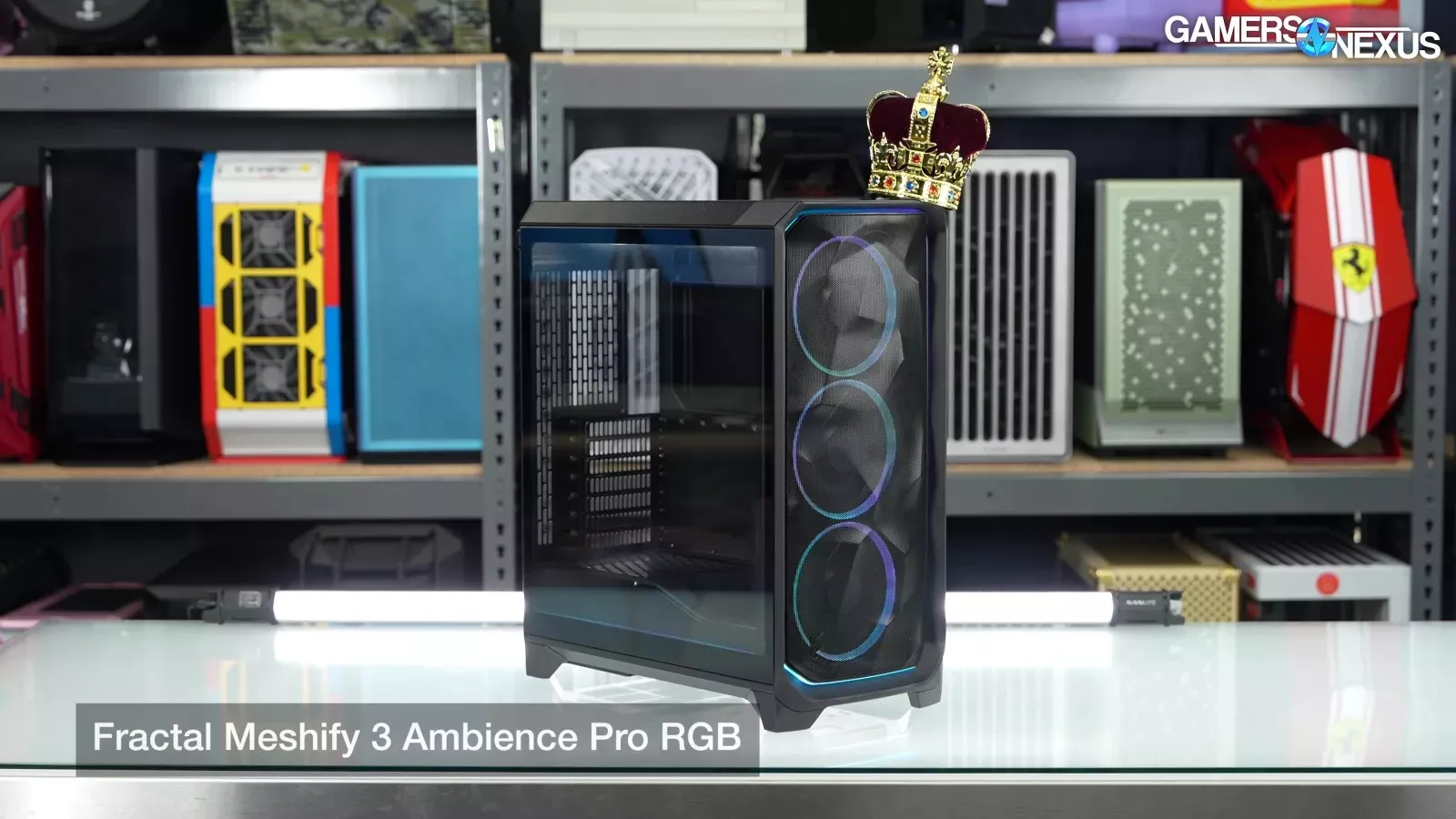
The case for the build is our choice for best overall case of 2025 - the Fractal Design Meshify 3 RGB. In that “best of” roundup, we specifically pointed out the Ambience Pro RGB variant of the Meshify 3; however, it’s currently out of stock or too expensive, depending on where you look. Check out our full review if you’re interested, but we’ll list some high points here.
First off, the Meshify 3 topped our 27dBA noise normalized CPU thermals benchmark chart, narrowly beating out the Lian Li Lancool 216 (older, but still a good case). We value function over form, so performance like this wins big points for the Meshify 3.
We also liked the Meshify 3 for its many points of attention to detail, such as the integrated scoop in the power supply shroud, easily accessible dust filters, and extensive built-in cable management features.
Be aware of volatility in price, though. If the Meshify 3 pushes high into the $100 range, it’s no longer worth it for a budget-conscious builder. In that case, choose something like the Lian Li Lancool 207 – a good performer in its category.
CPU Cooler
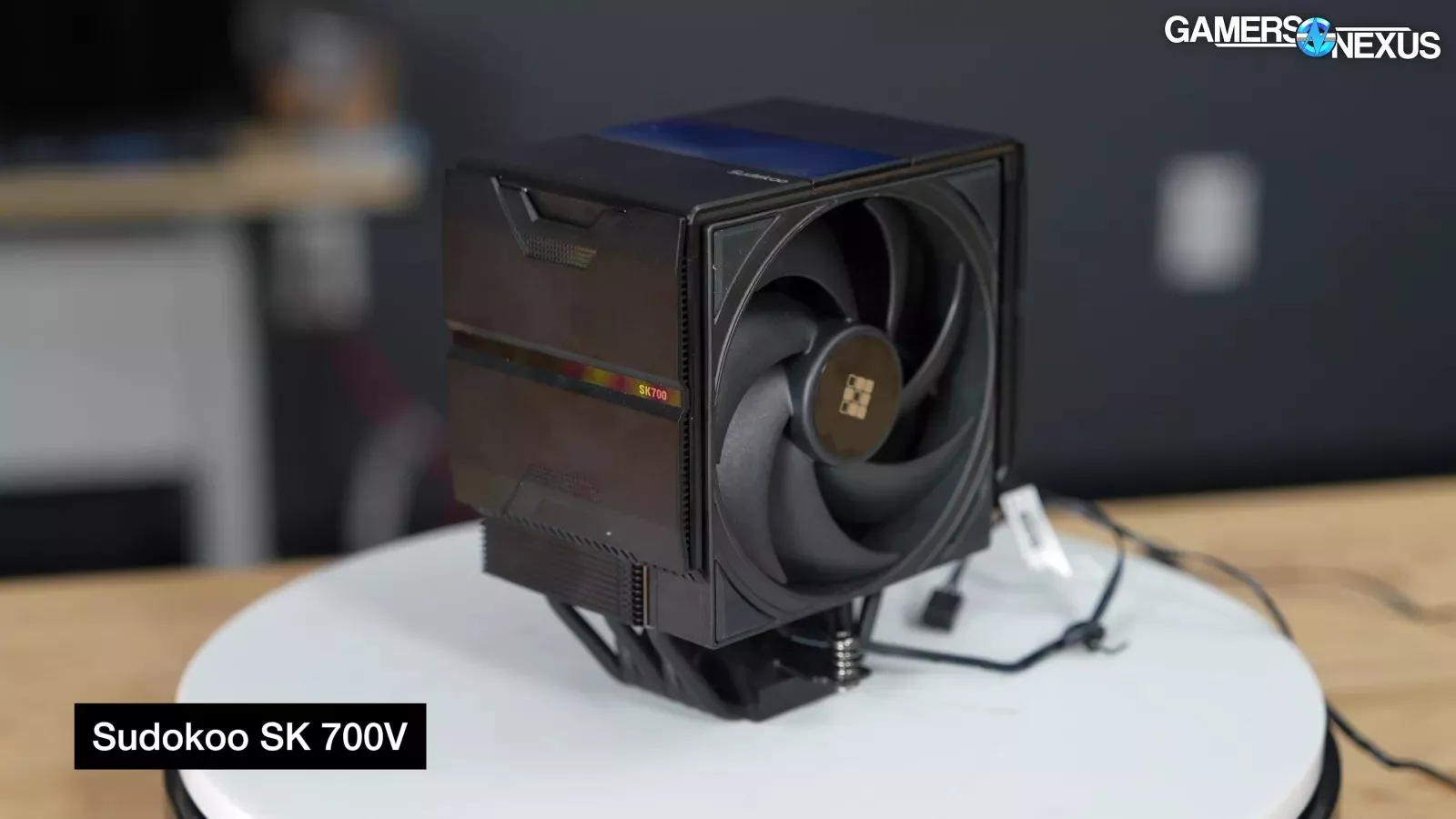
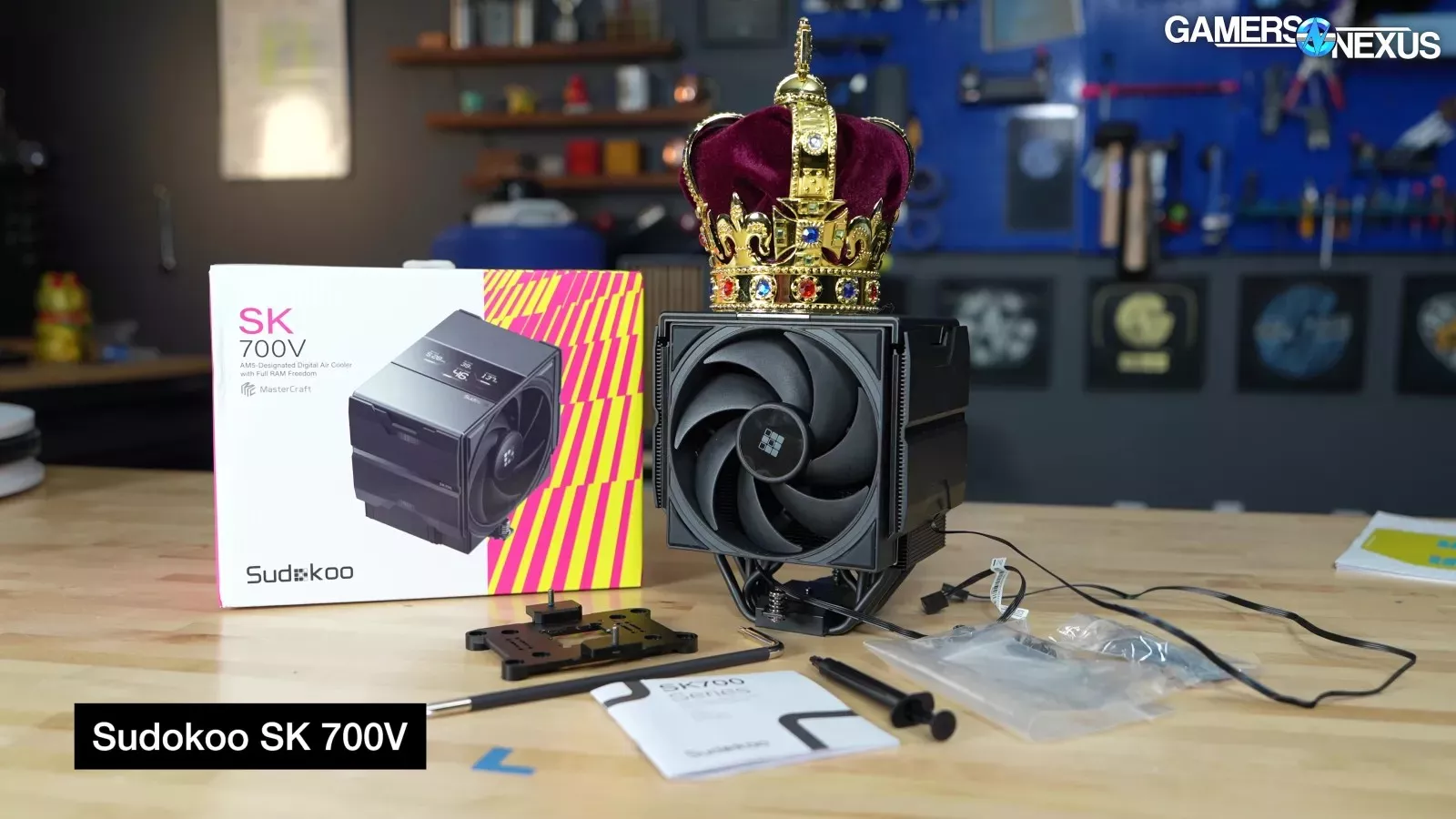
Another overall “best of” winner for this upper-midrange gaming PC is the Sudokoo SK700 CPU cooler. It takes our top recommendation for a combination of its thermal and acoustic performance, build quality, and mechanical design, while maintaining strong value.
The SK700 offers better build quality than the ID-Cooling A720, and costs far less than the Noctua NH-D15 G2. The SK700 has both white and black variants, so pick what suits your taste.
Power Supply
The overall average quality of power supplies from a safety standpoint is usually sufficient these days, but it always pays to choose one with high overall quality and protection features.
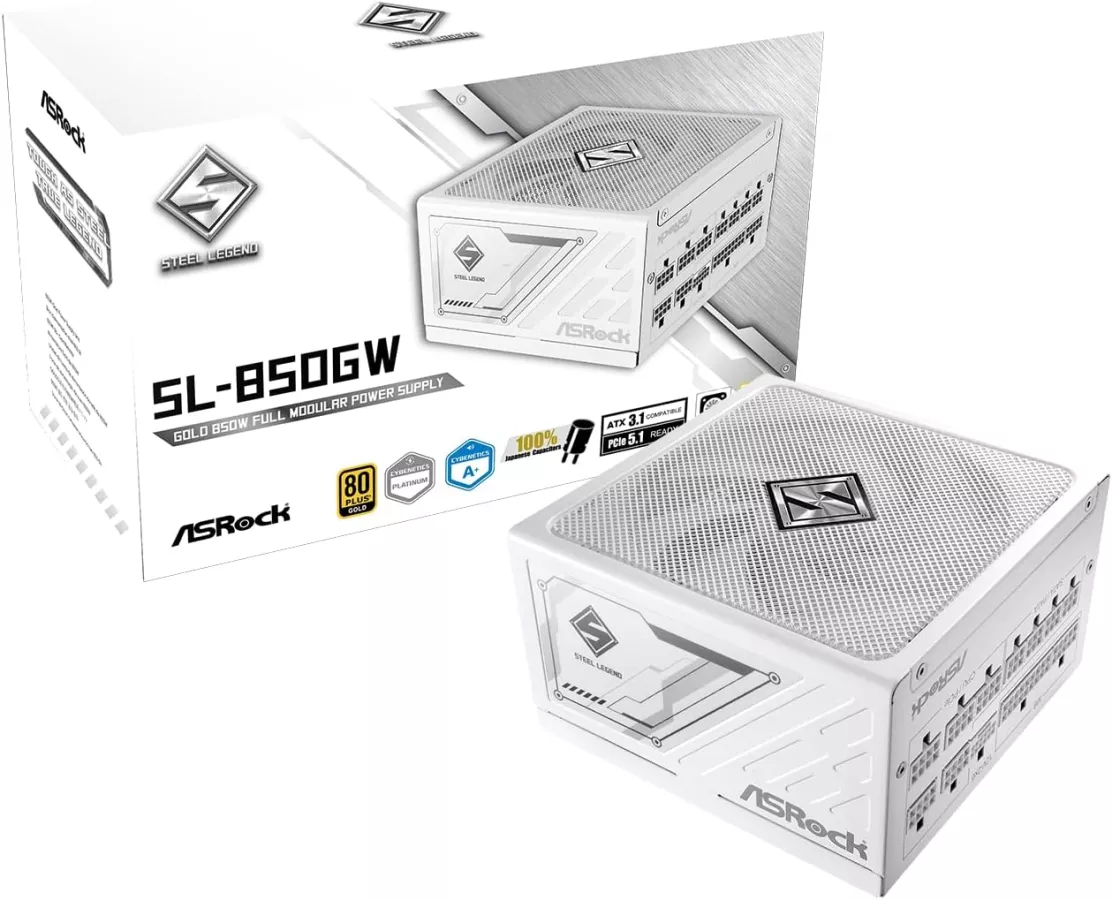
The ASRock Steel Legend SL-850GW checks those boxes with its Cybenetics Platinum and Lambda A+ certifications, indicating that it passed rigorous testing. It’s also 80 Plus Gold rated, but that only guarantees a certain level of efficiency.
The SL-850GW visually matches the other white components, and is marketed as ATX3.1 and PCIe5.1 ready. It also has a native 12V-2x6 cable with high contrast color on the plug, making it easier to tell when the cable is fully seated.
Storage
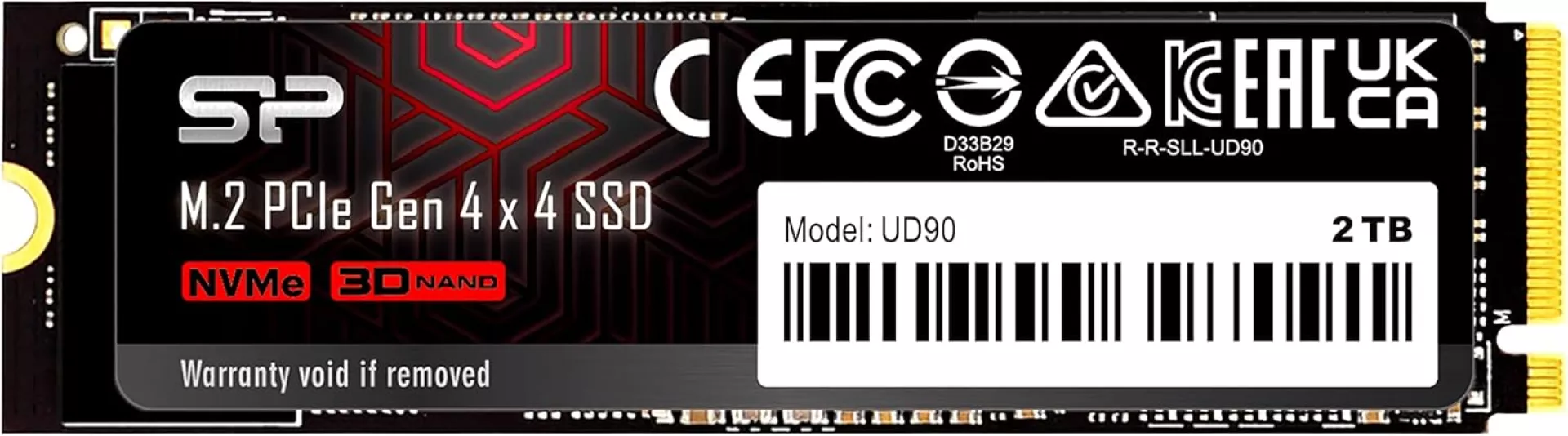
Storage selection for this system is simple. We chose the Silicon Power 2TB UD90 NVMe M.2 SSD for its strong value proposition for most standard users. As a rule of thumb, you don’t need a blisteringly fast SSD unless you already know you need one.

Conclusion
The uncomfortable truth is that building a brand new PC is expensive right now. The silver lining is that you can still technically get RAM if you need it – you just need to hope that you don’t need it until prices come back down. If you already have DDR5 or can get some for an actually reasonable price, by all means go DIY.
If you’re starting from scratch, pre-builts can make a lot of sense right now depending on price. Some selections can outright beat the cost of DIY. Like we said earlier, SIs are able to hold off price increases to the consumer longer than retail, but it won’t last forever.
We’ll list a few pre-built gaming PC options here for you to consider. The big caveat is that we haven’t tested any of these specific systems, so you’ll be at the mercy of the system integrator’s build quality and the courier’s handling of an entire gaming PC.
One of the most interesting pre-built options is this Skytech Gaming O11 Vision with a Ryzen 9800X3D, RX 9070 XT, 2TB Gen4 SSD, and 32GB of DDR5-6000. At the time of writing it’s still possible to add this system to the cart for $1,525, but it’s marked as “temporarily out of stock.”
Following that is another Skytech, the Azure 3 Plus, which is configured with a Ryzen 7800X3D, RX 9070 XT, 2TB Gen4 SSD, and 32GB of DDR5-6000. It’s not quite as attractively priced as the 9800X3D pre-built above, but you can actually buy it, and at $1850 at the time of writing, it narrowly wins versus our DIY list.
Alternatively, it’s also worth considering pre-builts with the NVIDIA RTX 5070, like this CyberPowerPC gaming desktop with 7800X3D, RTX 5070, 1TB SSD, and 32GB of RAM.
Finally, if nothing else, used and previous-generation hardware can still be very capable. We’re sure that you, like us, have an extensive backlog of older games to revisit – or to play for the first time since being purchased on sale 4 years ago.