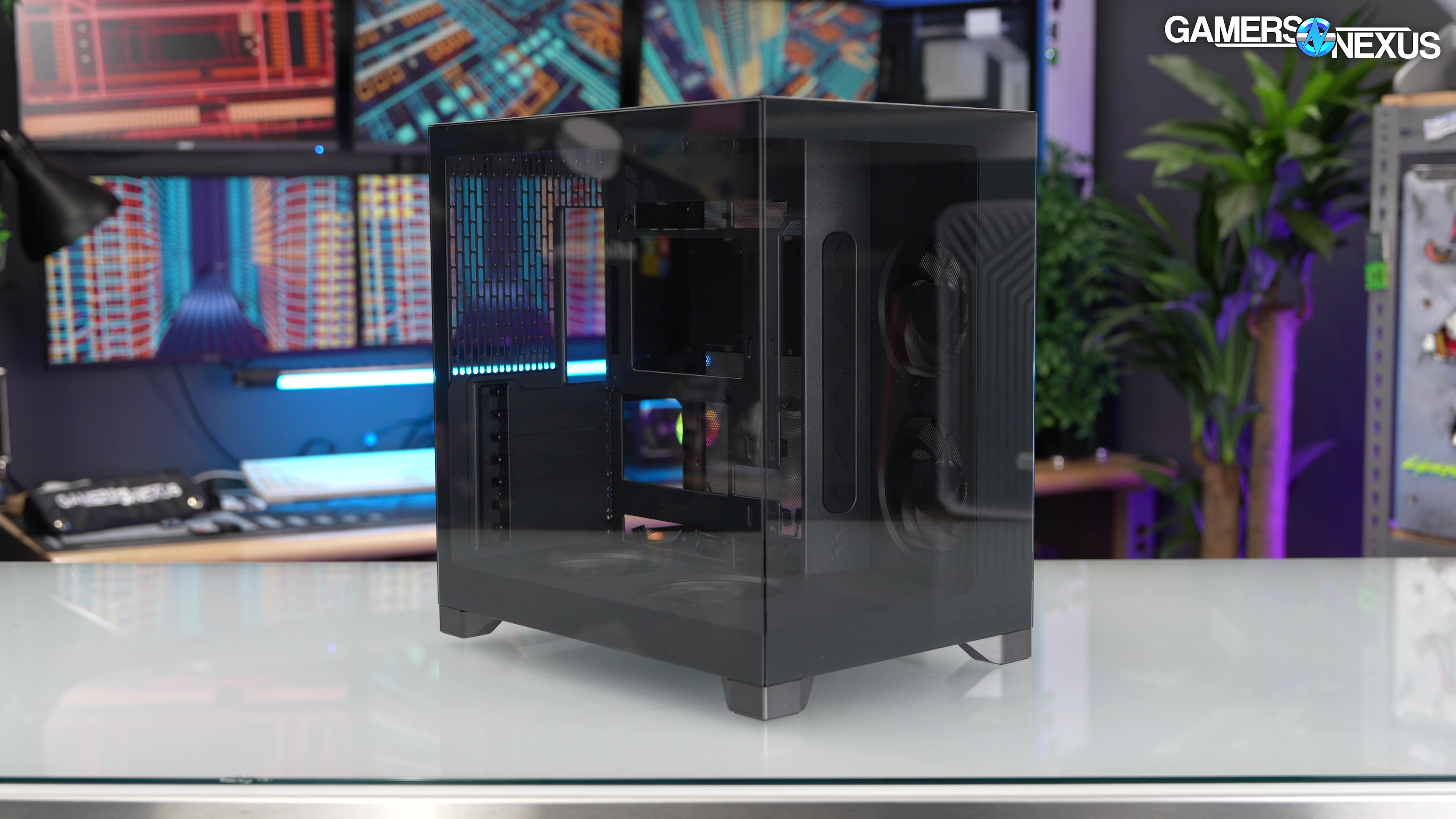
In our Fractal Pop 2 Vision review, we look at thermal performance, cable management, build quality, and strategy as case companies contend with lower sales volume due to DRAM pricing
The Highlights
- The Pop 2 Vision includes 4 fans and targets the more affordable end of the case market
- Its thermal performance was middling
- This is one of the cheapest dual-chamber cases we've seen this year
- Original MSRP: $90-$100
- Release Date: April 29, 2026
Table of Contents
- AutoTOC
Intro
Today we’re reviewing Fractal’s $90 Pop 2 Vision, which comes with 4 fans, impressively sturdy build materials and panels, and some obvious cost-cutting measures.
Editor's note: This was originally published on April 29, 2026 as a video. This content has been adapted to written format for this article and is unchanged from the original publication.
Credits
Test Lead, Host, Writing
Steve Burke
Testing, Writing
Patrick Lathan
Testing
Mike Gaglione
Camera, Video Editing
Vitalii Makhnovets
Camera
Tim Phetdara
Andrew Coleman
Writing, Web Editing
Jimmy Thang
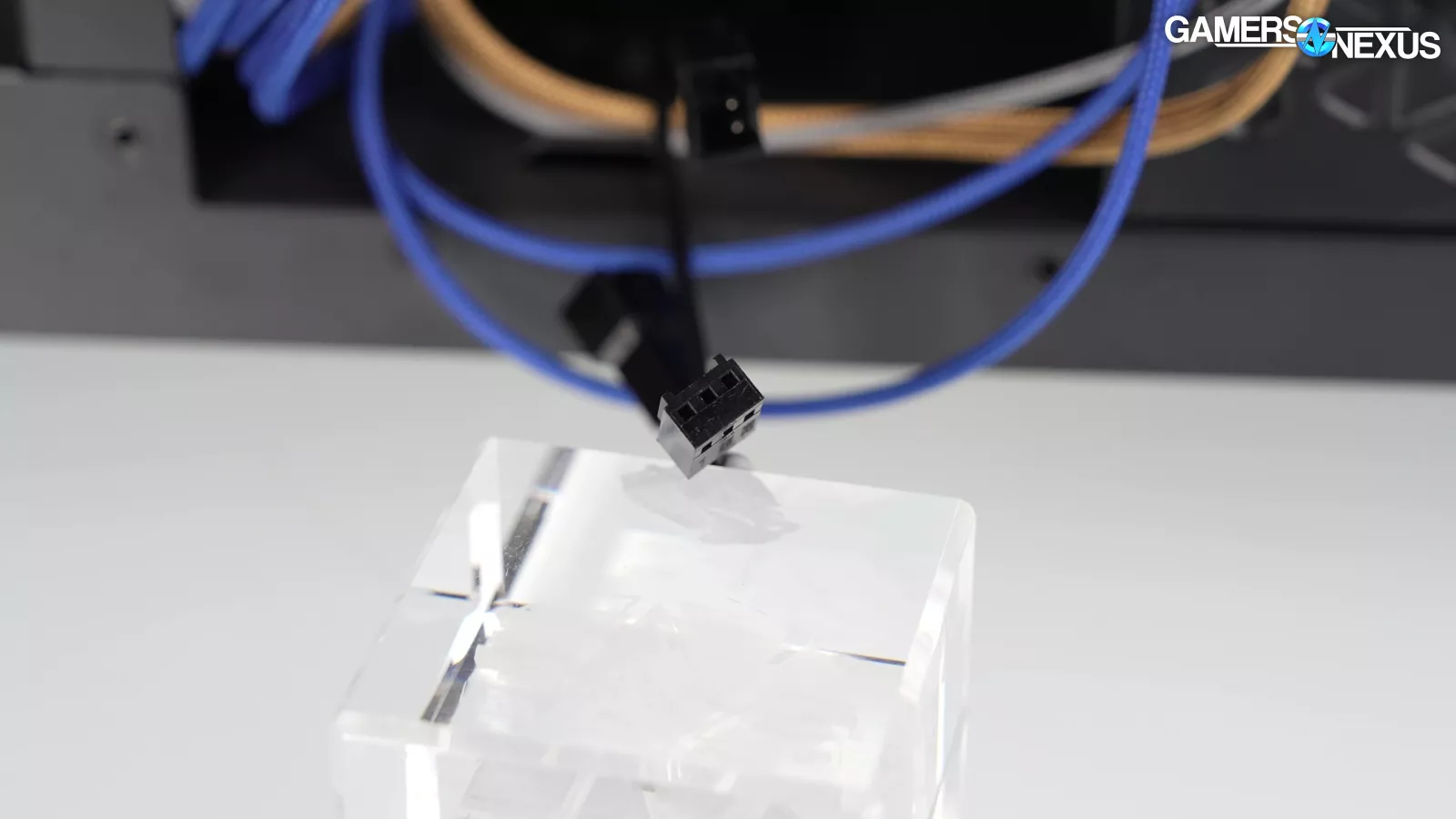
The case is the first we’ve reviewed in a long time that makes use of DC fans rather than PWM in a clear money-saving move, alongside its choice to combine 1x USB Type-A 5Gbps and 1 USB Type-C 5Gbps on the same cable.
And you’re going to see a lot more of that going deeper into this year, as case companies in particular are struggling right now with low revenue as a result of soaring memory prices.
But the case does things that we’re positive about, too:
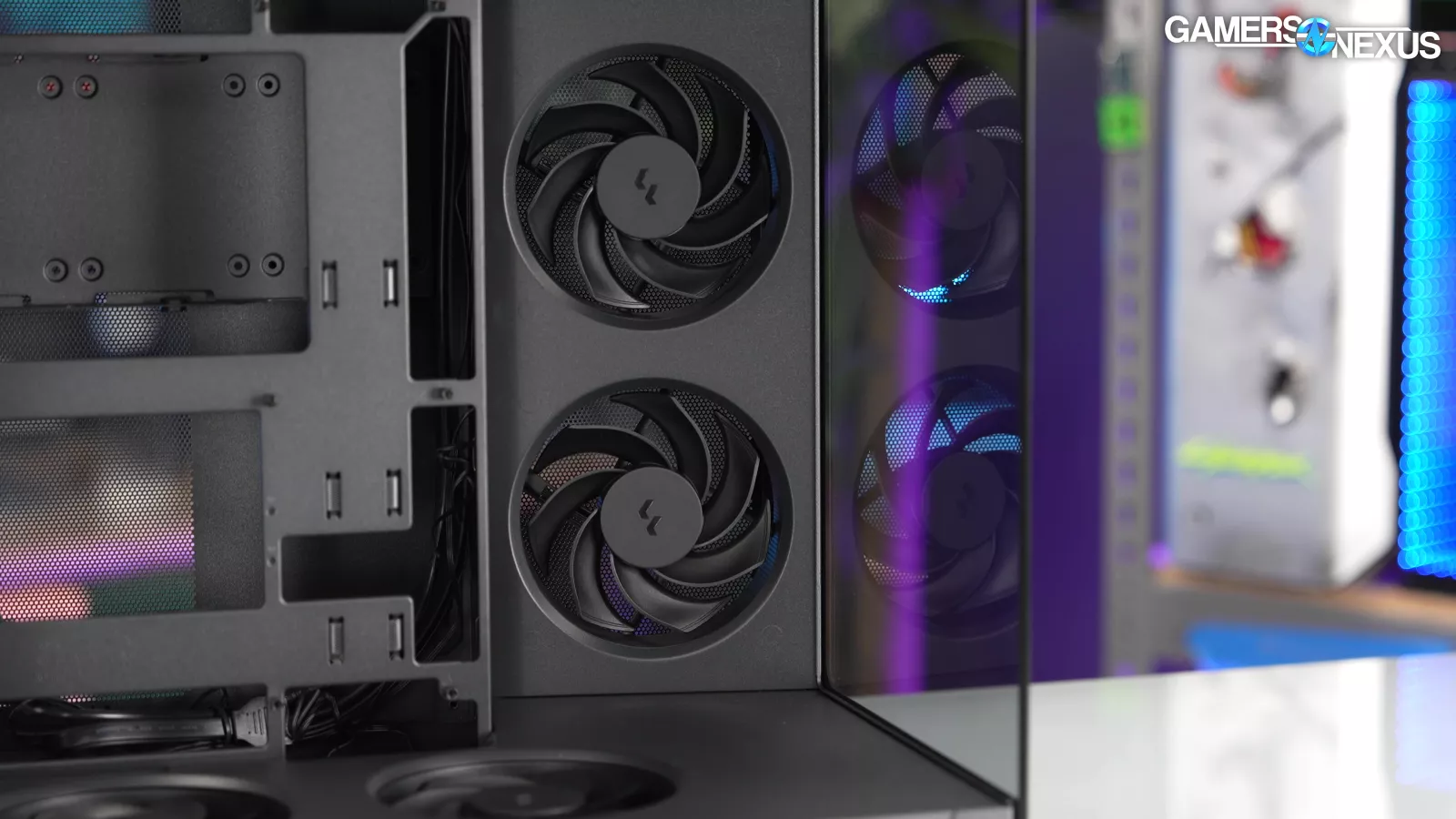
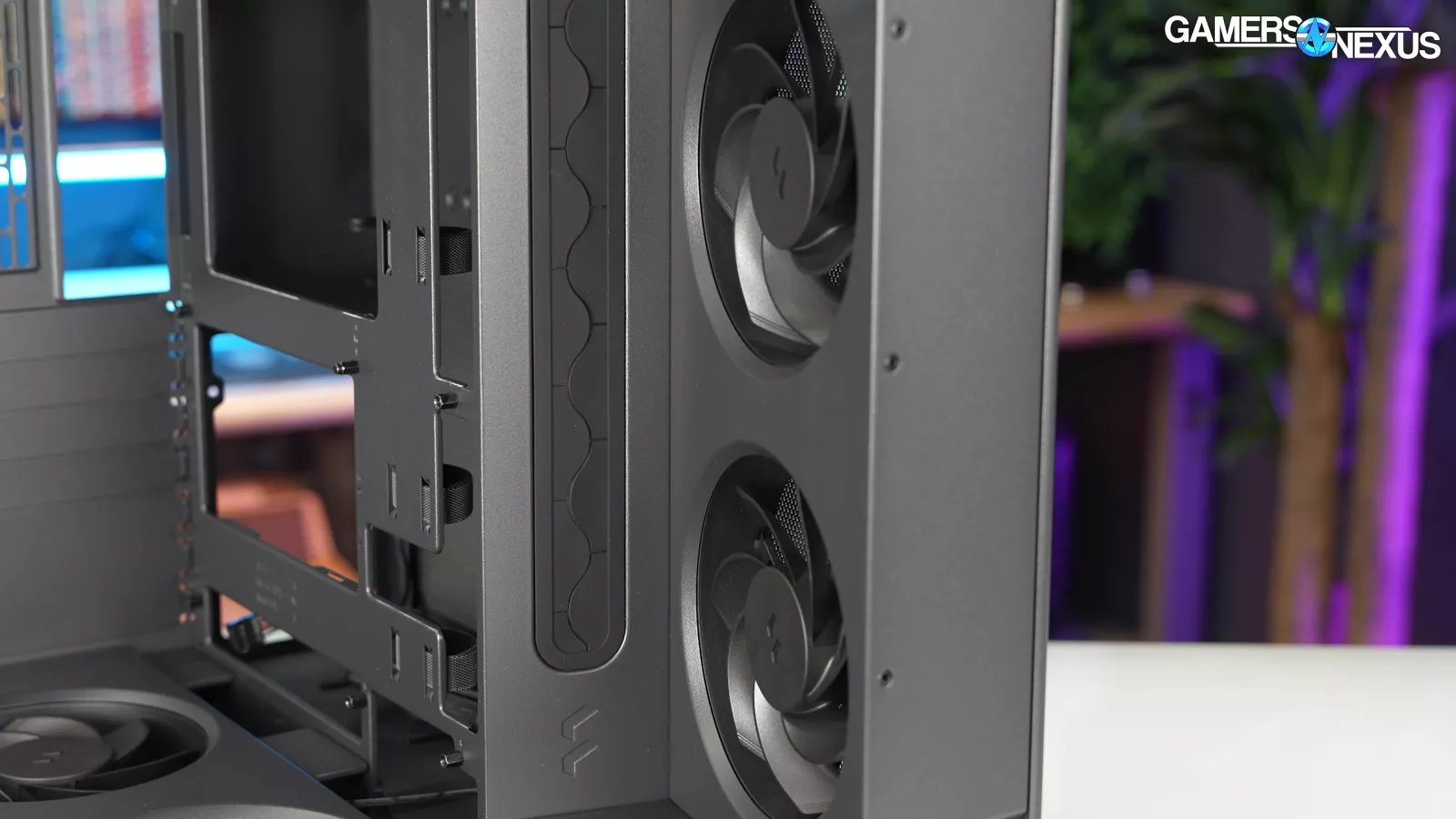
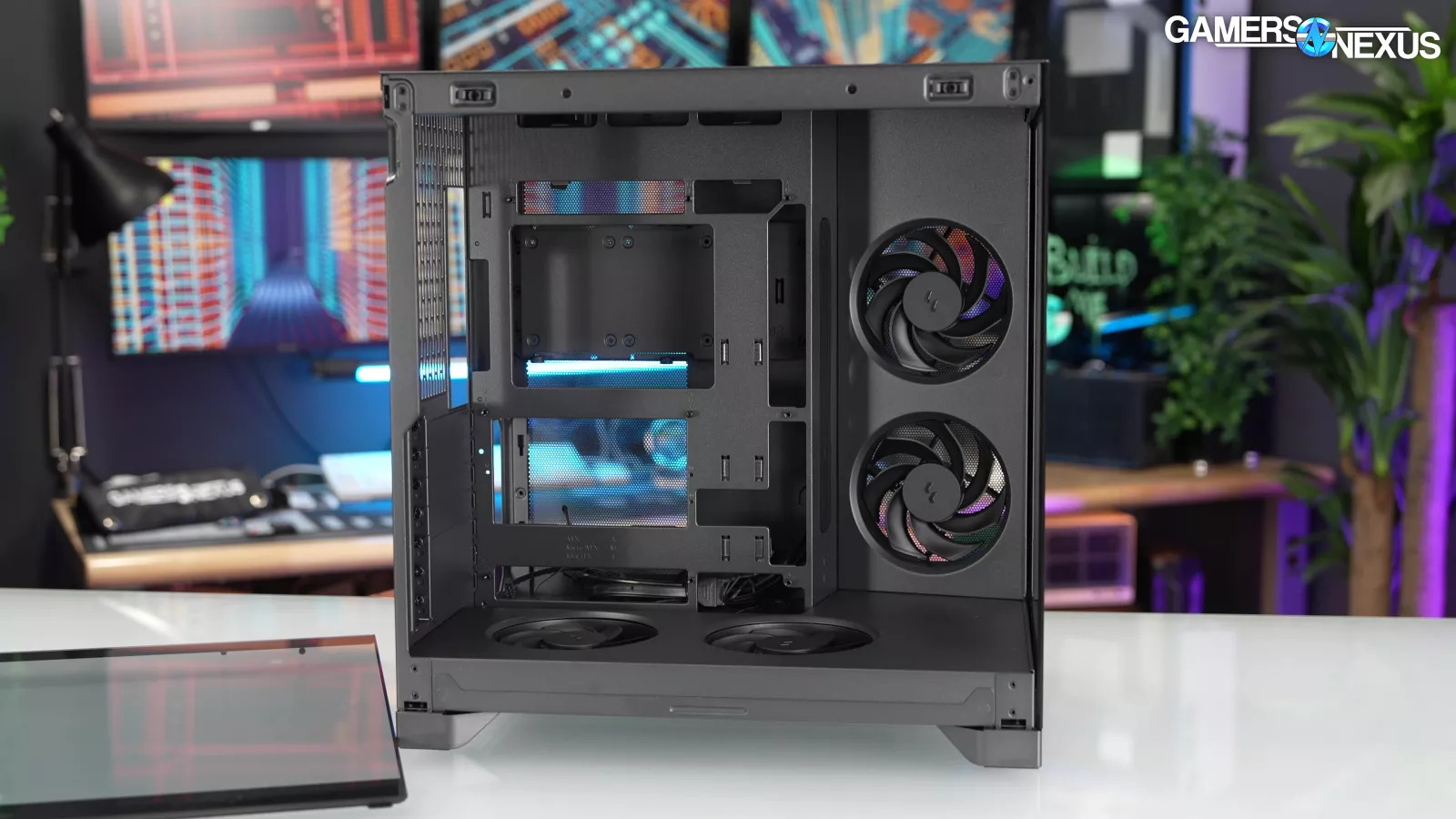
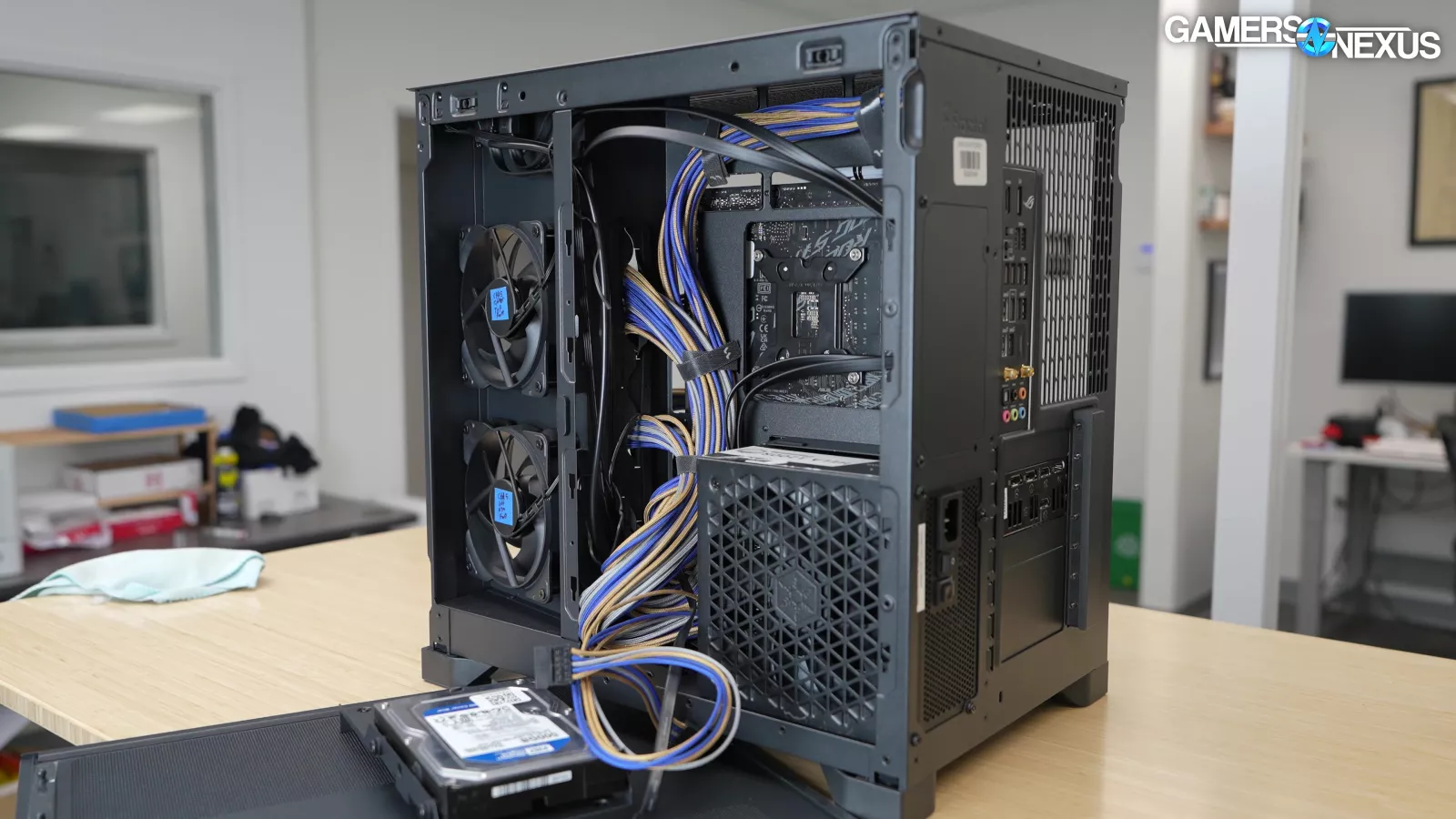
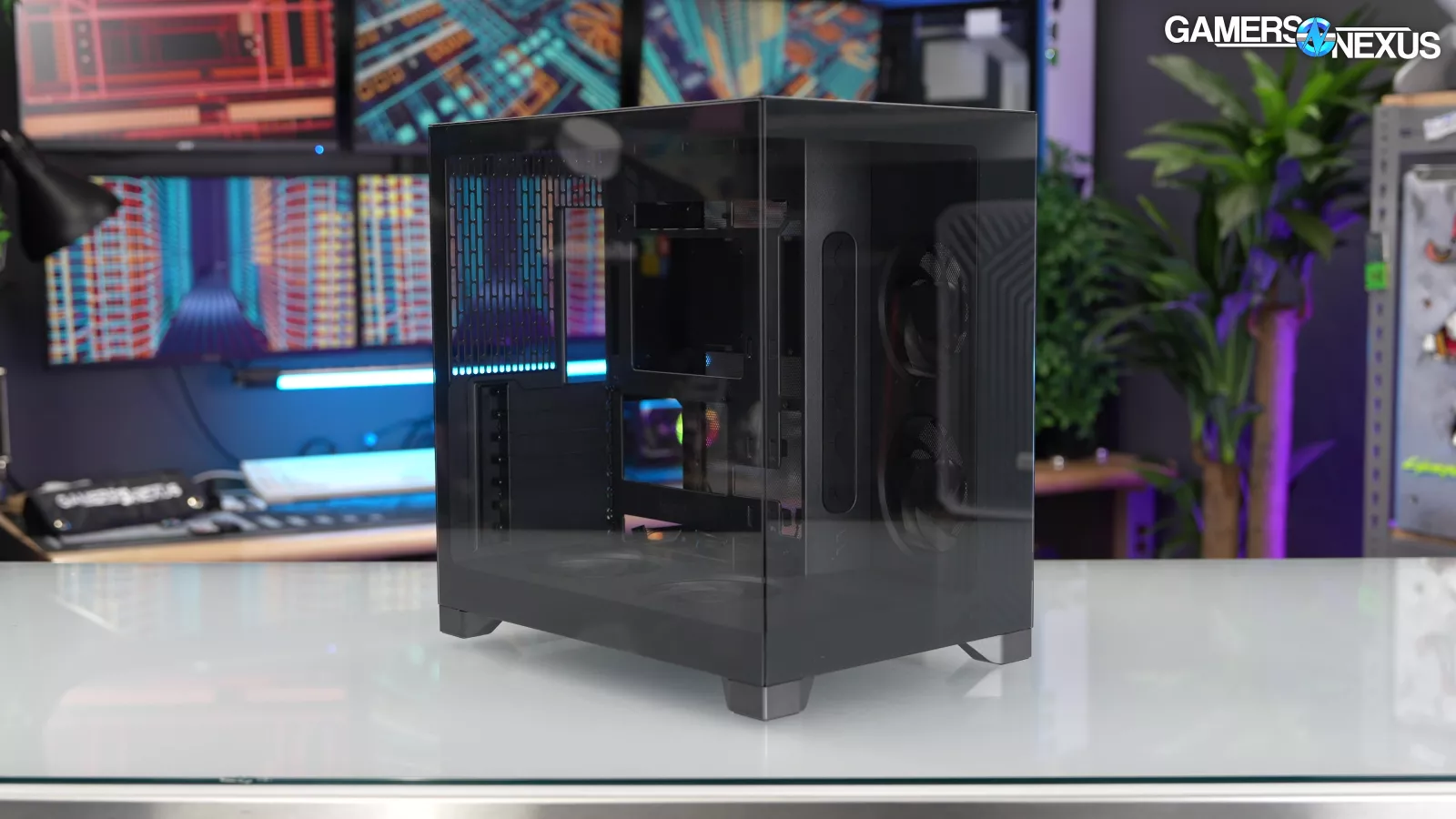
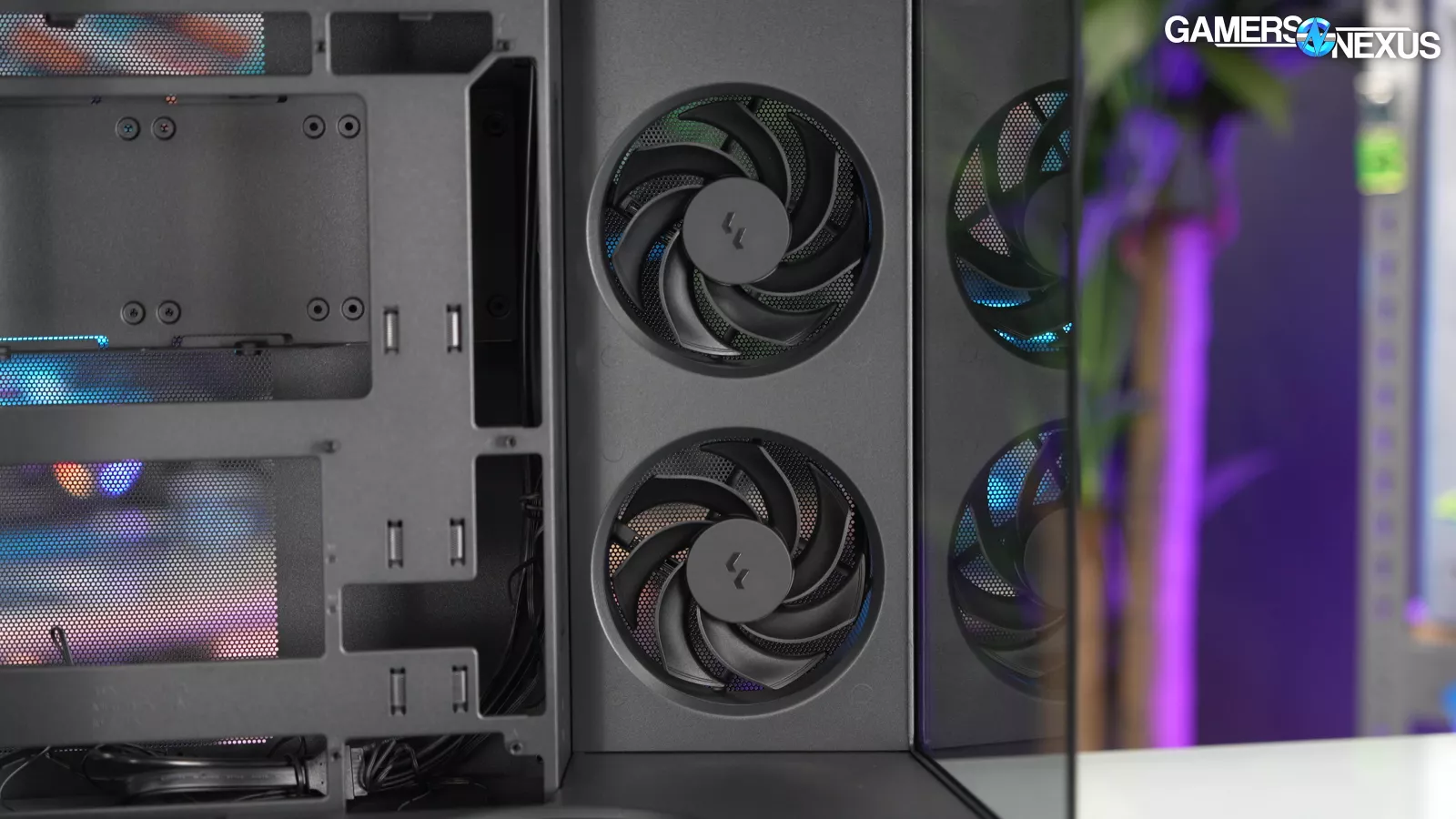
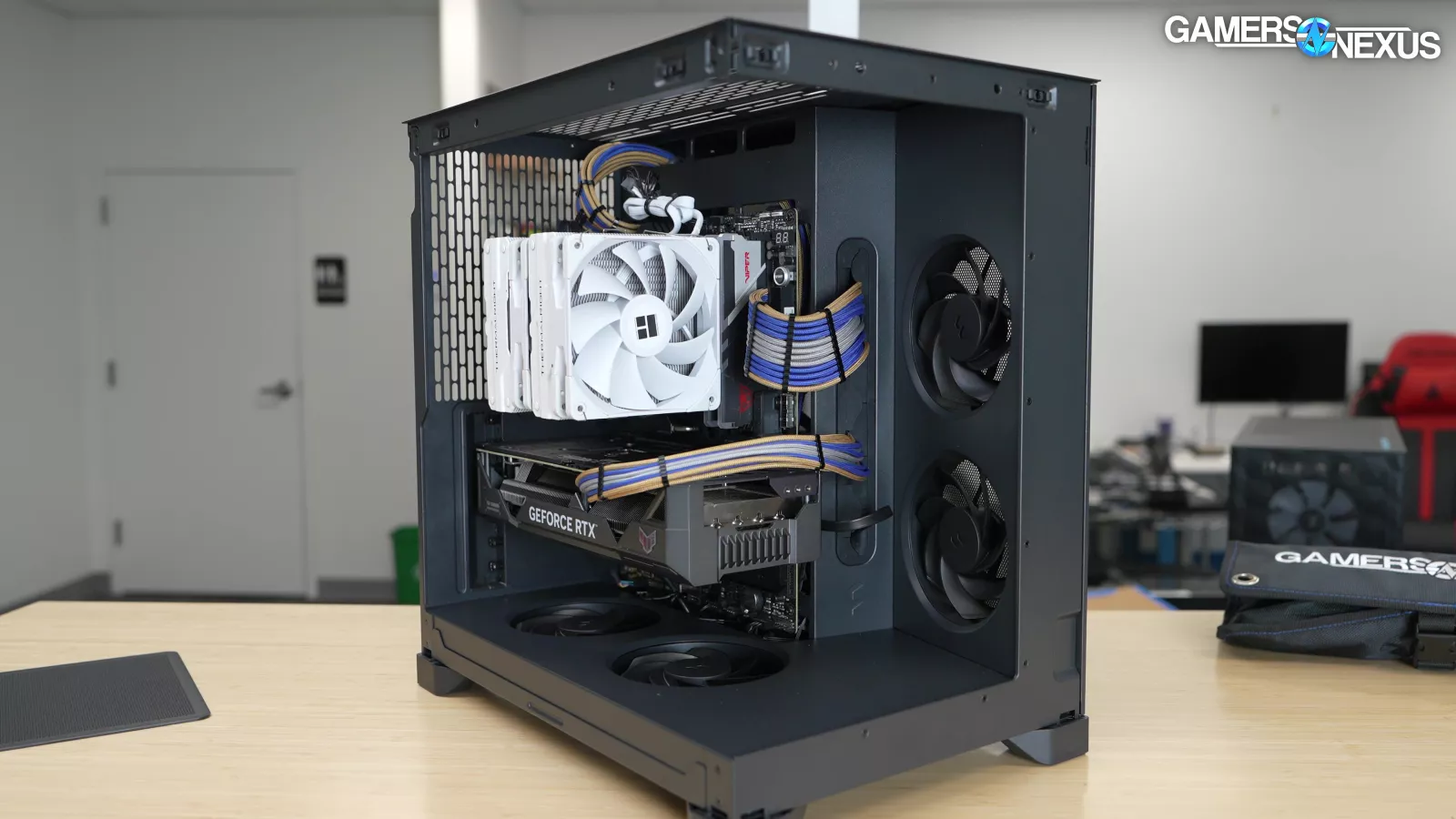
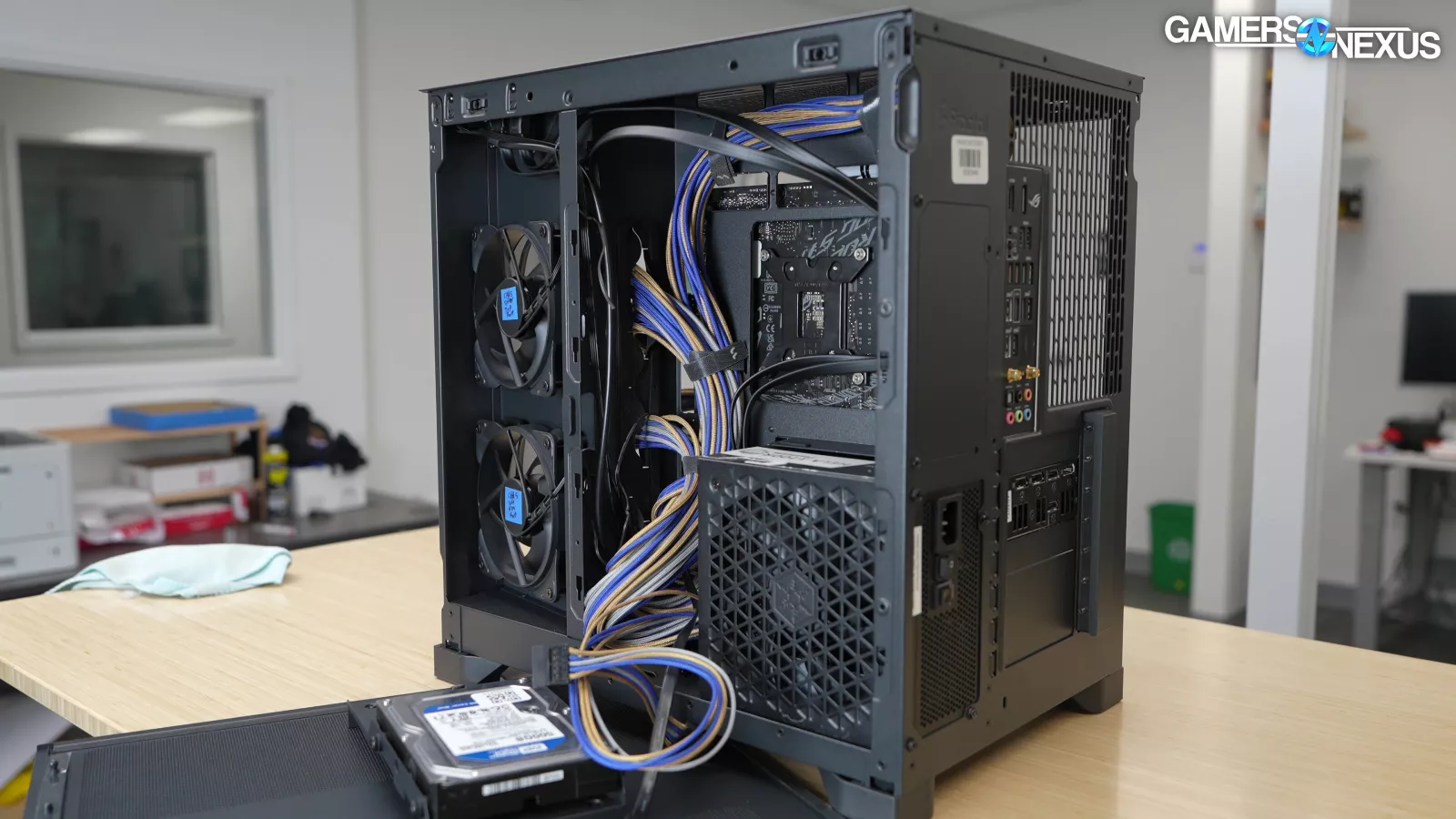
The curved front-edge for the embedded fans should improve thermals by angling the fans more toward the components, but also just looks different -- branching-out from the Hyte-inspired motif of the Y-series. The back-side is enormously deep for easy cable management, and the form-fit fans should benefit from improved performance as a result of their chambered design.
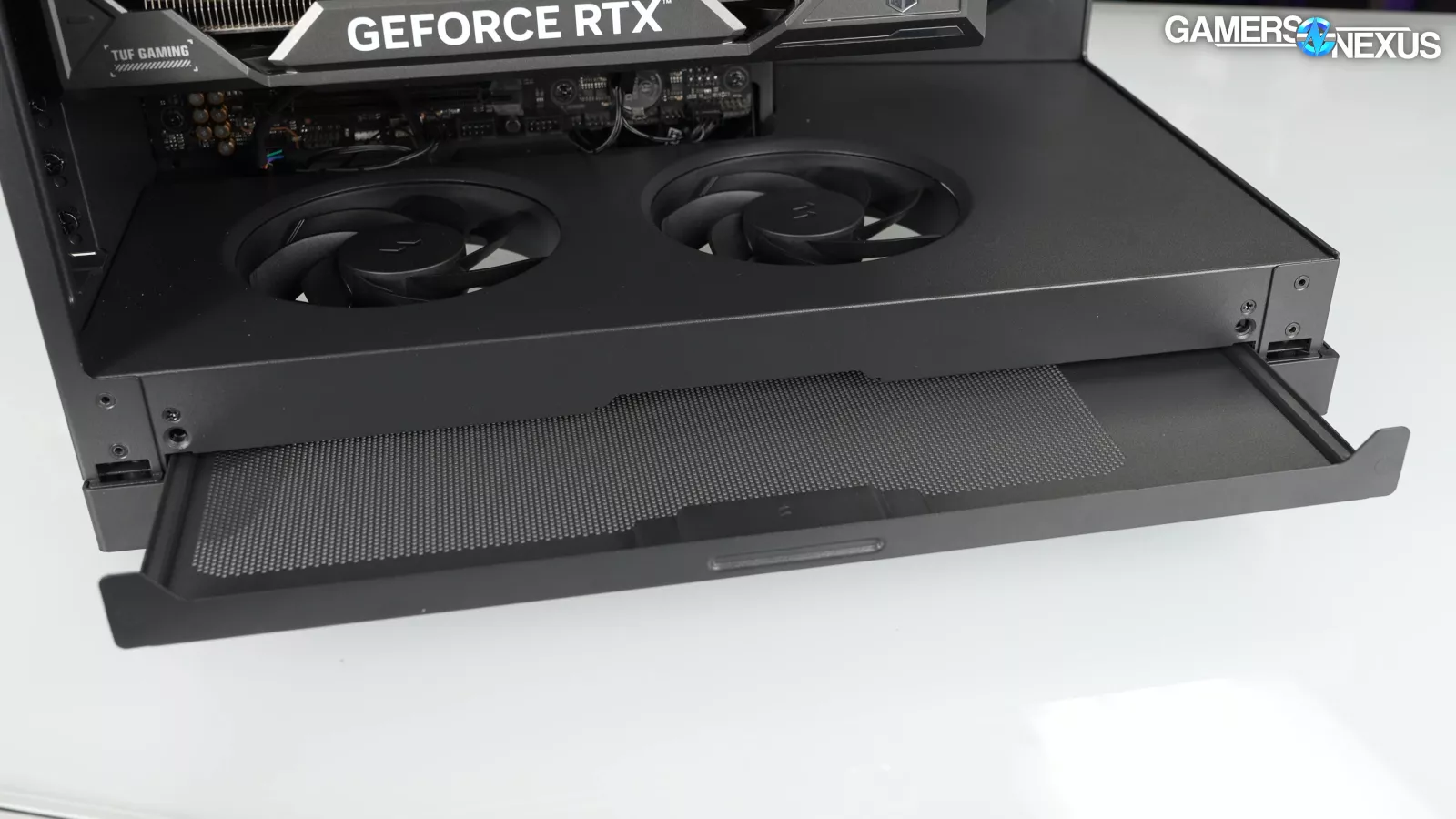
The unusual, stamped bottom filter is also higher quality than we’re used to.
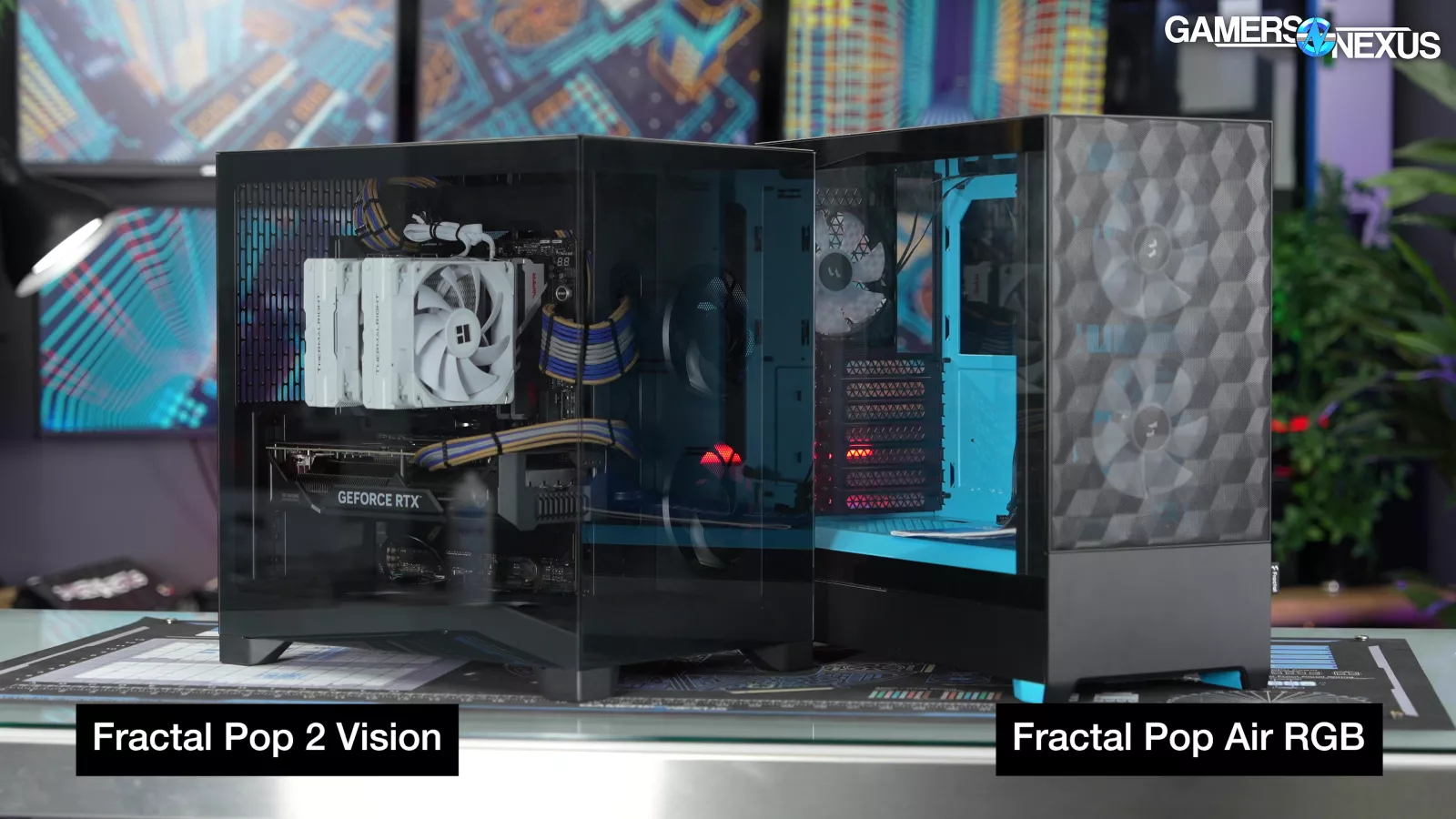
Fractal also recently released the Pop 2 Air, a followup to the colorful budget Pop Air (watch our review) that we reviewed positively back in 2022.
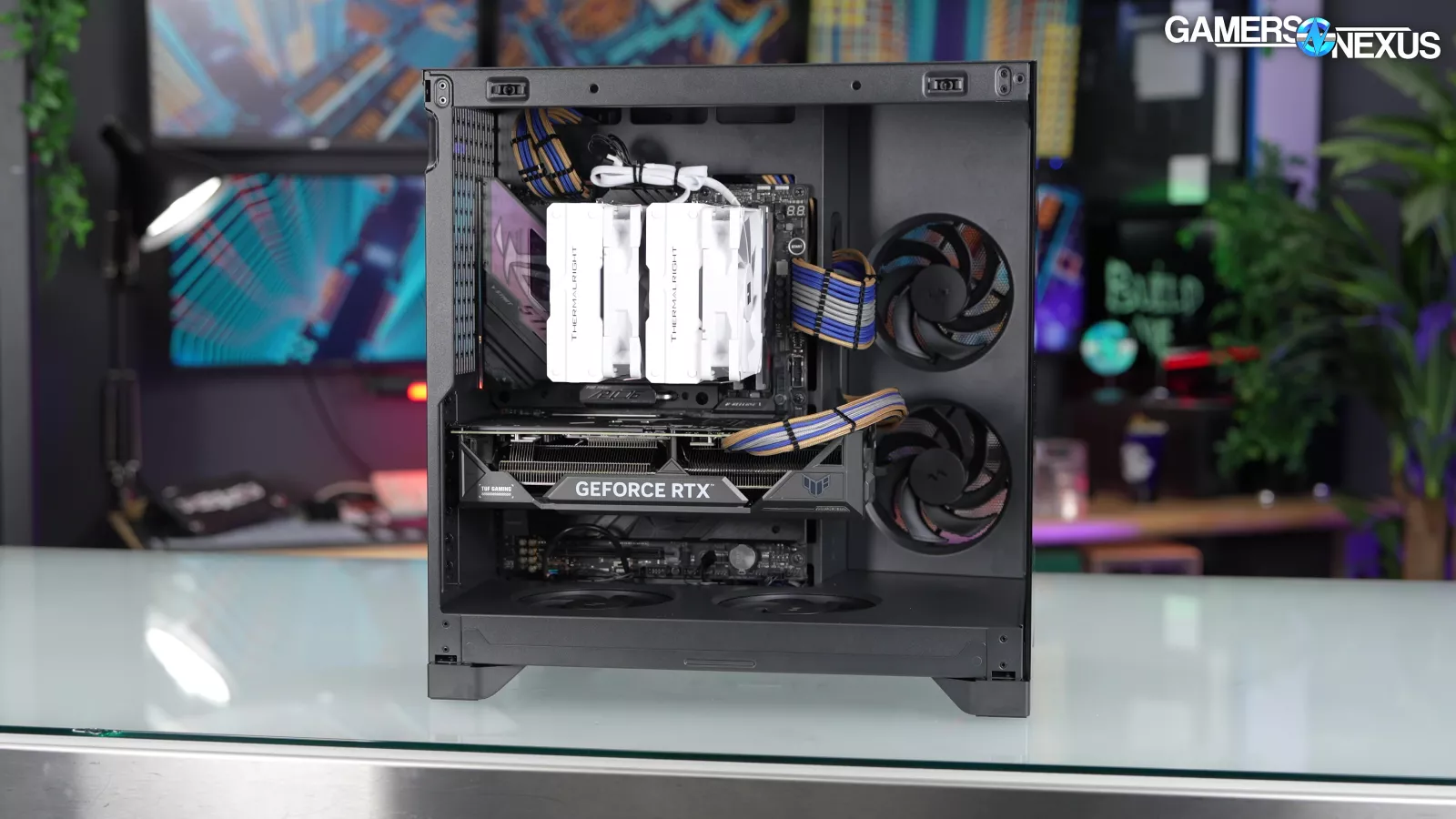
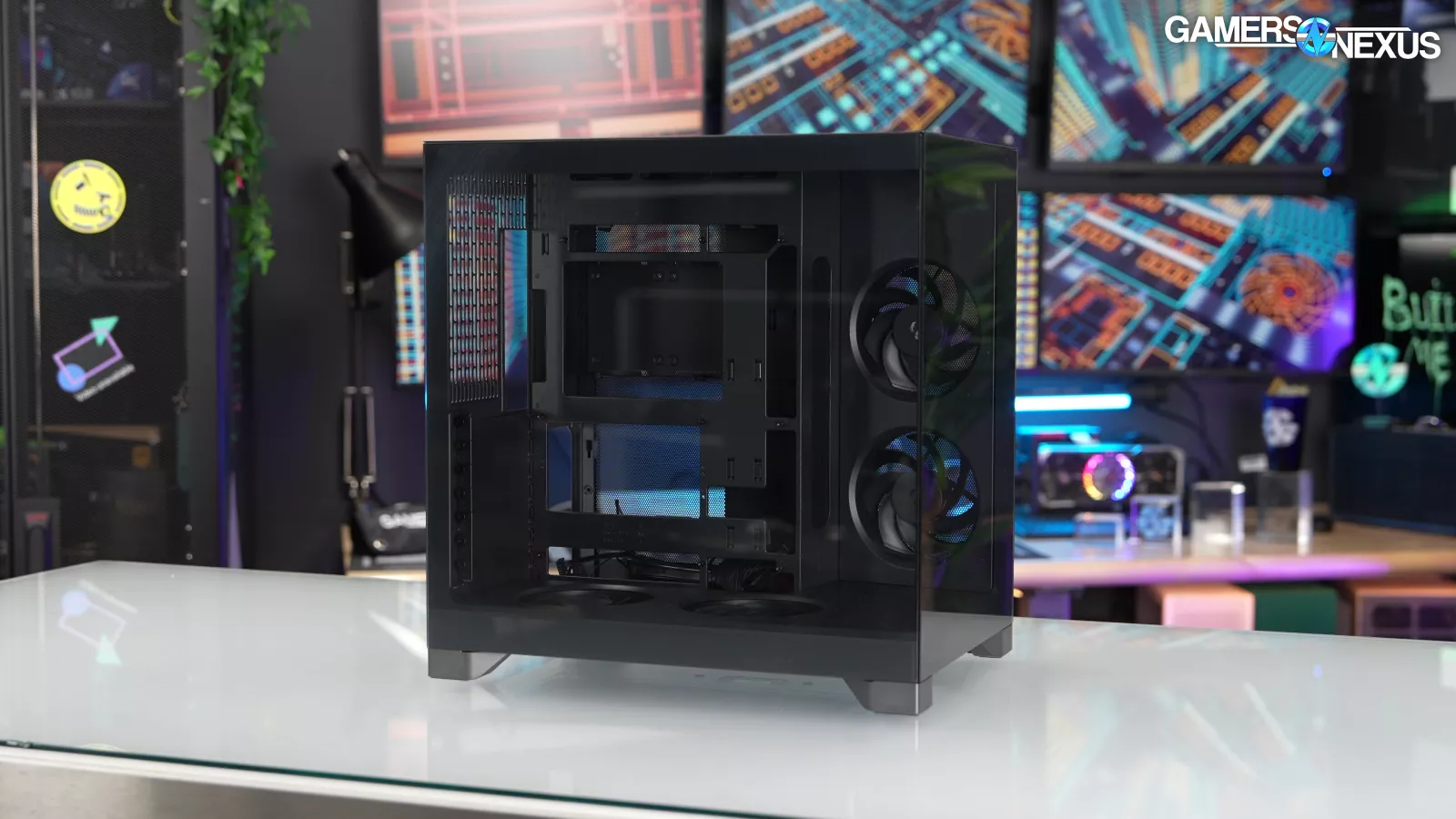
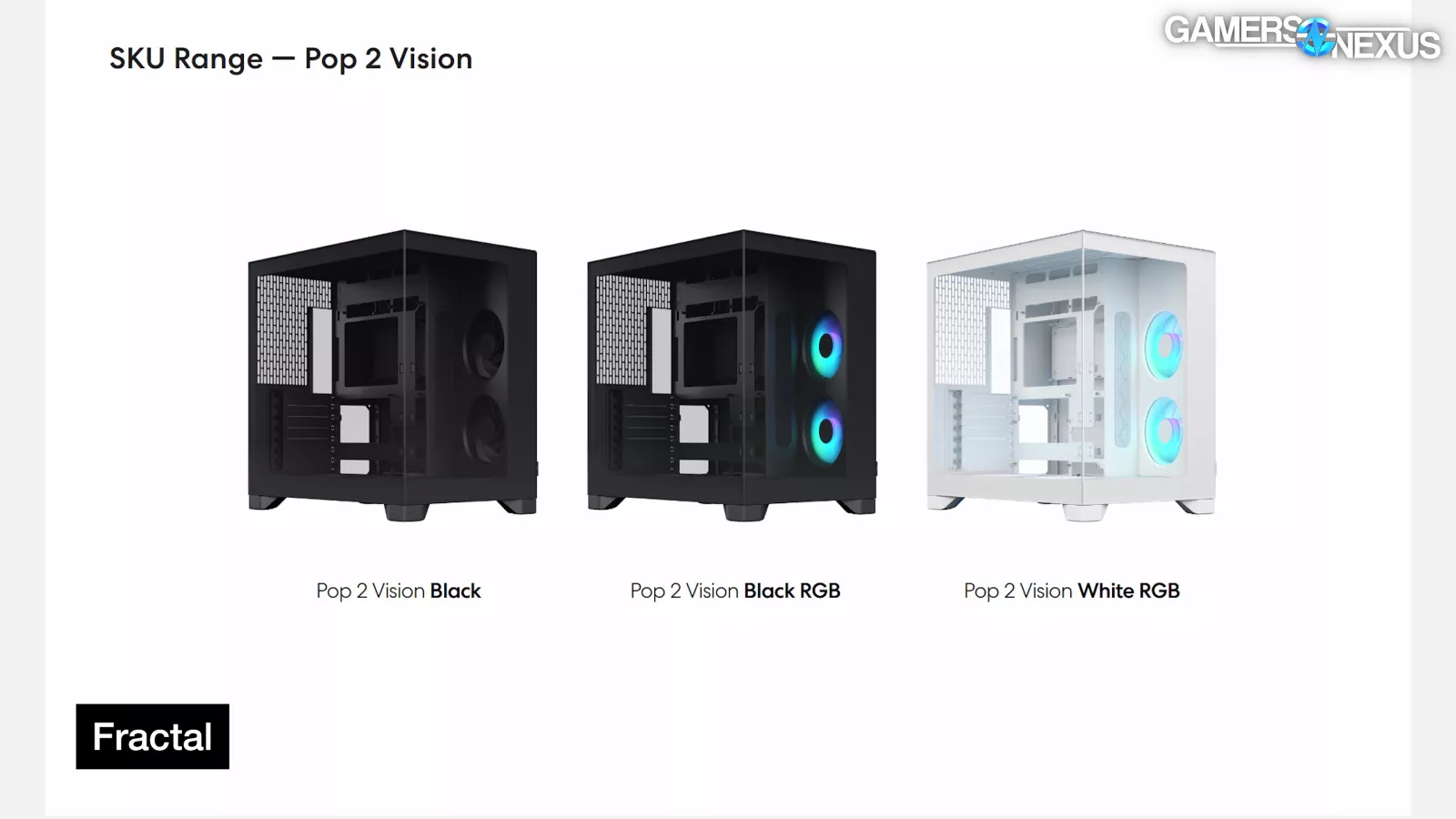
Now, it's adding the Pop 2 Vision to the family, an O11D-style dual chamber fishtank with a glass front panel. The name is deceptive. It doesn't really have anything in common with the other Pop cases other than its relatively low price, at $90 for the non-RGB, black-only SKU that we’re reviewing and $100 for the black or white RGB SKUs. As you'd expect for a case named "Vision," Fractal isn't offering a steel-sided variant for this case.
Specs
| Dedicated 3.5" drive mounts | 1 |
| Dedicated 2.5" drive mounts | 3 |
| 5.25” drive mounts | - |
| Expansion slots | 7 |
| Motherboard compatibility | ATX / mATX / Mini-ITX |
| Reverse motherboard connector support | Yes |
| Power supply type | ATX |
| Front interface | 1 x USB Type-A 5 Gbps, 1 x USB Type-C 5 Gbps, 1 x Audio/Mic Combo Jack |
| Total fan mounts | 8 x 120 mm or 2 x 140 mm + 5 x 120 mm |
| Front-right fan | 2 x 120 mm (Included) |
| Top fan | 3 x 120 mm or 2 x 140 mm |
| Rear fan | 1 x 120 mm |
| Bottom fan | 2 x 120 mm (Included) |
| Dust filters | 1 x Top, 1 x Bottom, 1 x Perforated Side Panel |
| Front radiator | - |
| Top radiator | Up to 280 / 360 mm |
| Rear radiator | 1 x 120 mm |
| Bottom radiator | - |
| PSU max length | 190 mm |
| GPU max length | 412 mm |
| CPU cooler max height | 172 mm |
| Cable routing space | 93 mm (w/o 2.5''/3.5'' bracket installed) |
| Cable routing grommet | Yes |
| Hook-and-loop straps | Yes, 5 pcs |
| Tool-less access | Top filter; left side panel; right side panel; front side panel; bottom filter |
| Thumbscrews | 7 x PCIe blanks |
| Left side panel | Tempered glass |
| Front panel | Tempered glass |
| Right side panel | Steel |
| Case dimensions (L x W x H) | 434 x 297 x 441 mm |
| Case dimensions w/o feet, protrusions, screws | 431 x 297 x 421 mm |
| Net weight | 9.7 kg |
| Package dimensions ( L x W x H) | 550 x 410 x 530 mm |
| Gross weight | 11.3 kg |
| Chassi type/structure | Dual-chamber chassis |
| Fans included | 4 x Aspect 12X Reverse BK |
The Build
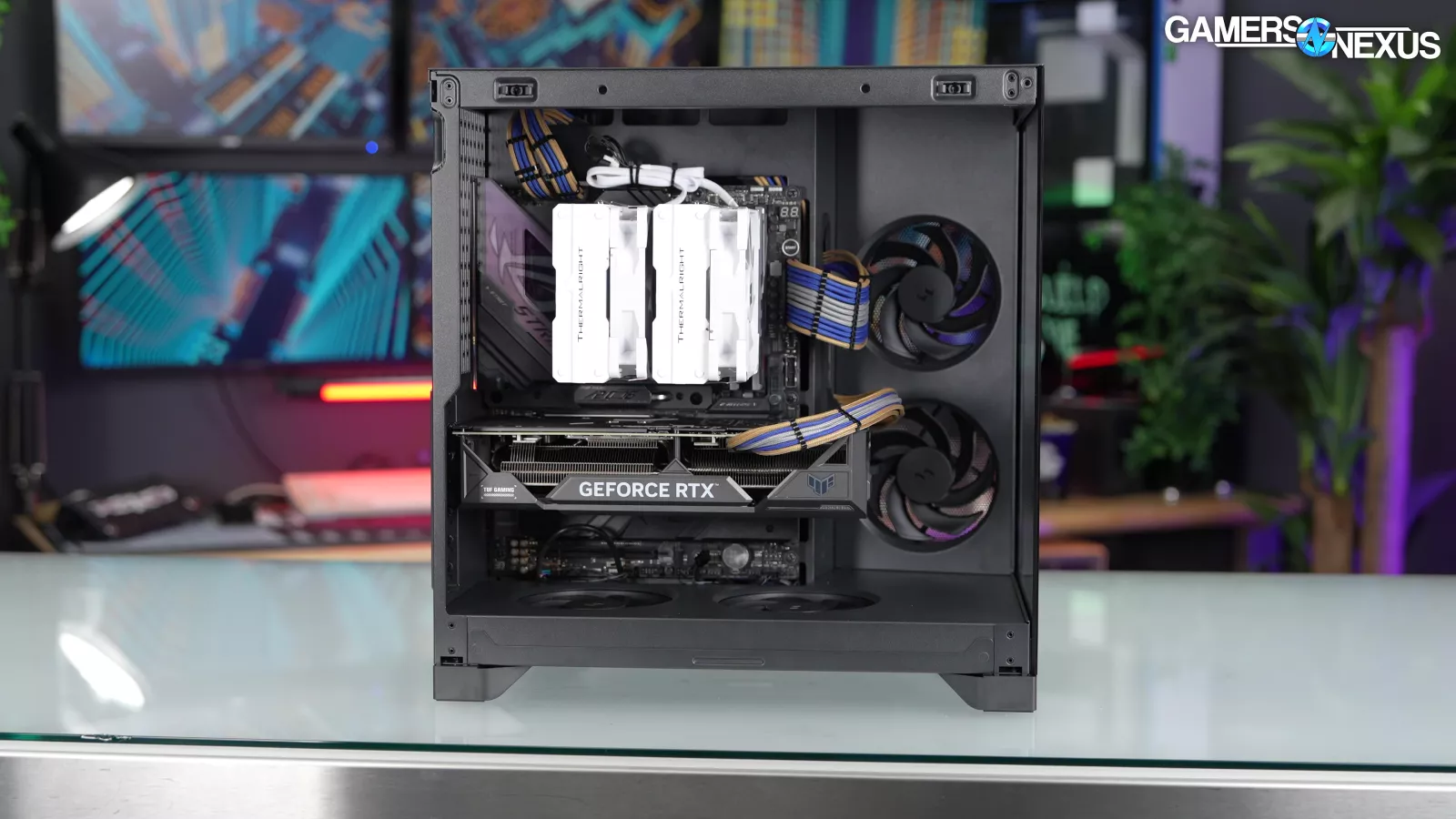
We've been wanting Fractal to release a new sub-$100 case for a while now, but that’s been difficult with the state of the industry -- sales are down massively, especially for case companies, so now they are either forced to race to the bottom or try to find one of just a couple spots at the high-end.
The Pop family is the logical candidate for a new budget tower, since the original Pop Air was just $80 ($90 for RGB). We can tell that the Pop 2 Vision was built to keep costs low, but that hasn't affected its sturdiness: the unsupported corner of the top panel is one of the strongest we’ve encountered, even without the side or front panels installed.
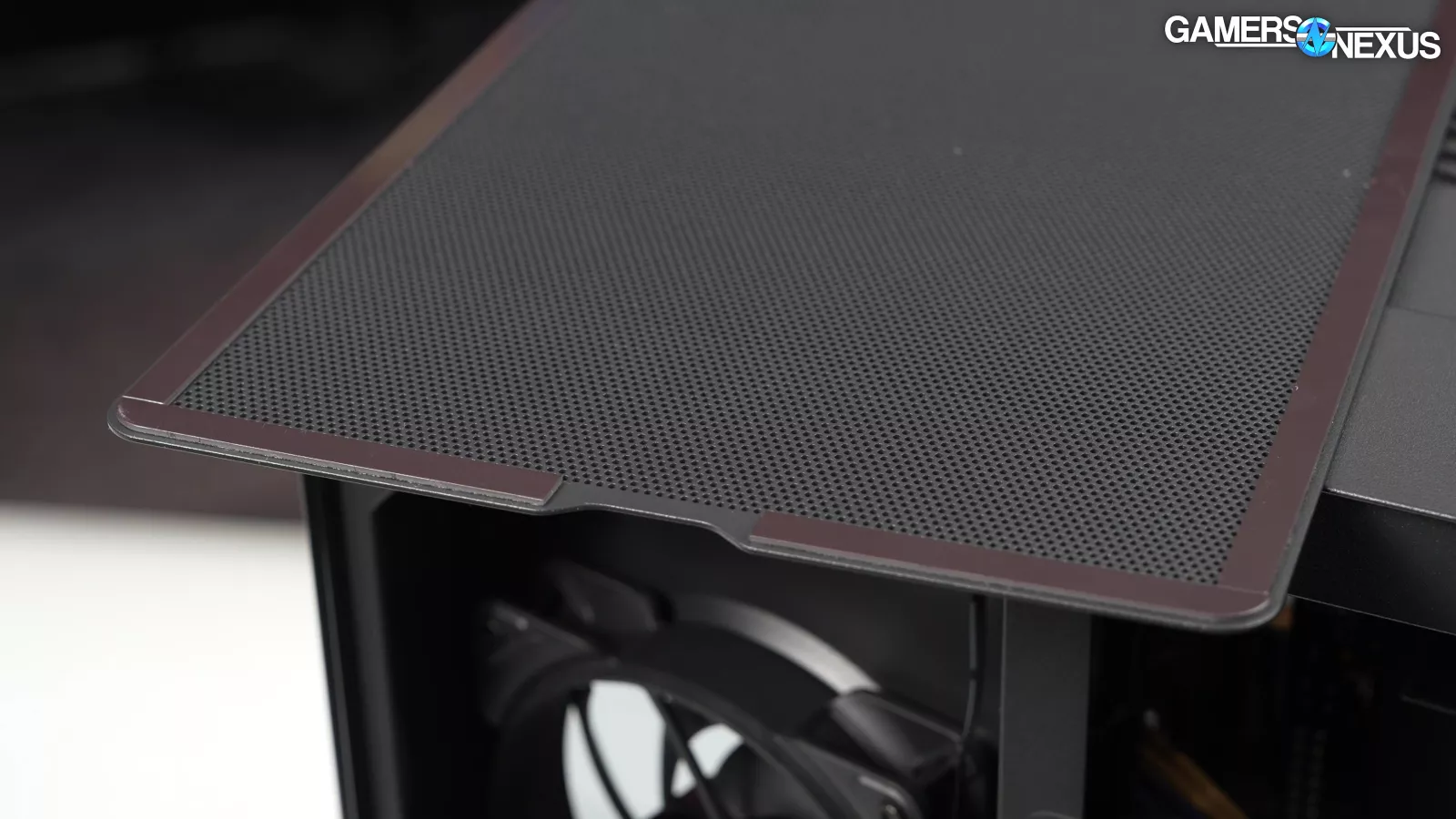
The top filter is rigid steel rather than a flexible sheet, so the magnets don't peel off as the filter bends.
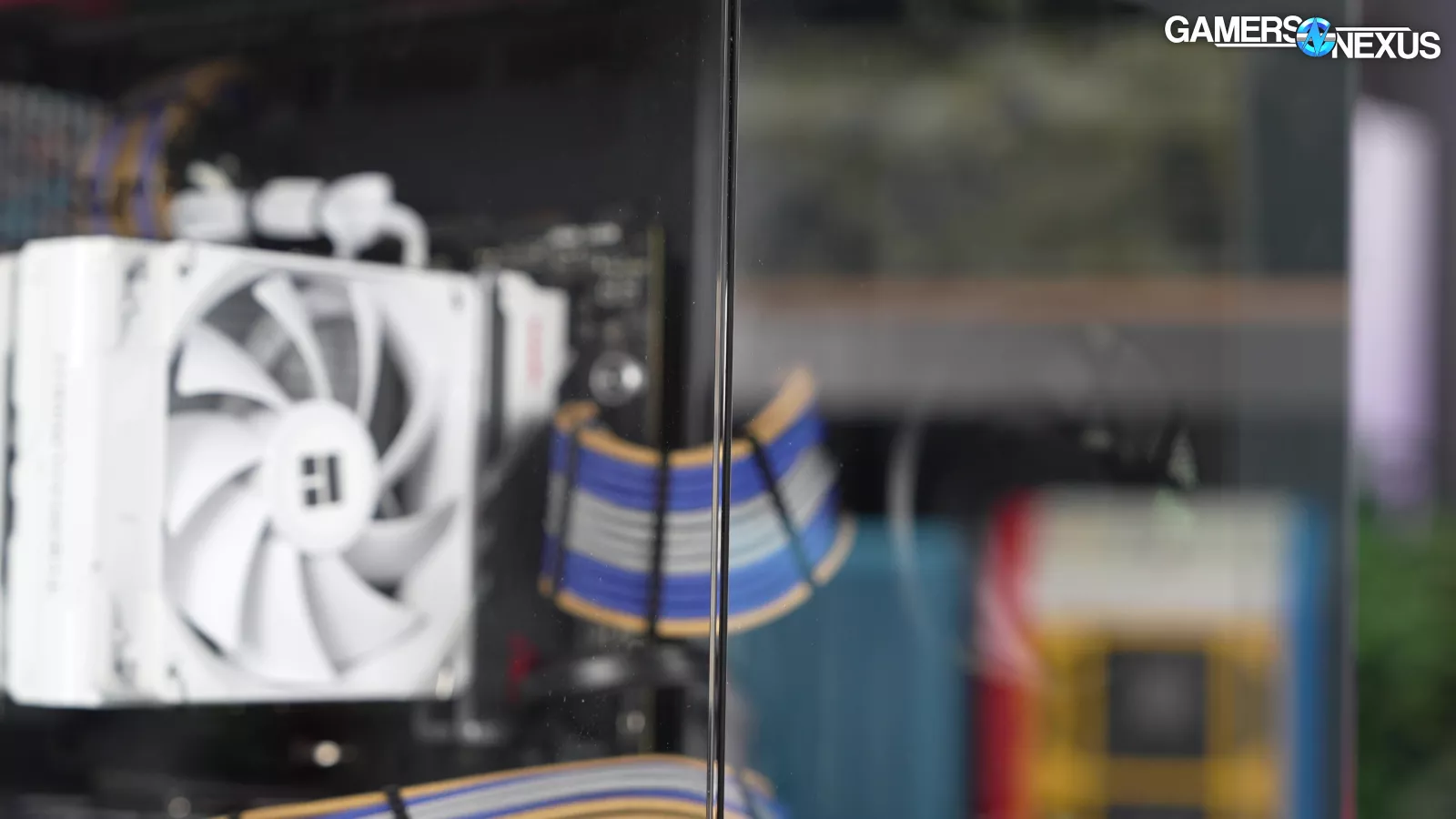
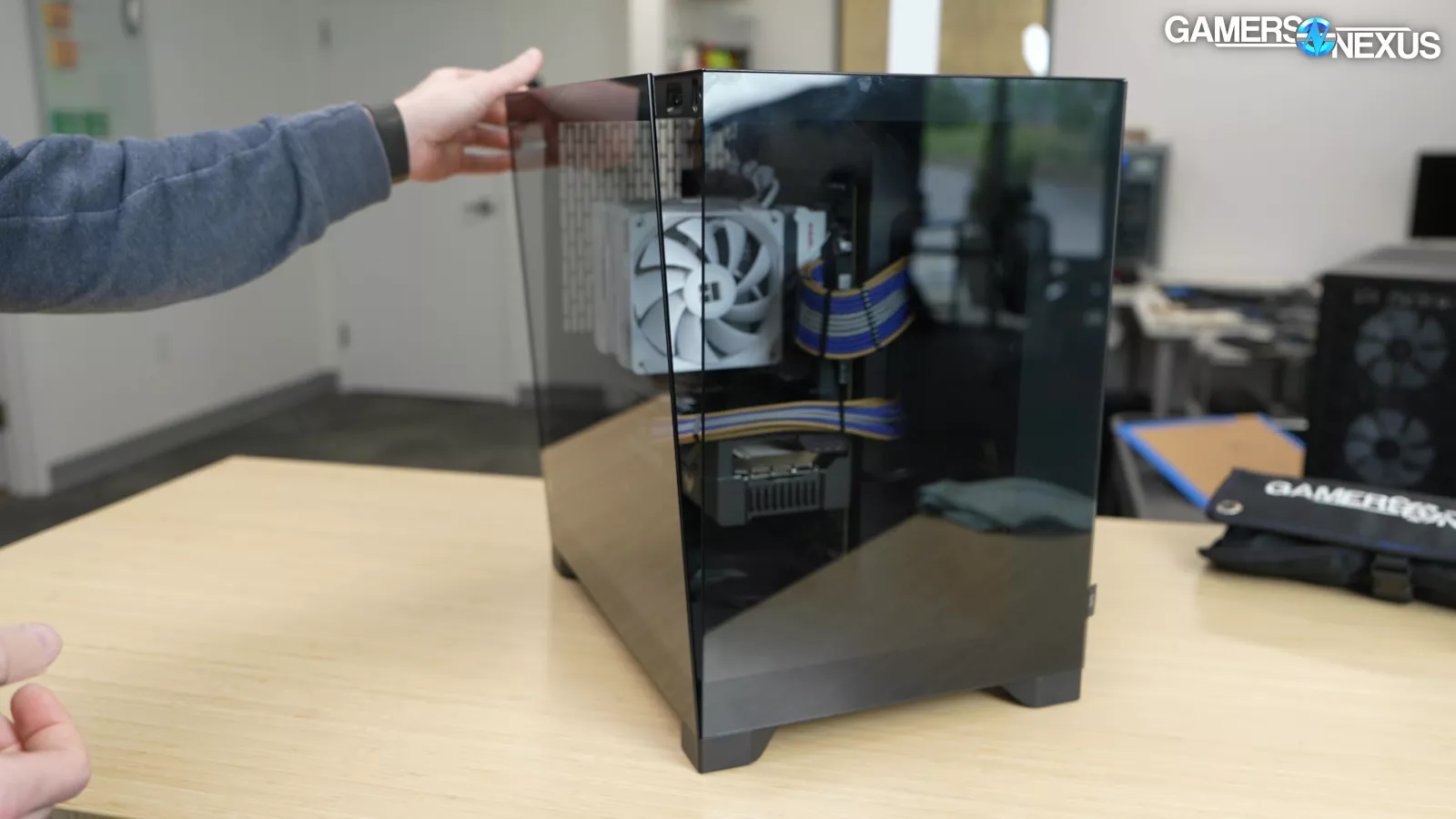
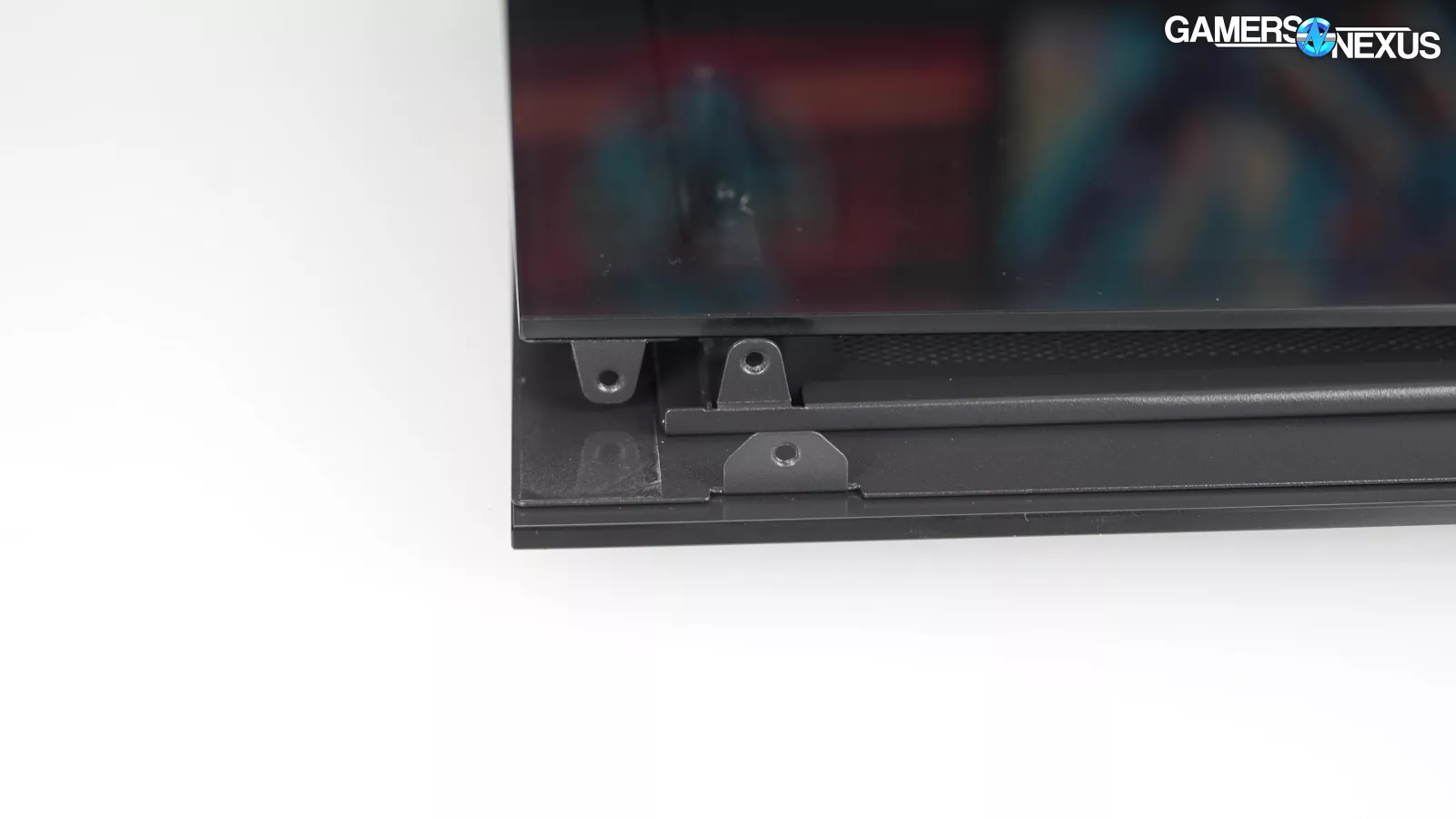
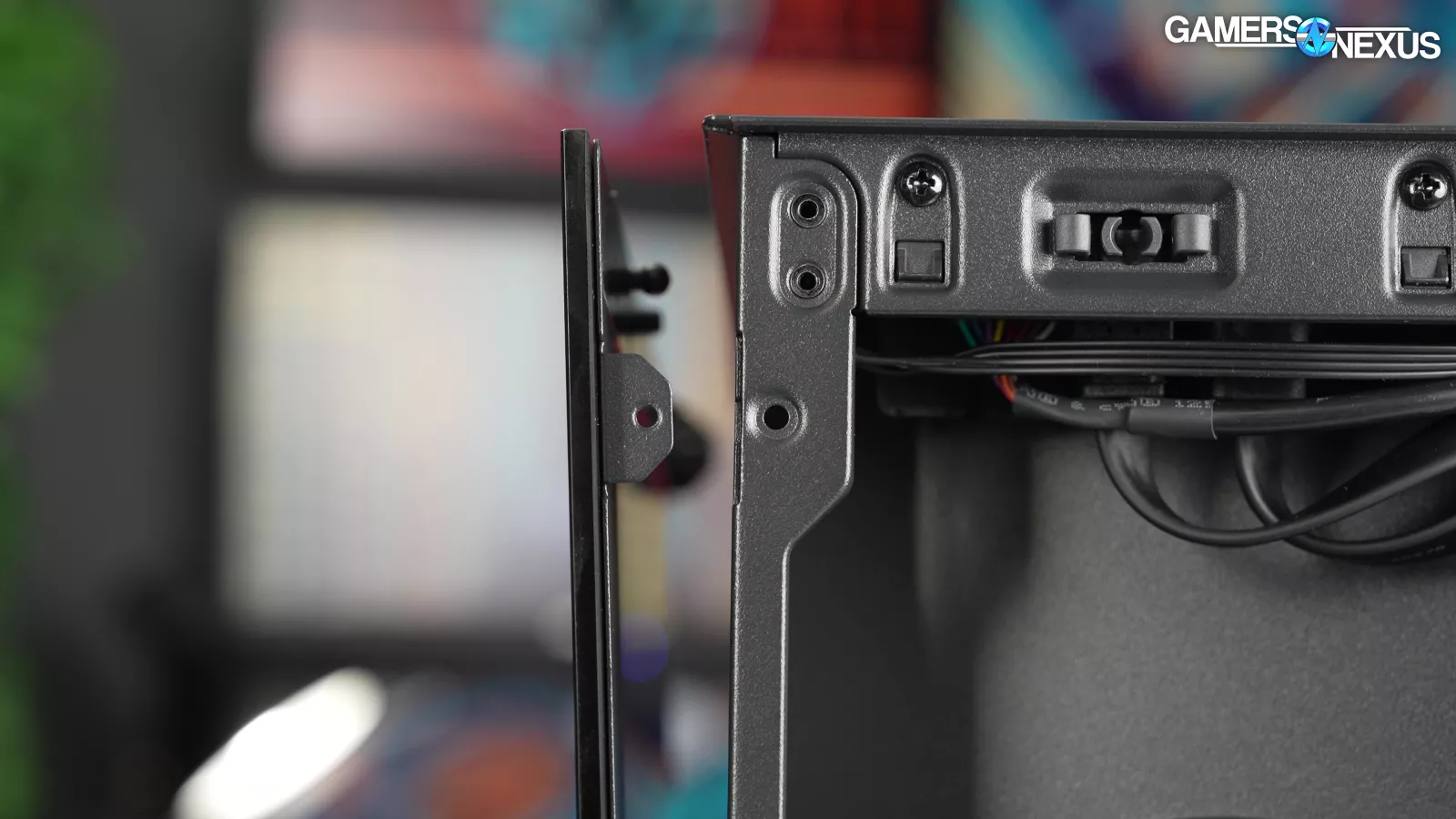
The two glass panels don't contact each other, but the panel gap is consistent top-to-bottom. Each of the panels only requires light pressure to unsnap, but all of them (including the steel panel) have tabs that can be screwed down for shipping.
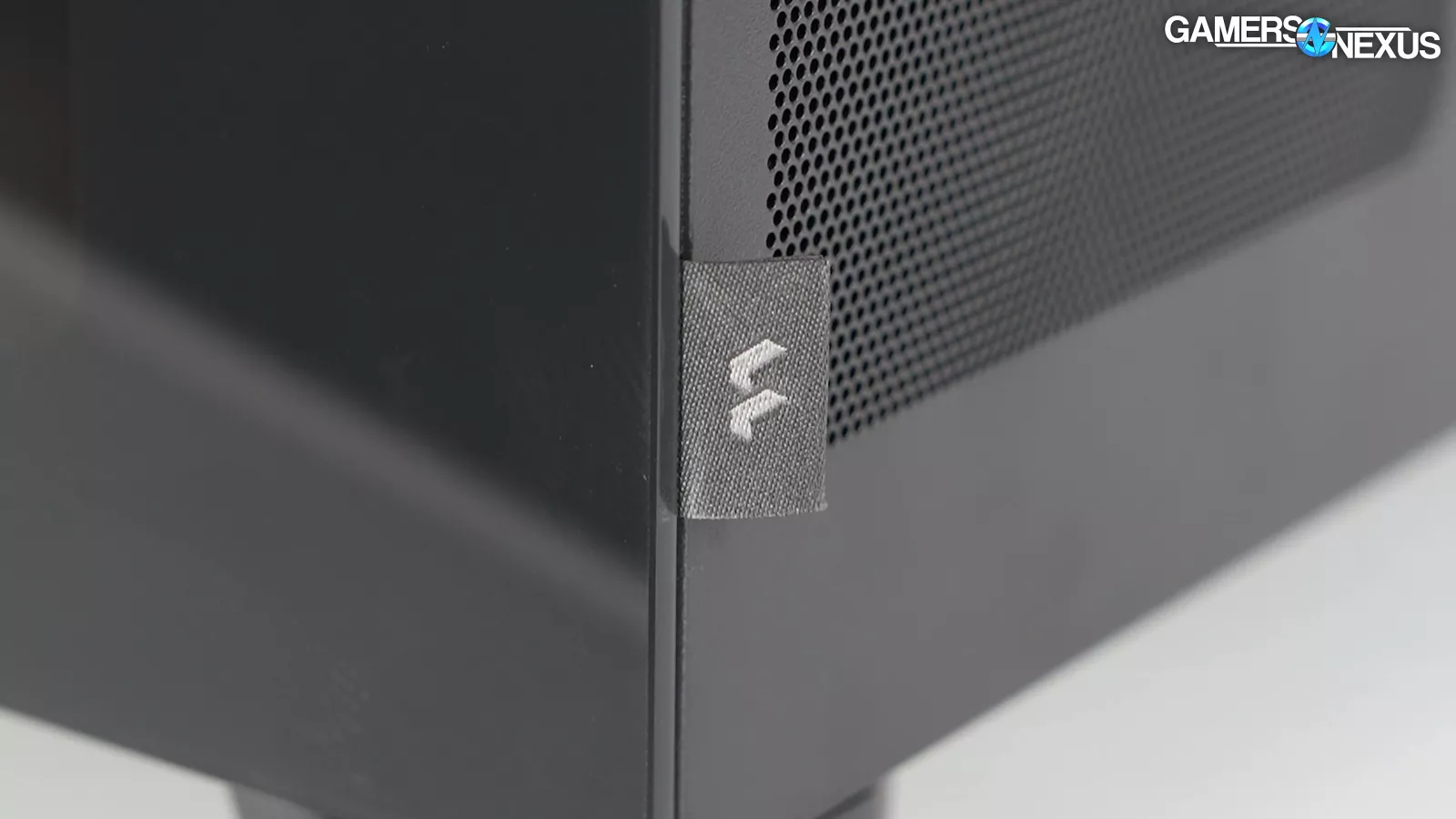
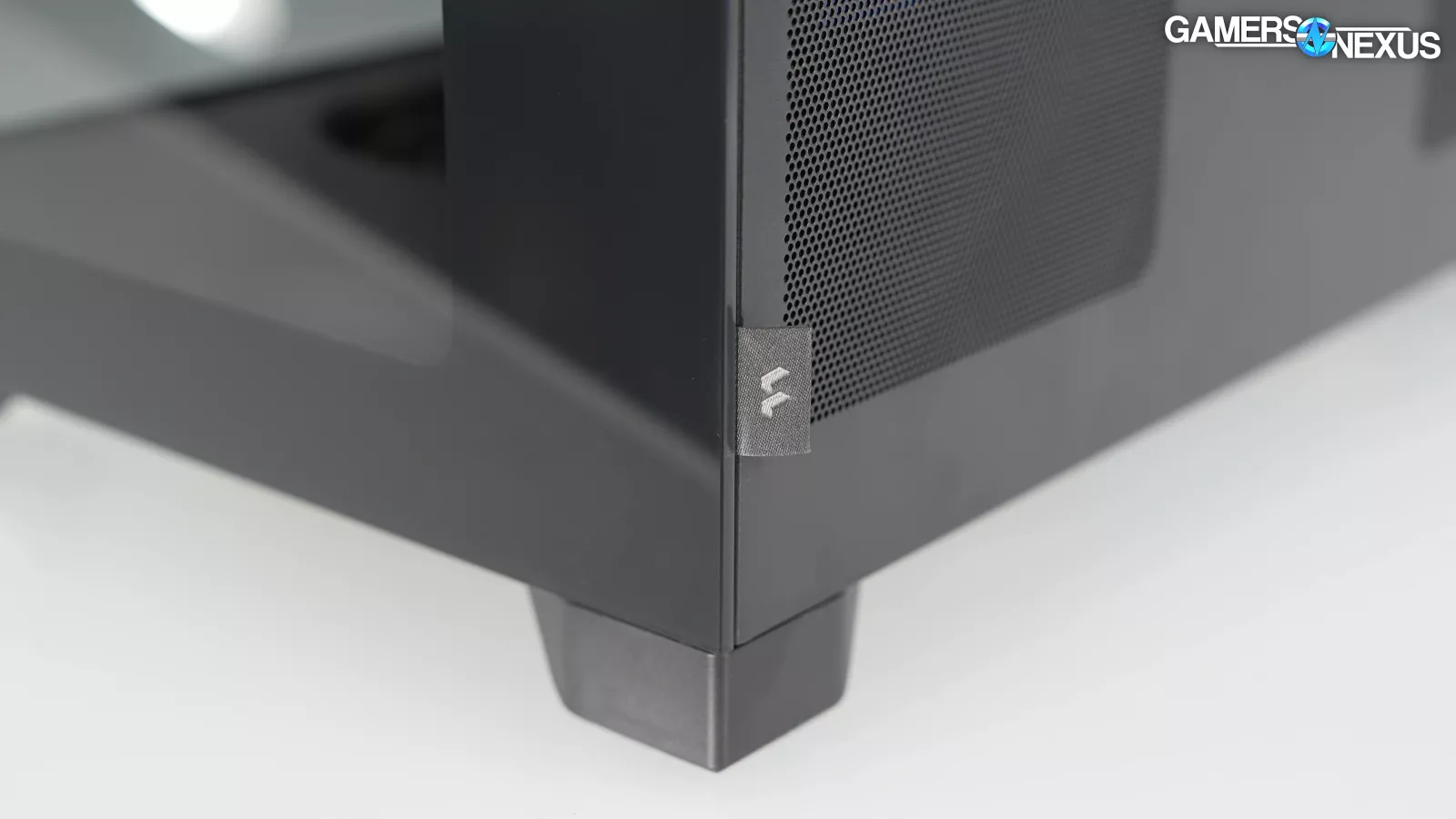
The Fractal tag on the front panel looks like a pull tab, which is how we used the tag on the original Pop Air, but it's purely decorative here.
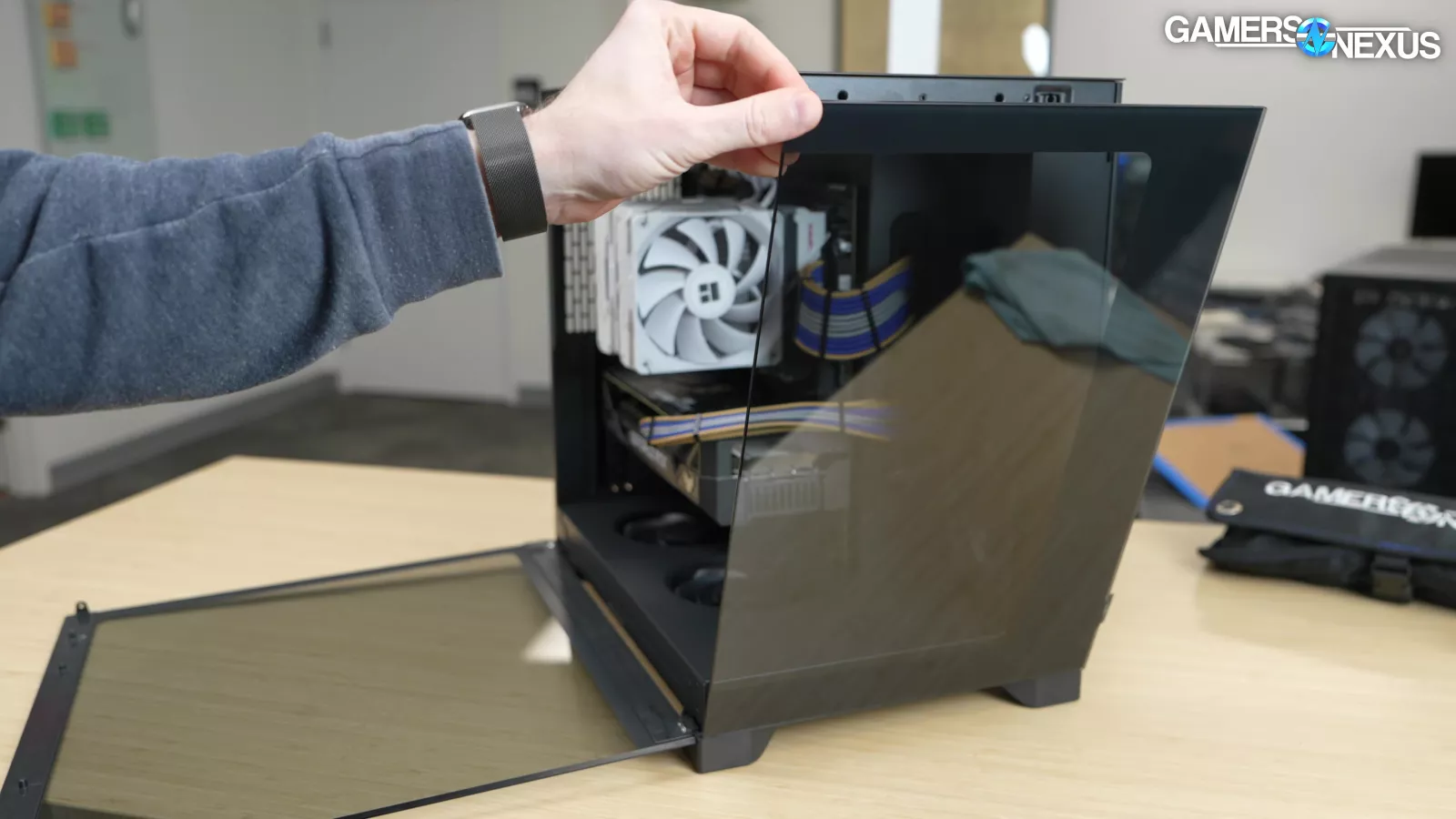
The front panel instead has to be pulled out from its top edge or from the inside once you’ve removed the side panel.
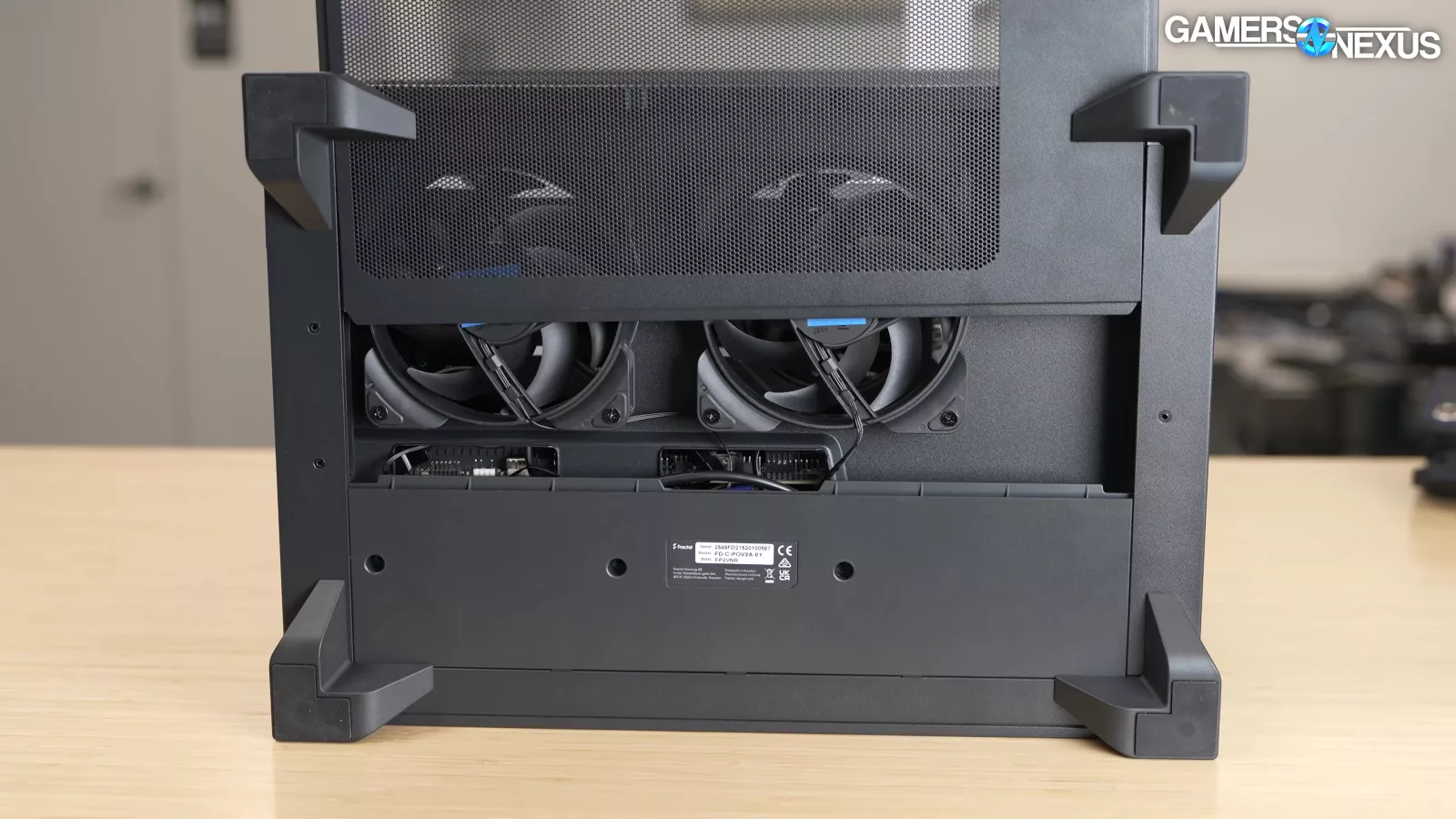
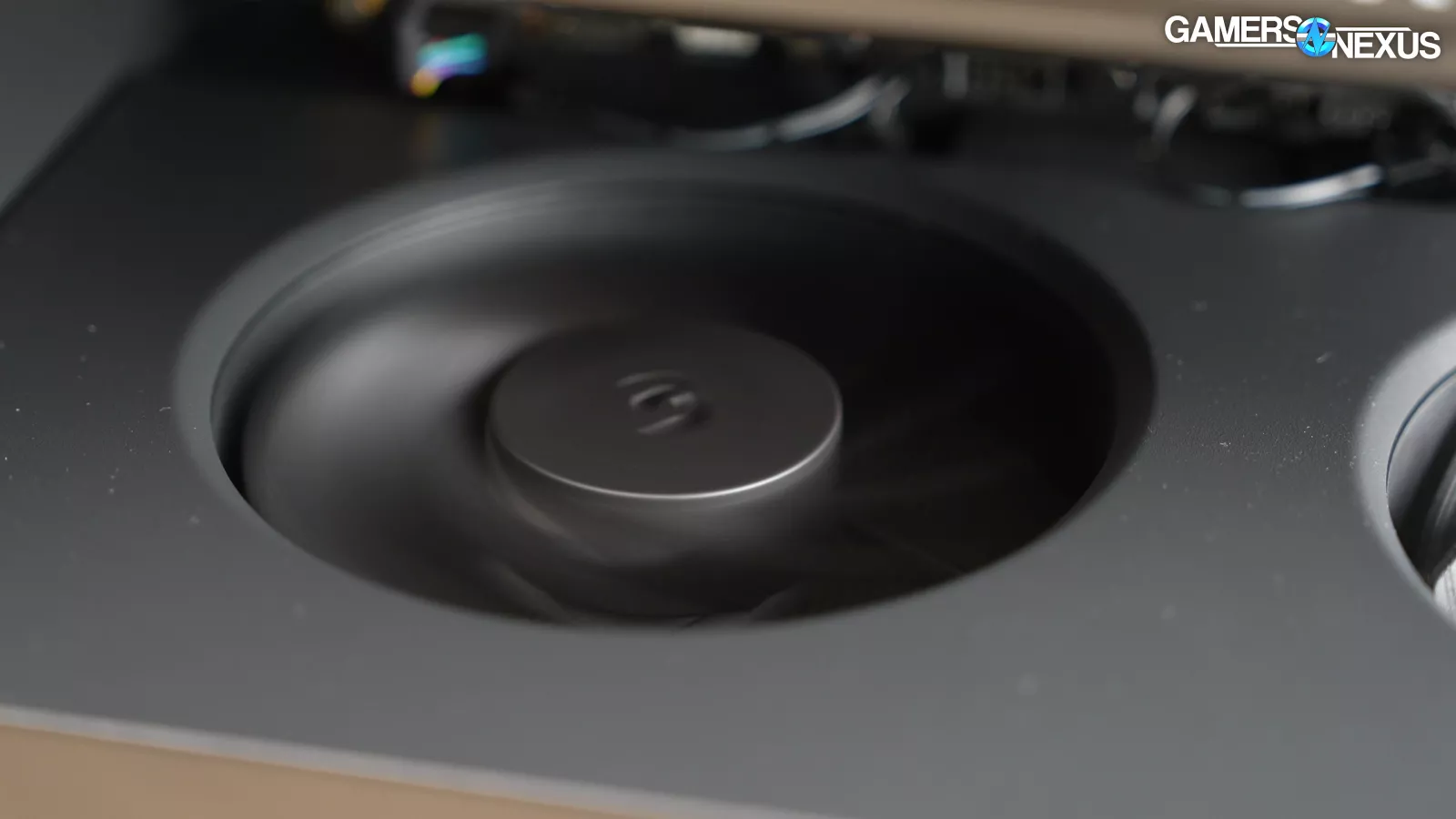
The bottom filter is highly unusual among the cases we've reviewed: it's a single piece of stamped steel mesh with a plastic handle that pulls out from the side of the case. We suspect this was less expensive than a traditional filter, but it's also sturdier and easier to wipe down. On the negative sides, removing the bottom filter requires removing the side panel -- but this is at least better than a pull-from-the-back filter.
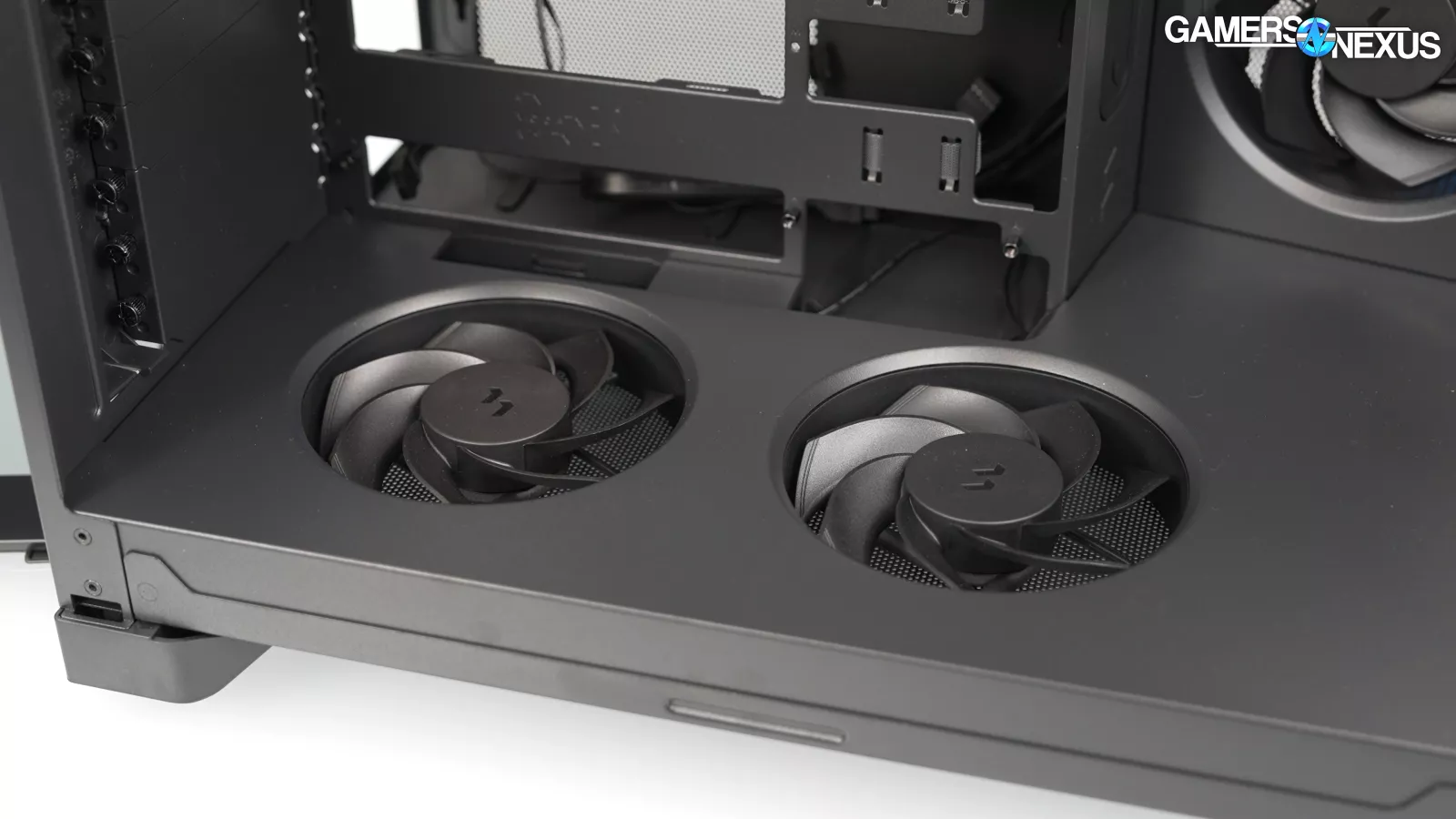
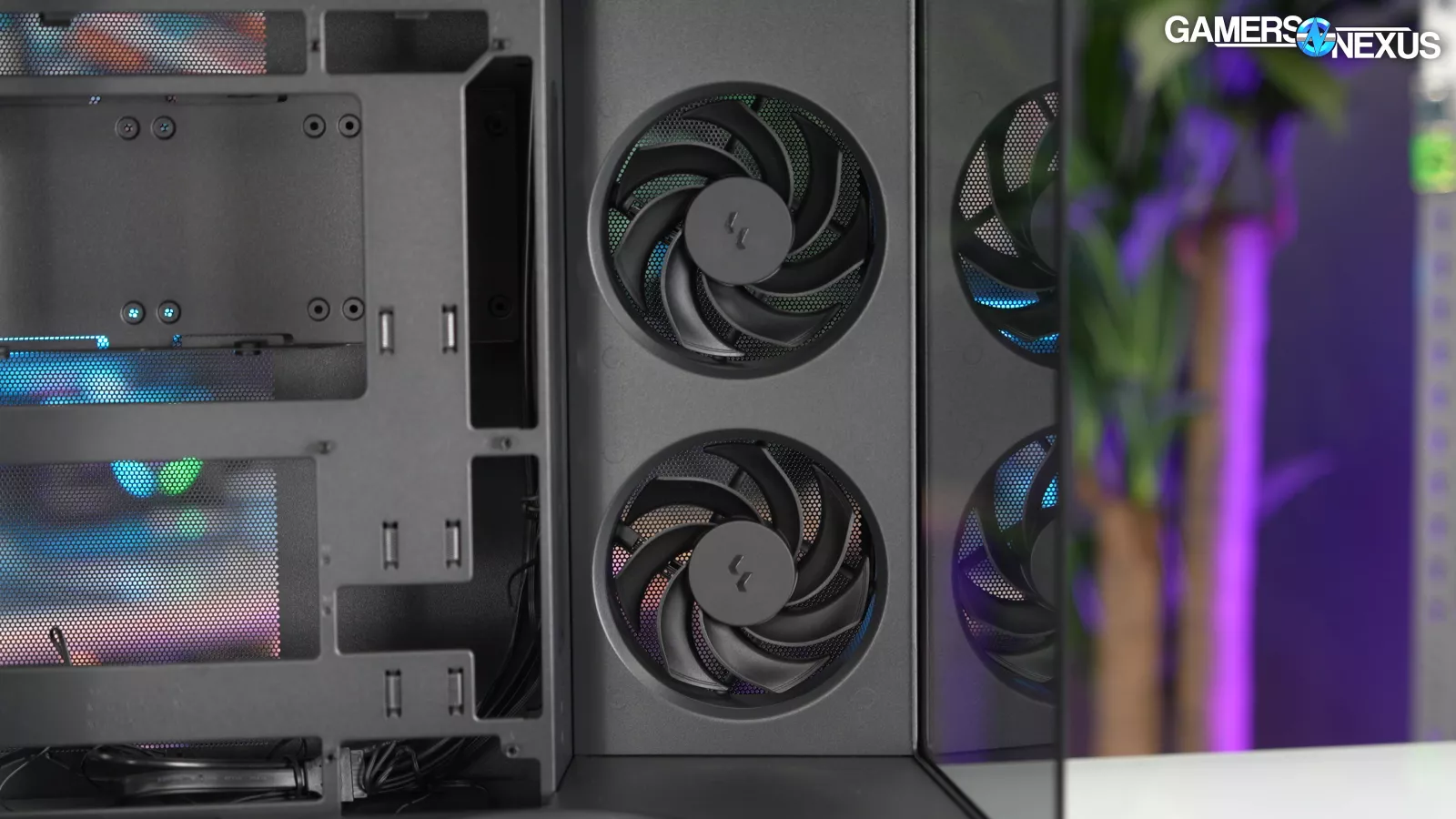
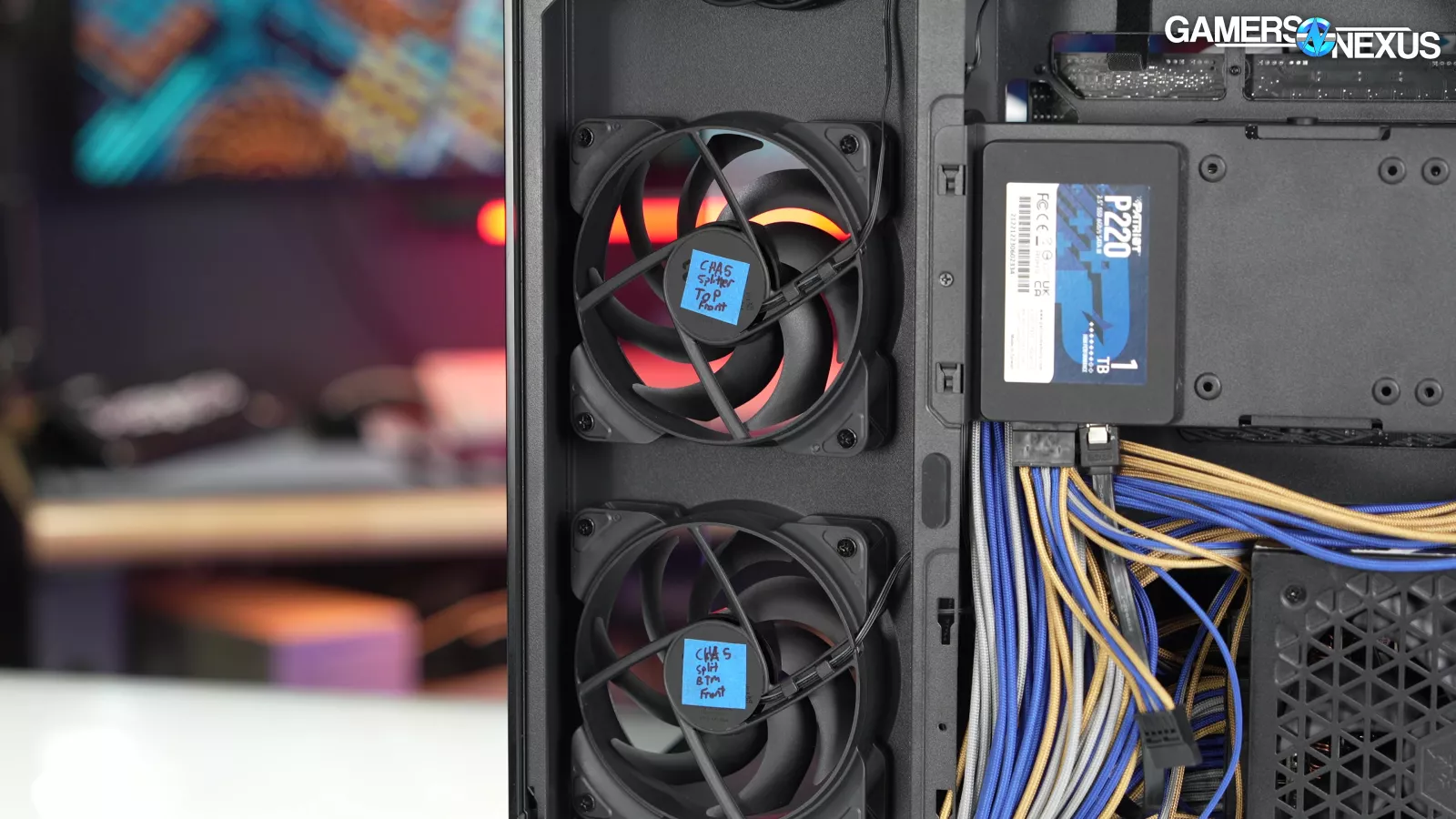
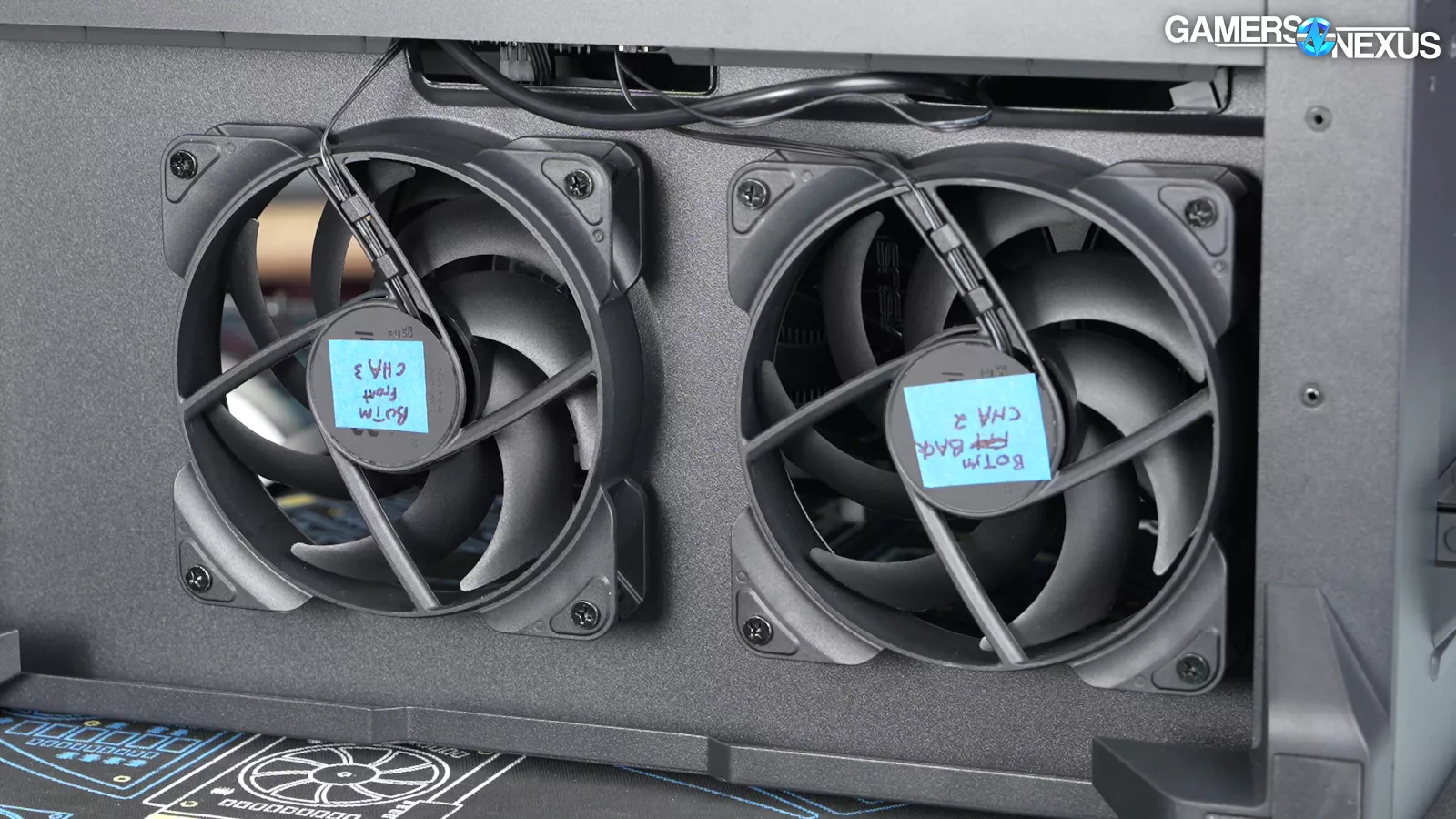
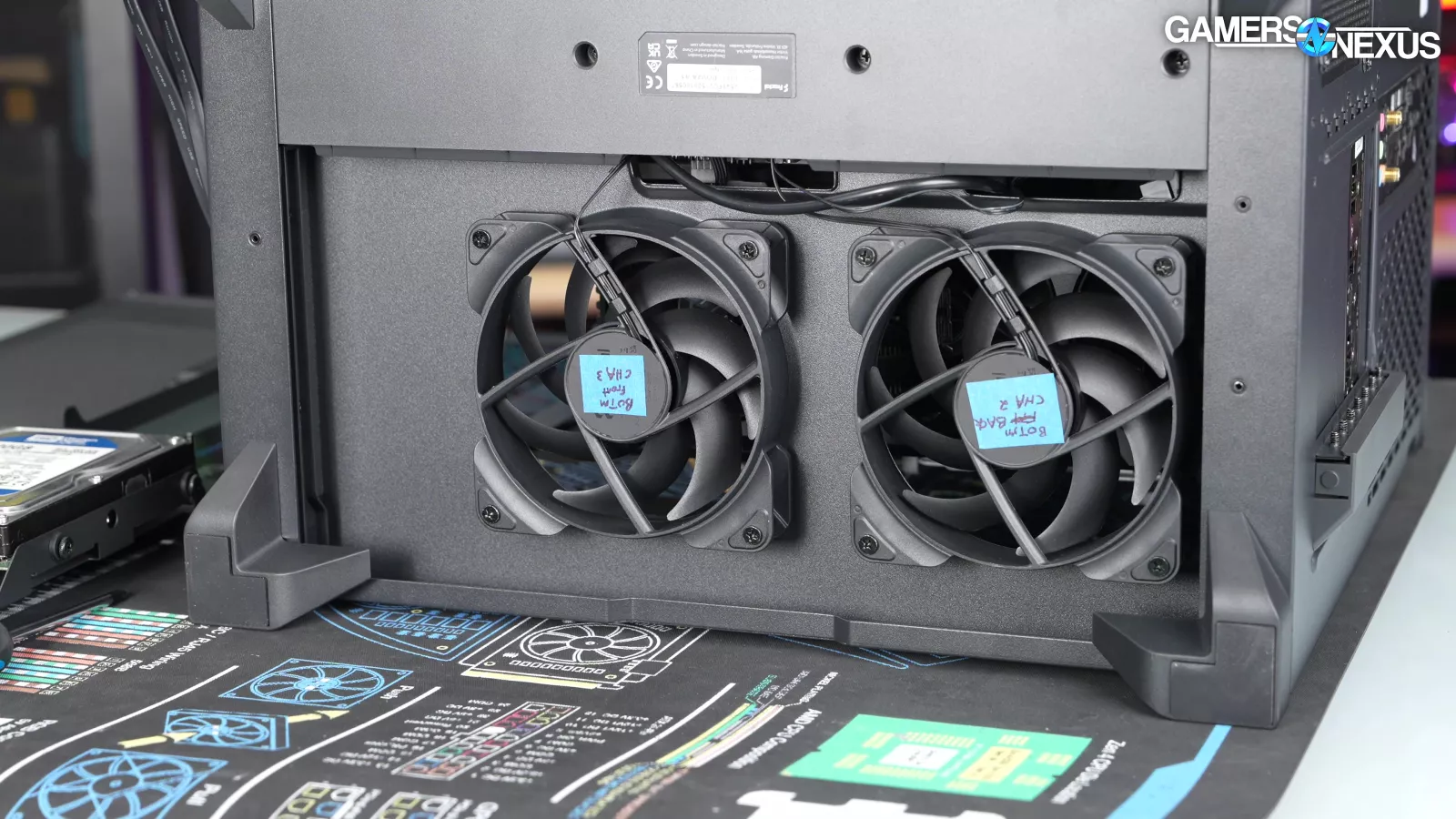
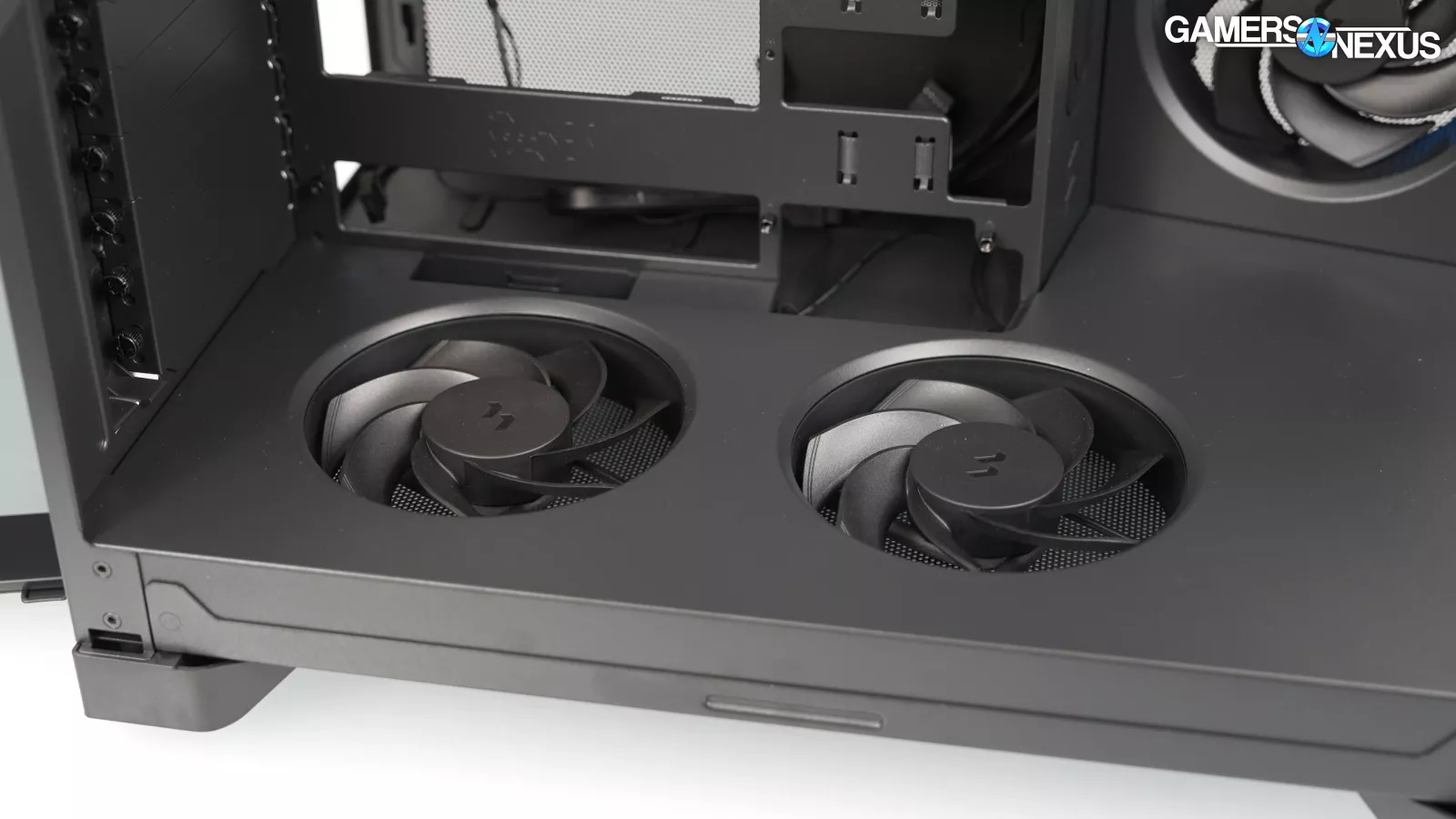
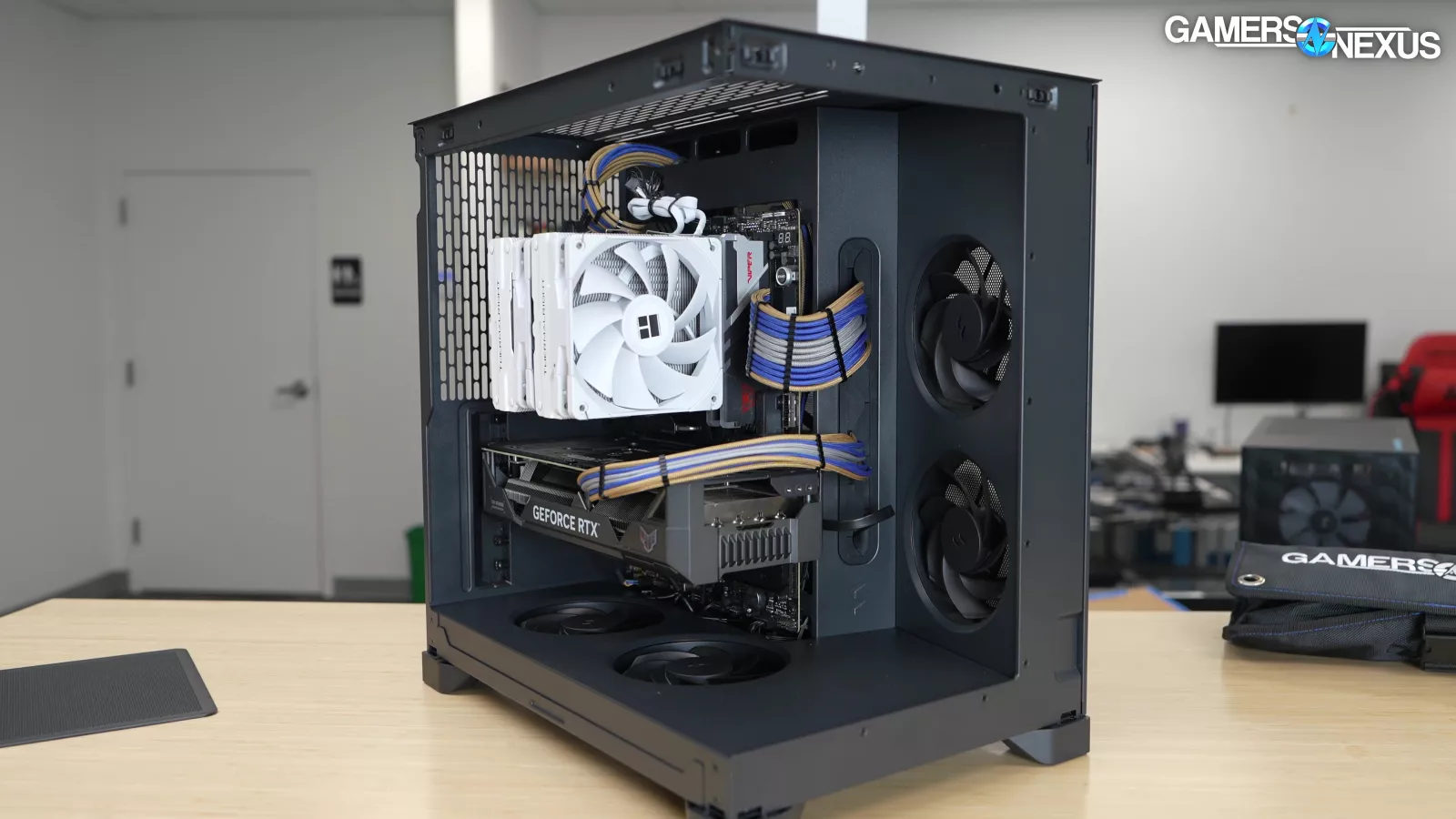
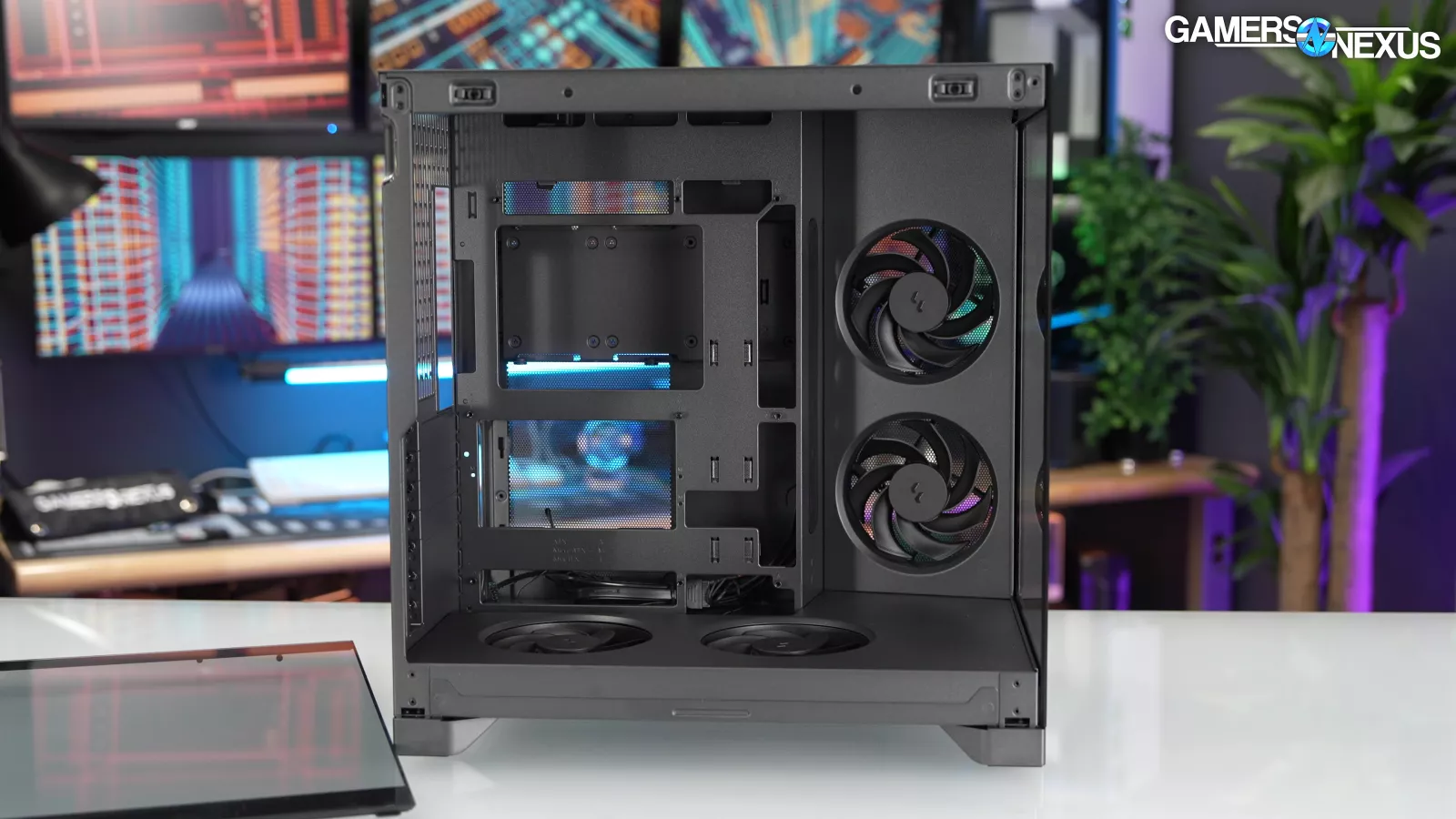
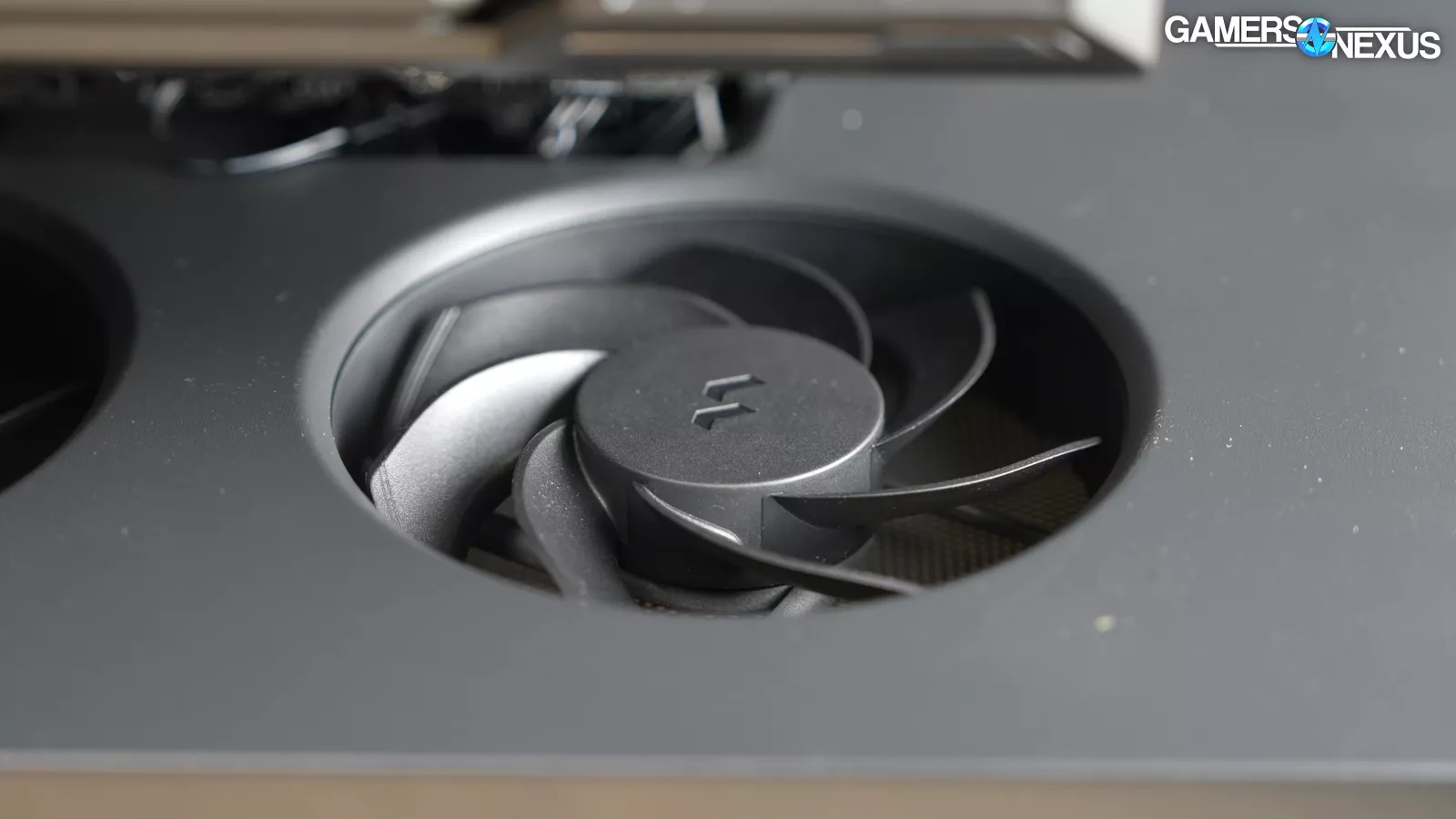
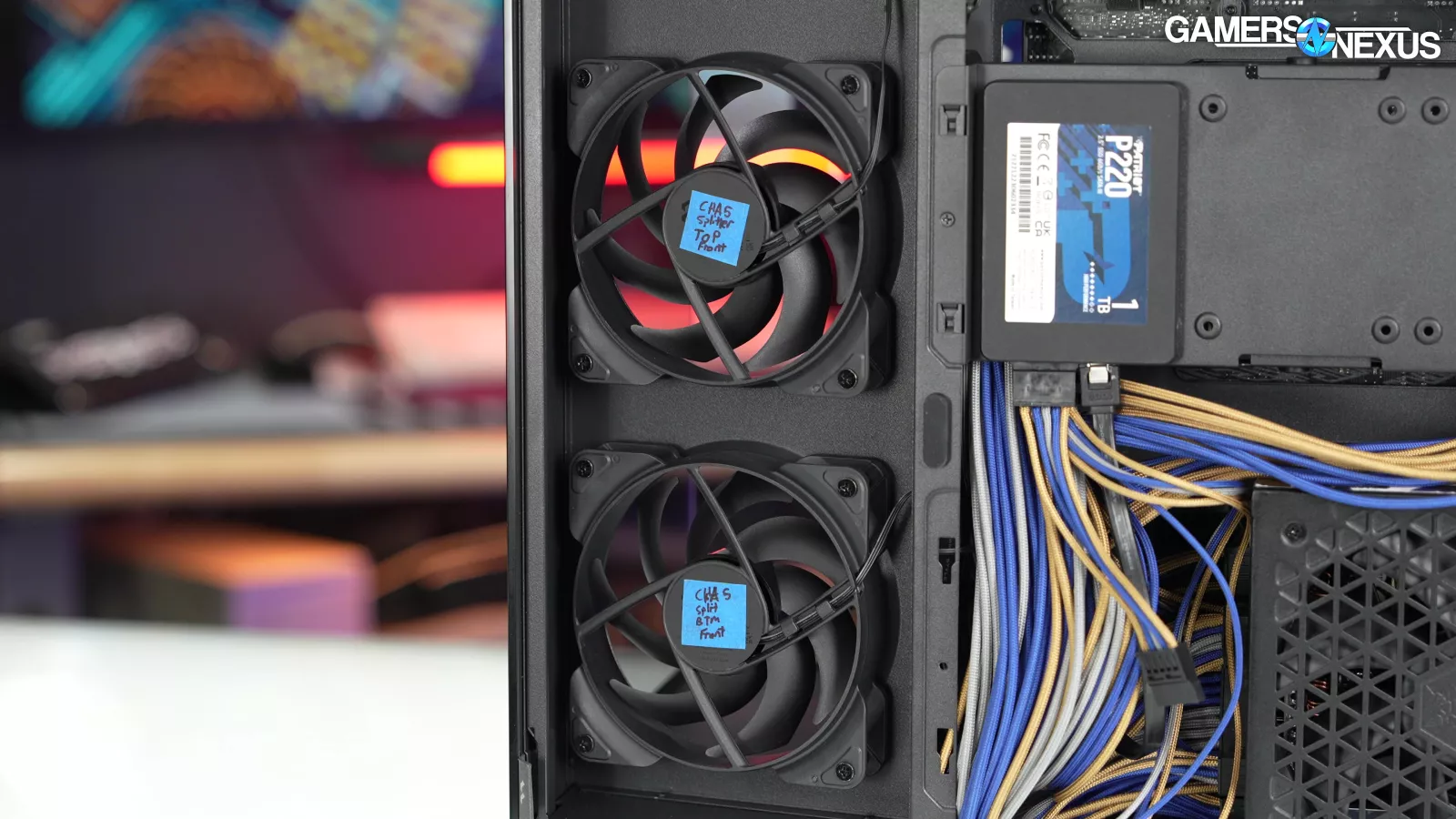
The flat, blank plates that surround the four stock fans are visually distinctive, and overall it was a good choice to make the Vision stand out and the angle adds an interesting Y70-ish cutoff to the corner. The downside is that the side and bottom fan mounts are 120mm-only, and only in the dimensions of Fractal's stock fans, resulting in a highly restrictive build from a fan and liquid cooler standpoint.
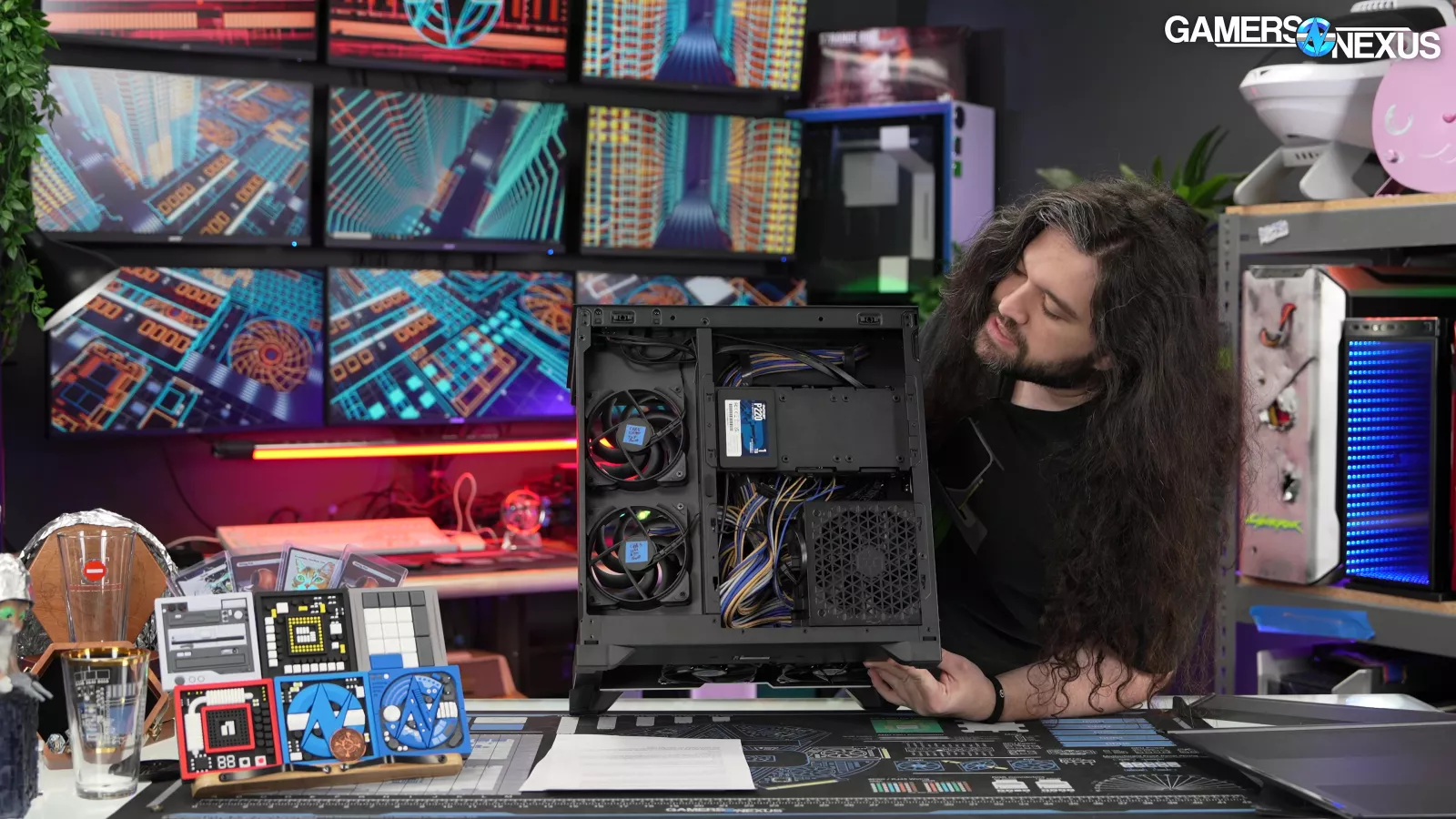
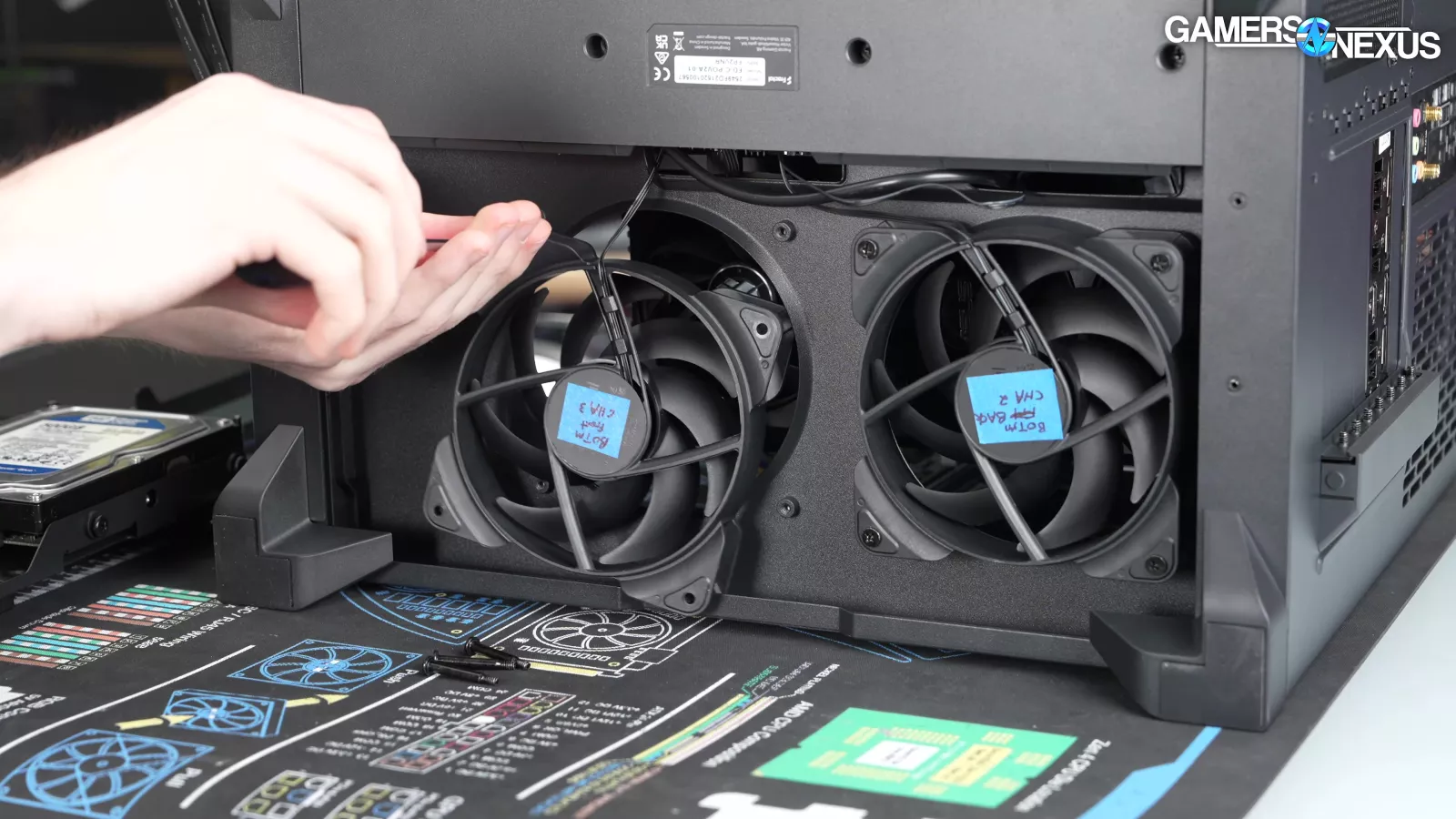
Access to the stock fans is much easier than we expected. Reaching the side fans requires only removing the side panel, and reaching the bottom fans requires removing the bottom filter. All stock fans are attached with radiator-style mounting screws.
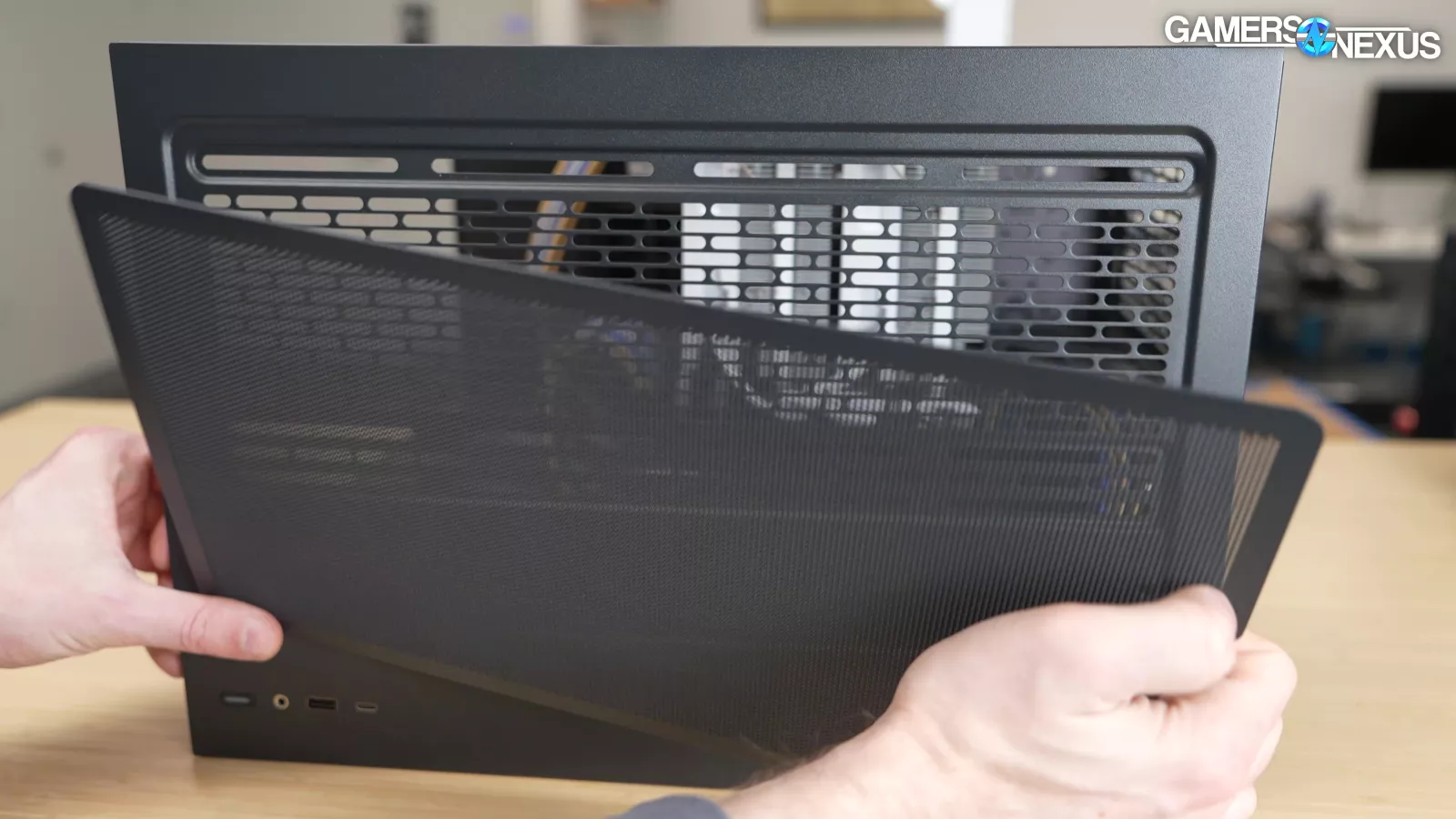
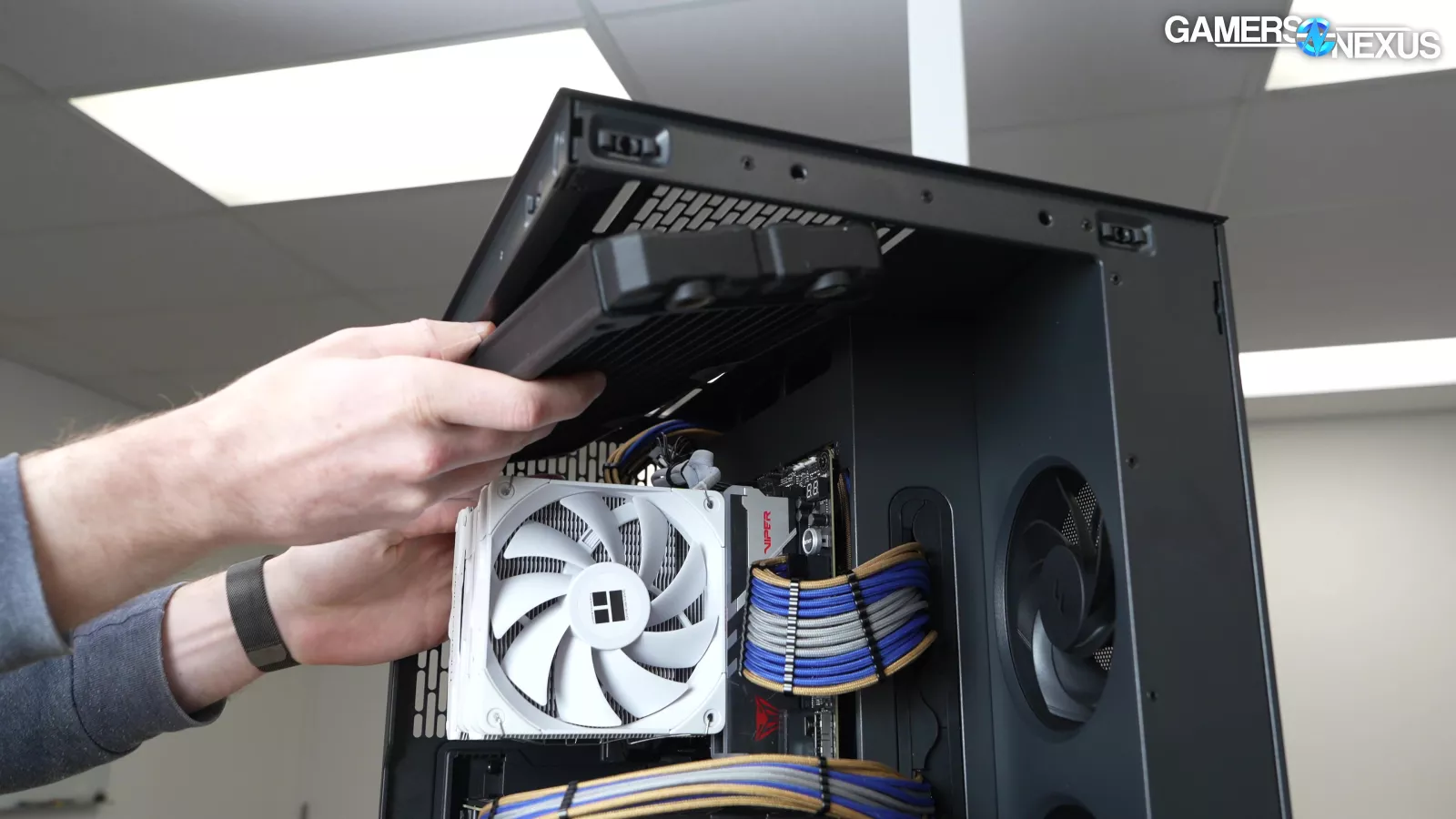
The only real radiator mount in the case is at the top, which can theoretically fit up to 360mm, although it would be an extremely tight squeeze. We strongly recommend limiting radiators to 280mm.
For us, the elephant in the room is that, other than price, this case has nothing to do with the other Pop cases.
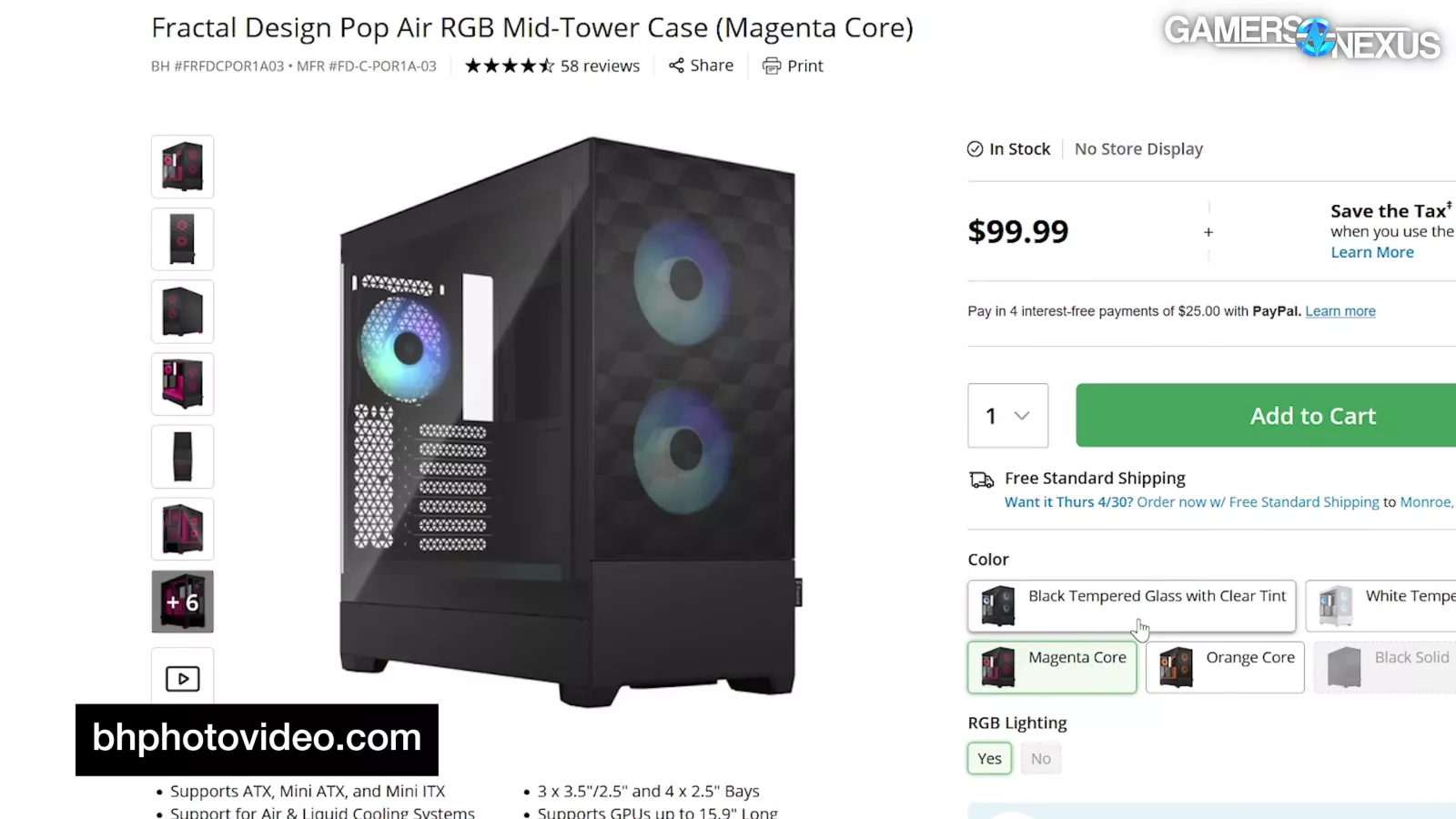
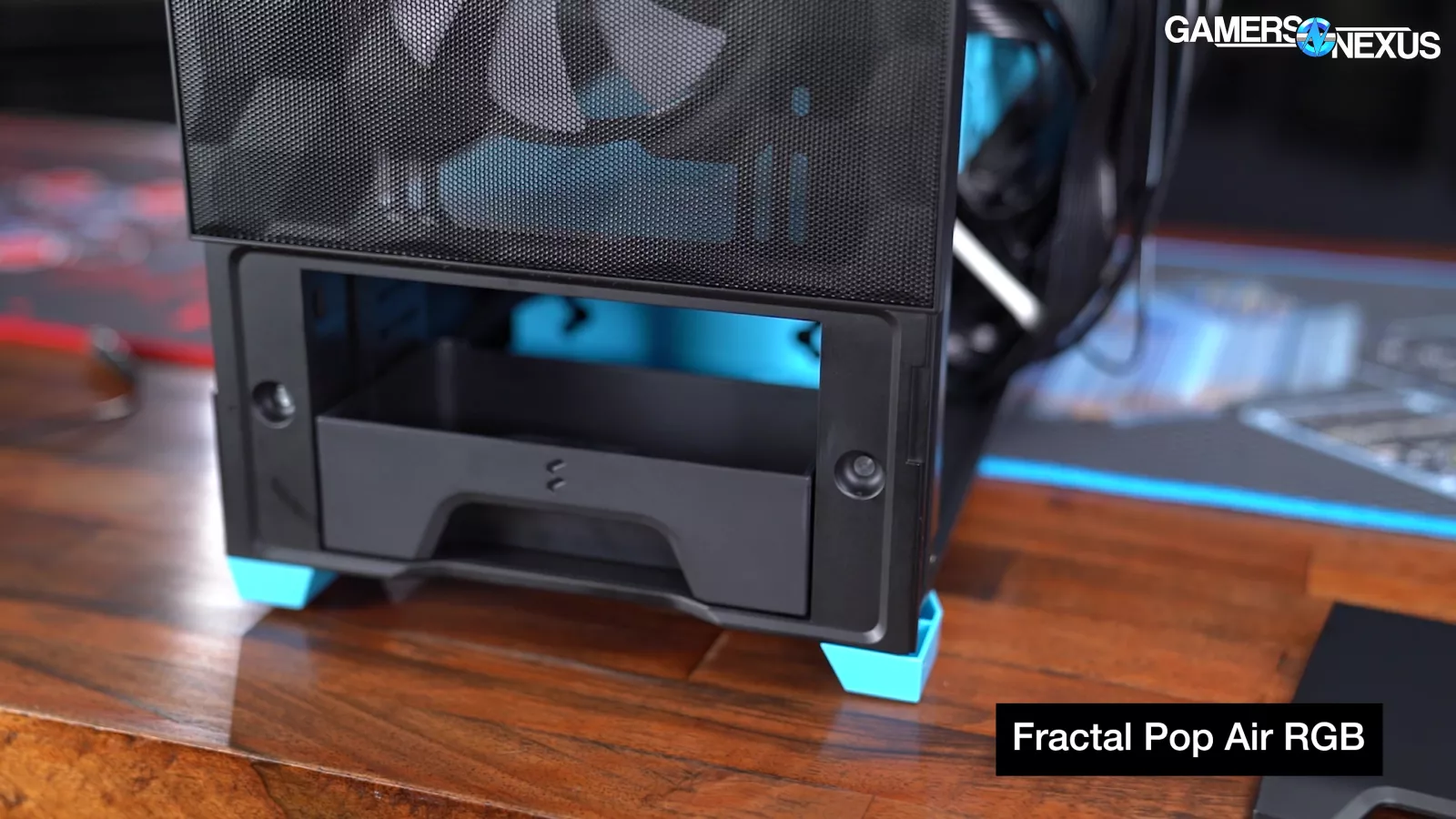
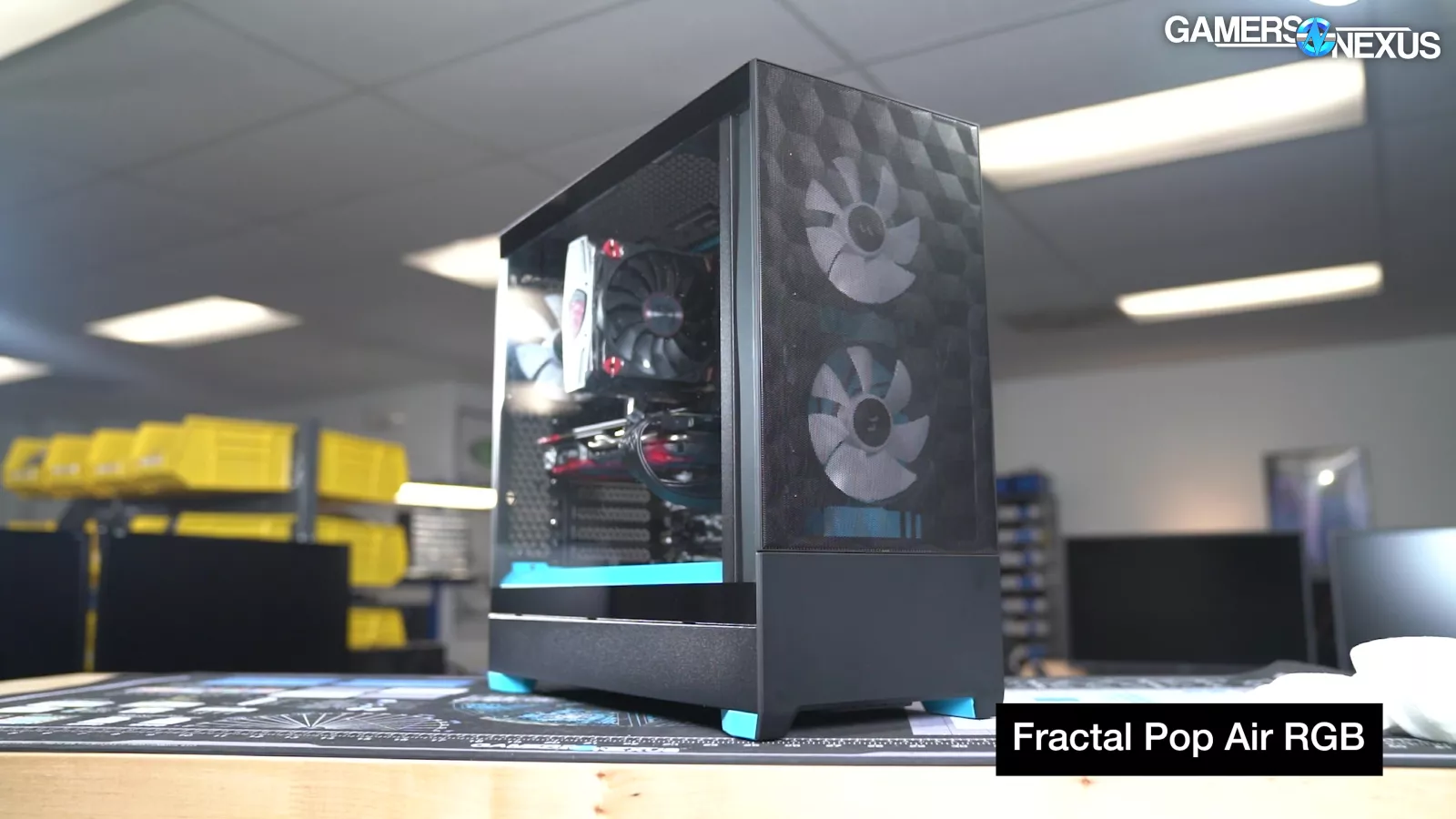
The Pop Air was defined by its brightly colored variants, the inclusion of a 5.25" bay in a modern case, and its mesh front. Only the mesh front made it to the Pop 2 Air, but as it turns out, that's irrelevant.
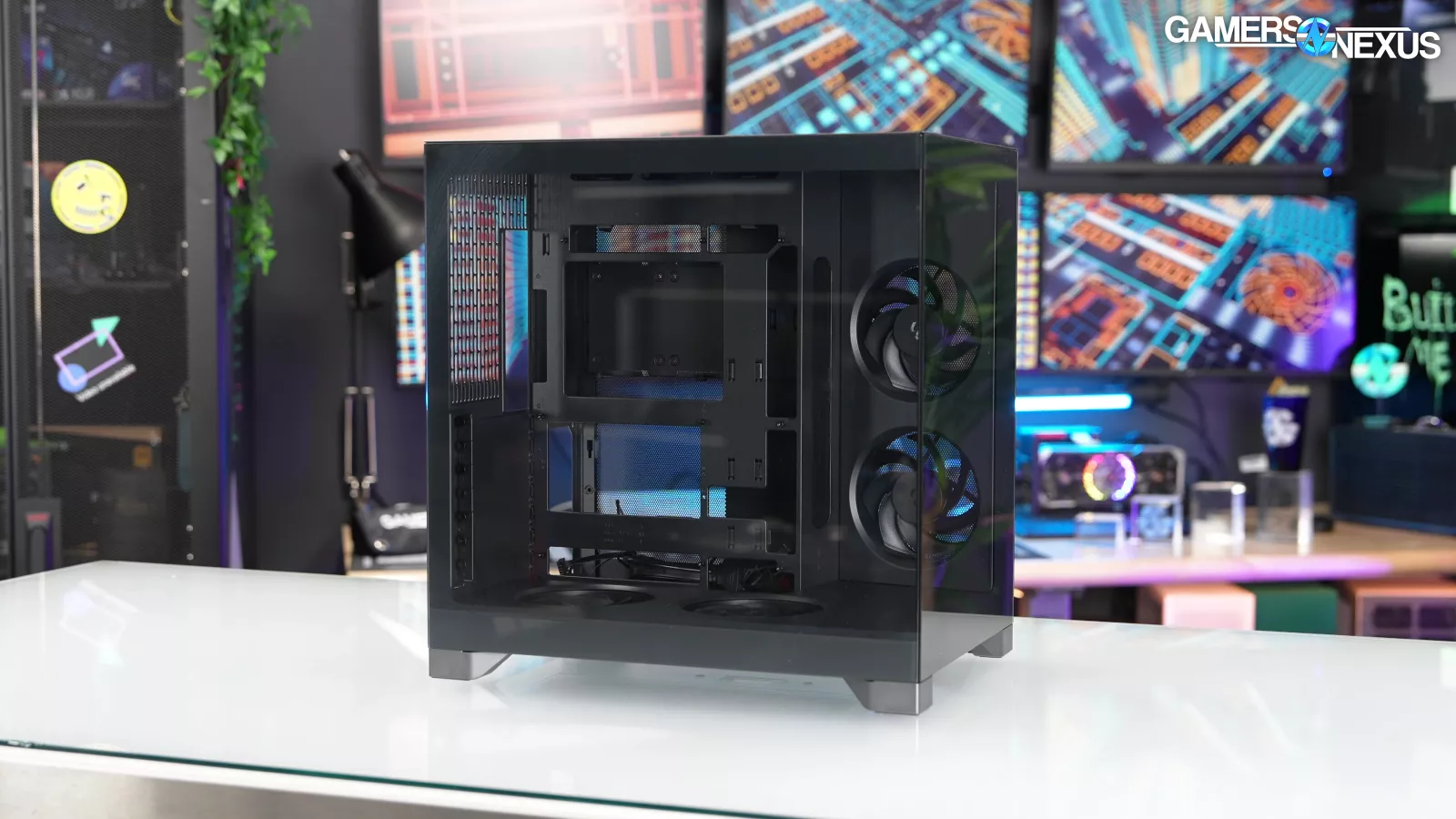
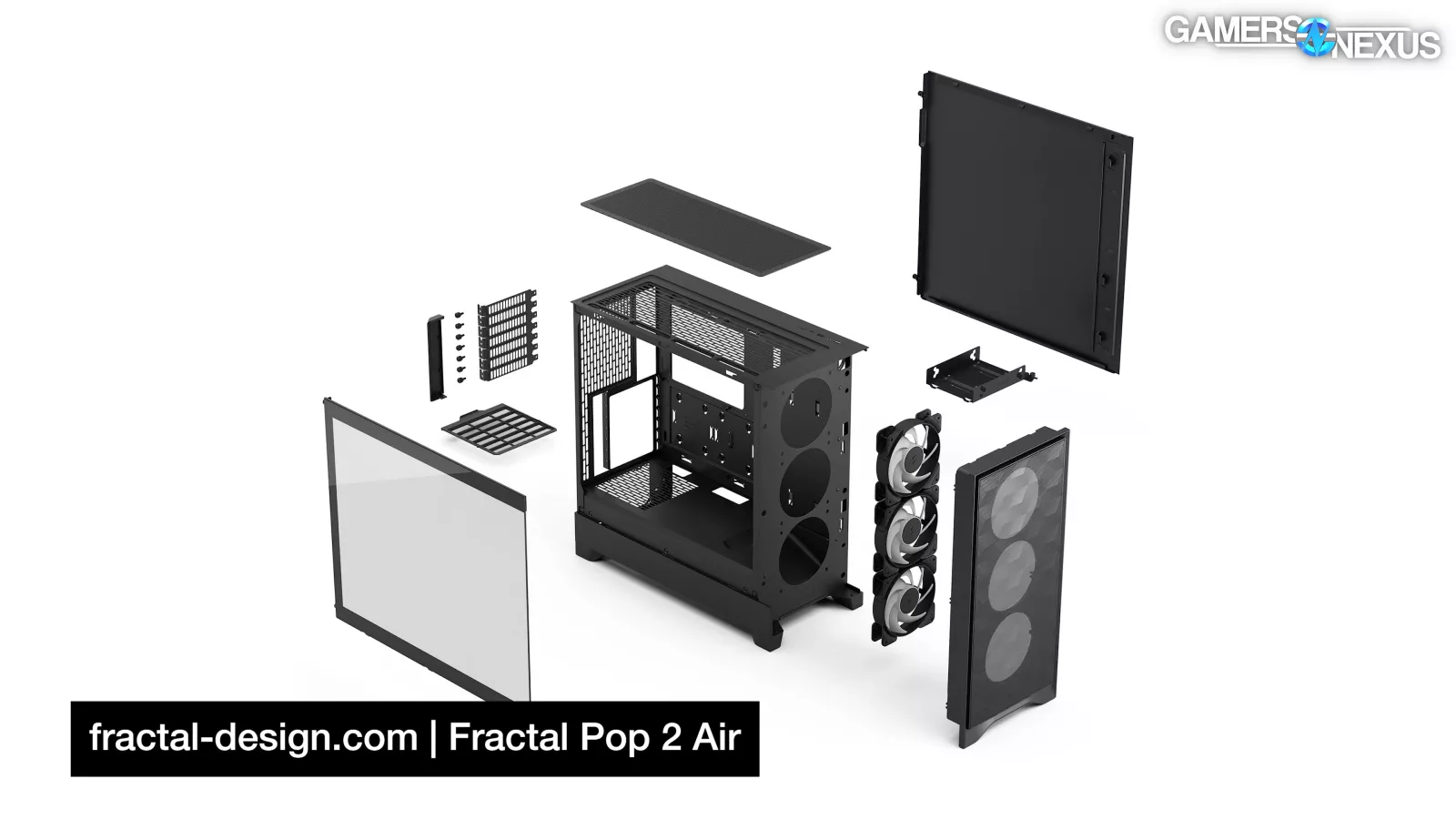
The Pop 2 Vision is a different size, layout, and (from what we can see) uses different tooling from the Pop 2 Air. Our best guess is that Fractal just didn't want to launch and brand-build another case family.
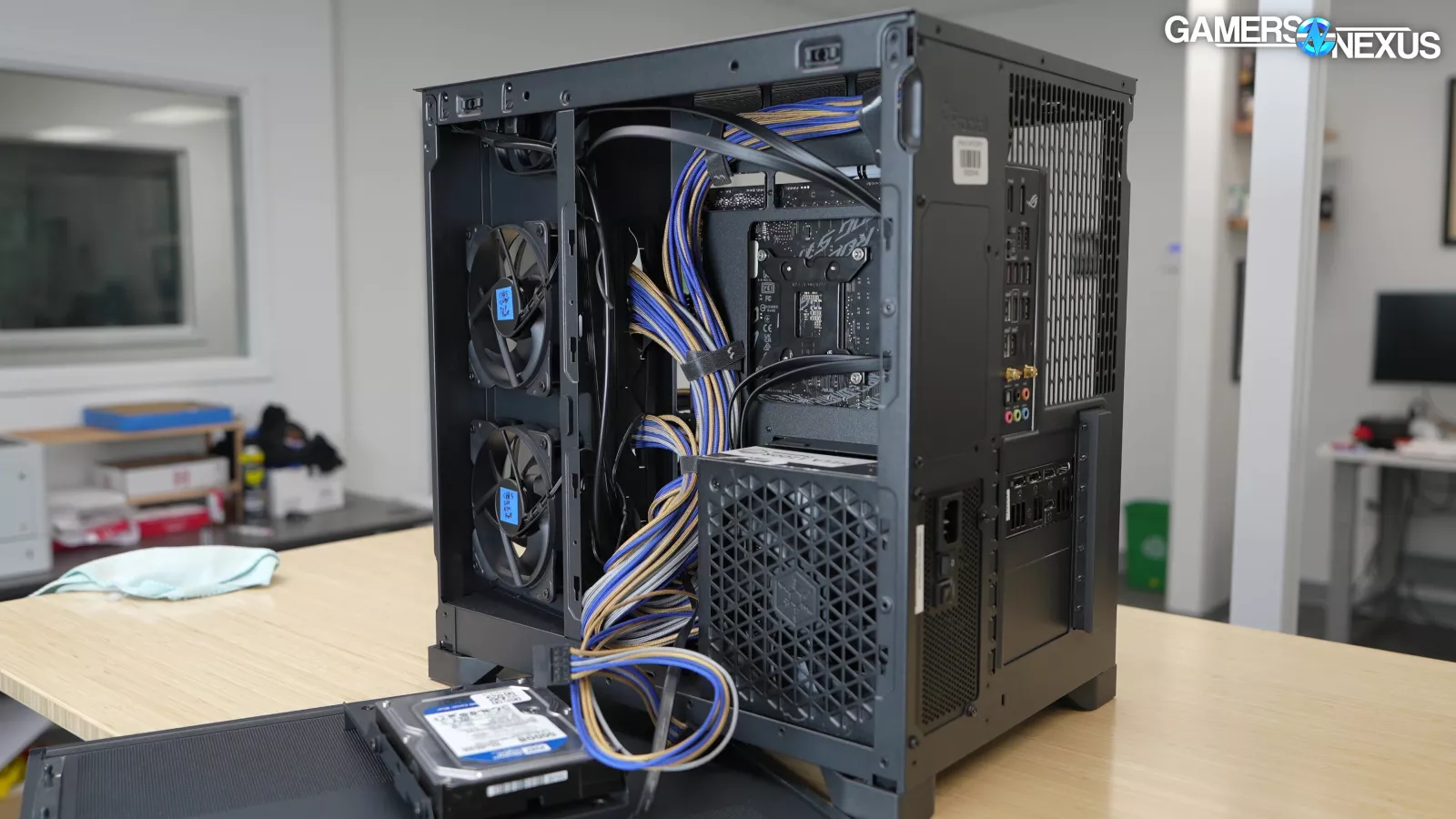
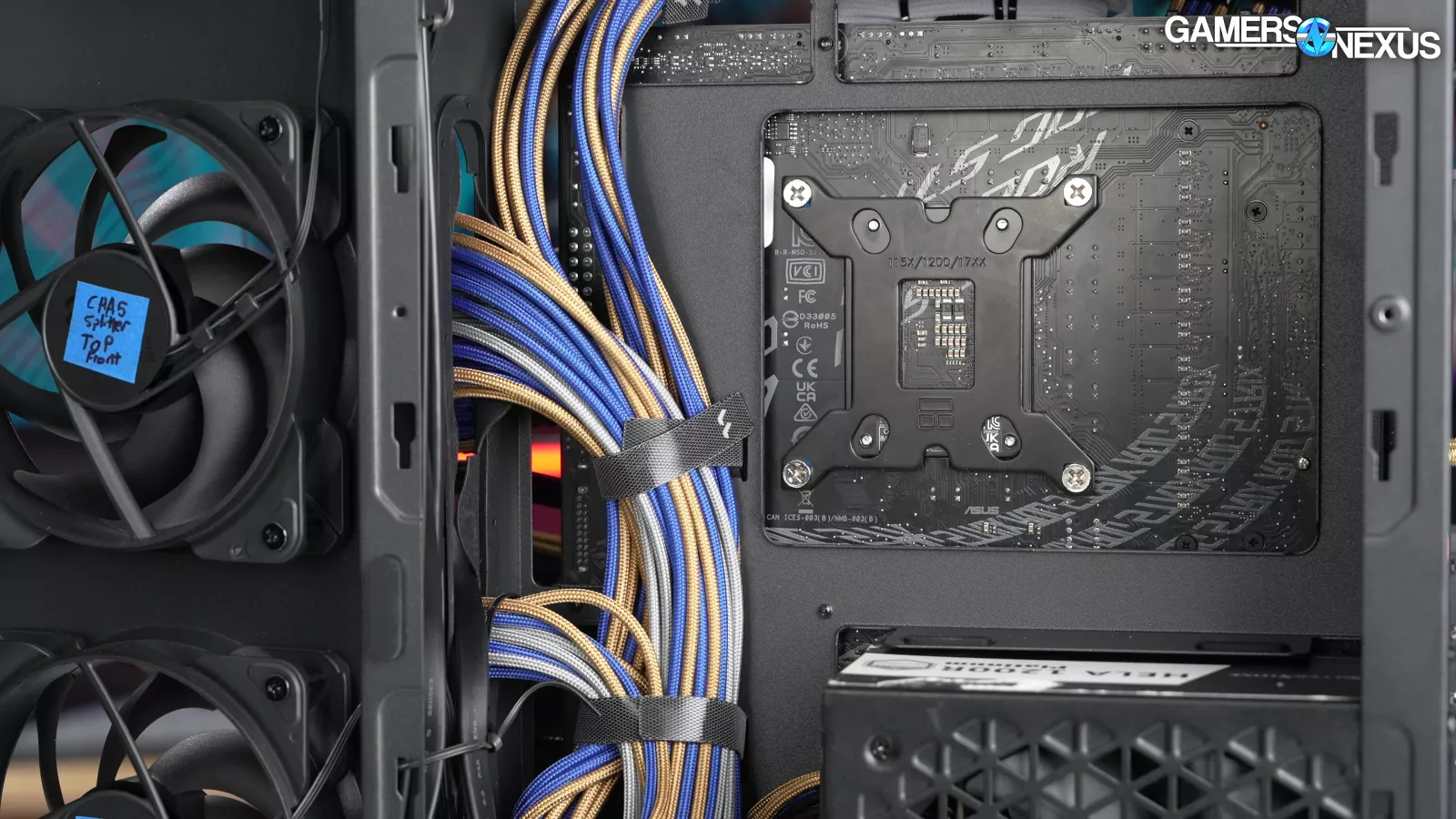
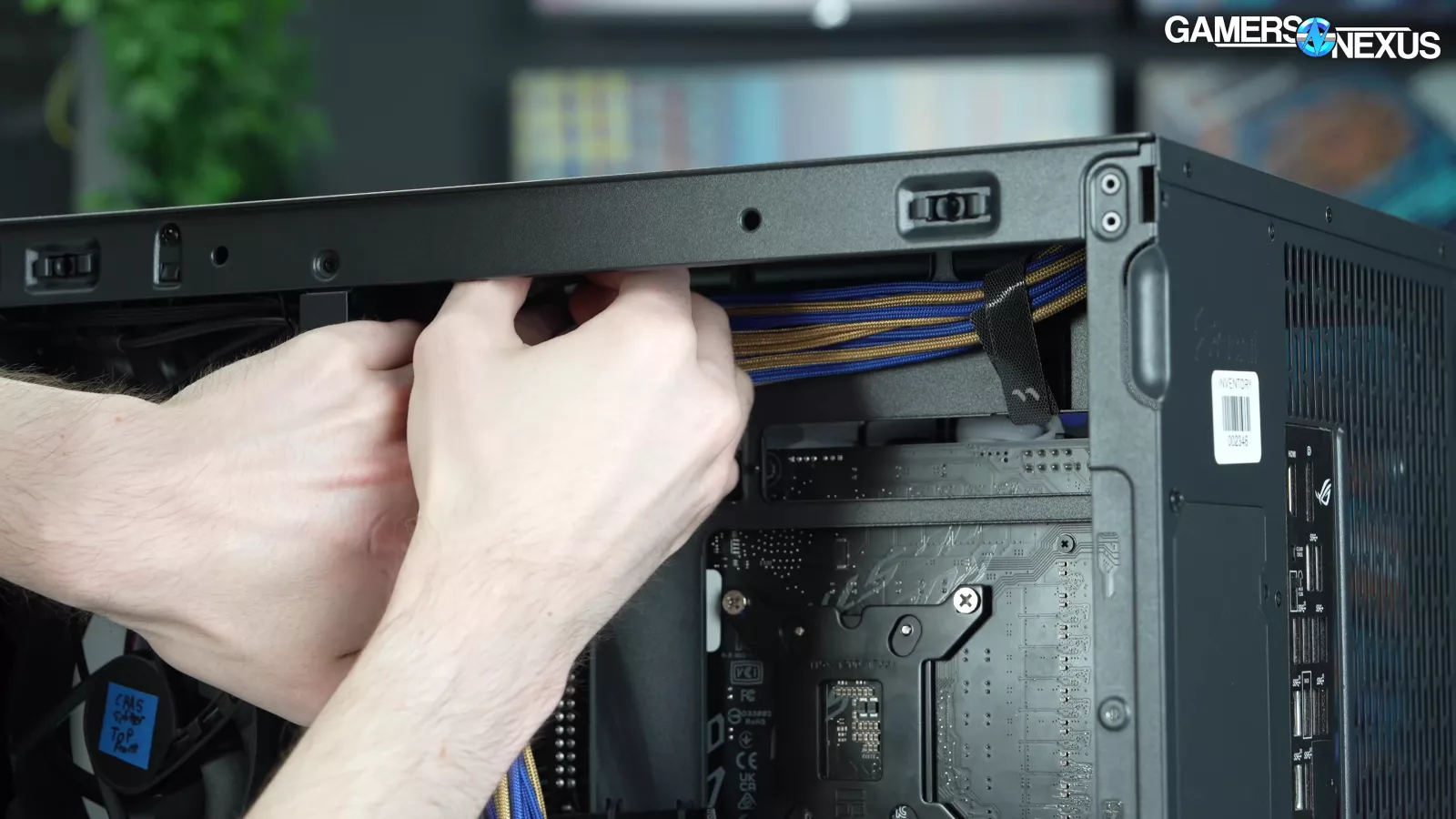
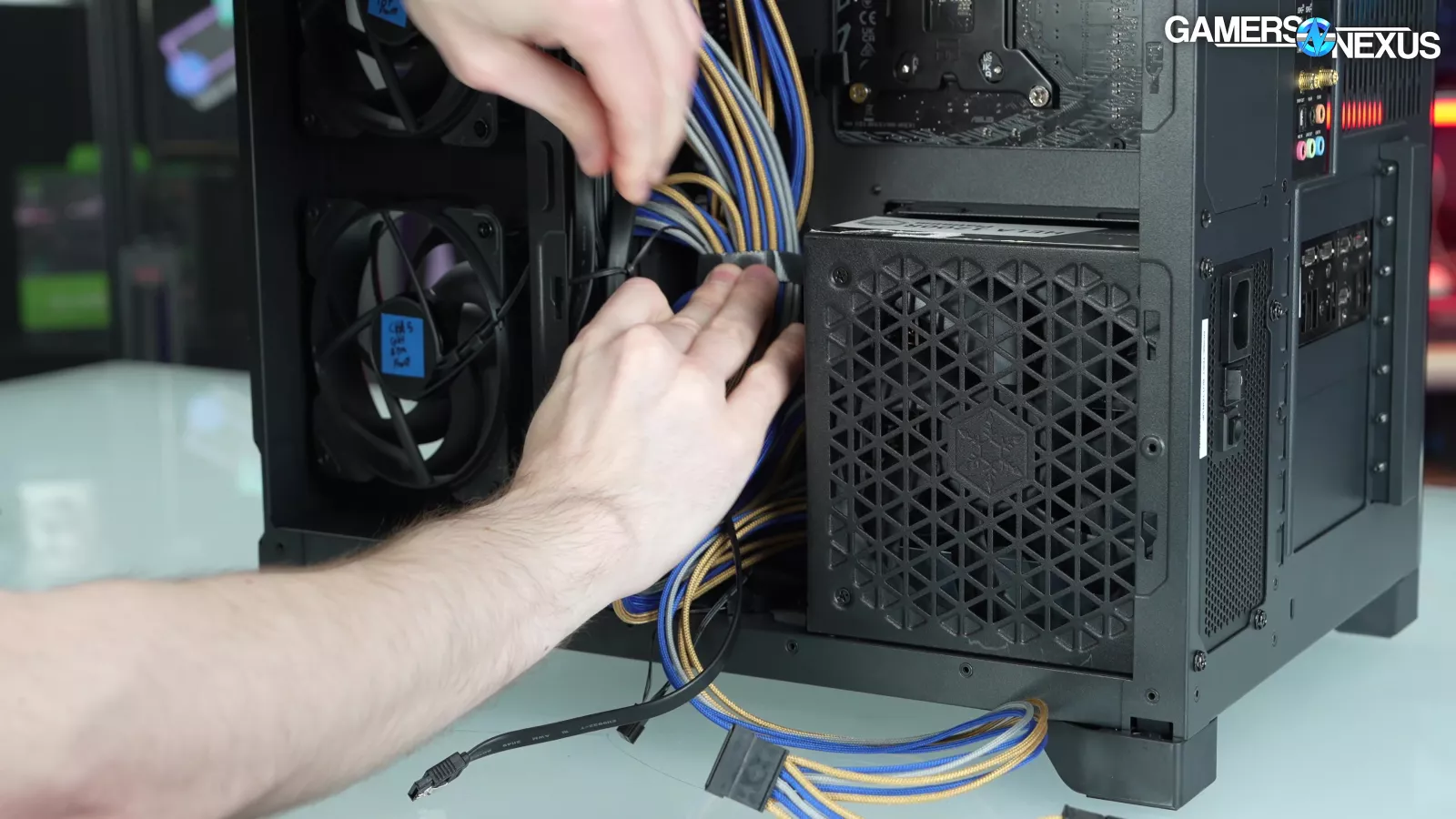
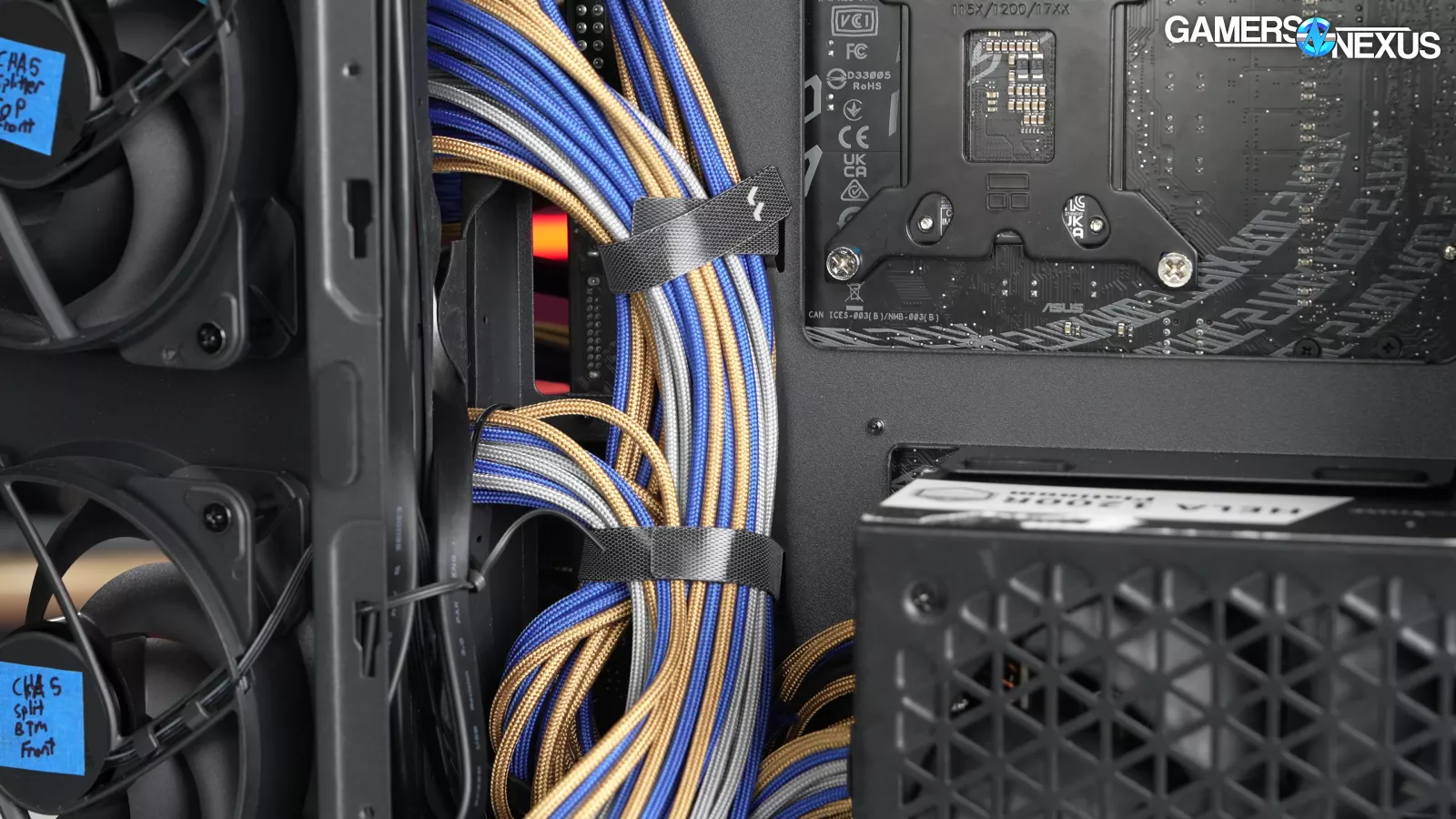
A hallmark of dual-chamber cases is that there's a huge amount of space for routing and storing power cables, and the Vision is no exception. There are five Velcro straps preinstalled in the case in convenient locations, making it easy to bundle everything together.
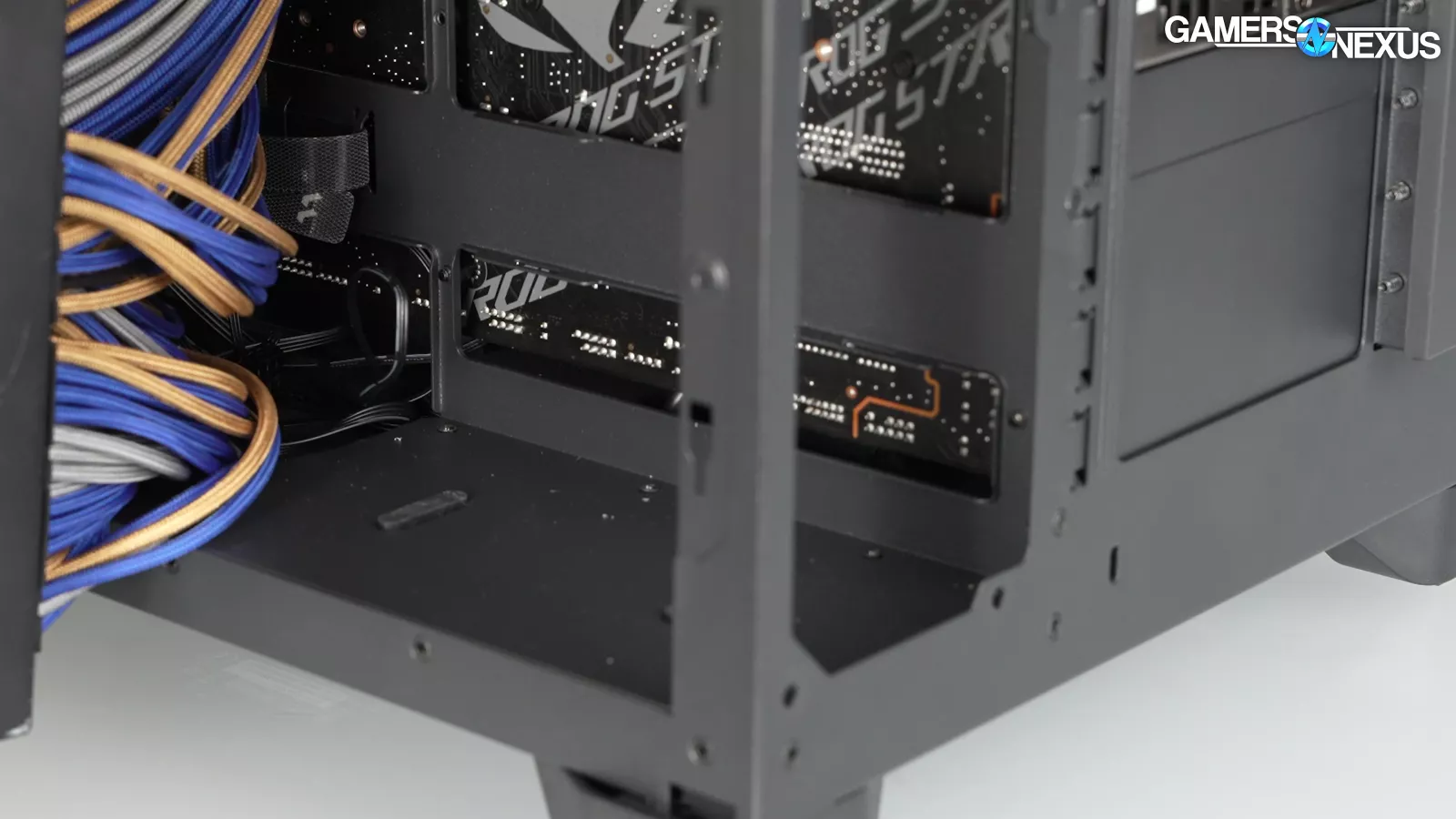
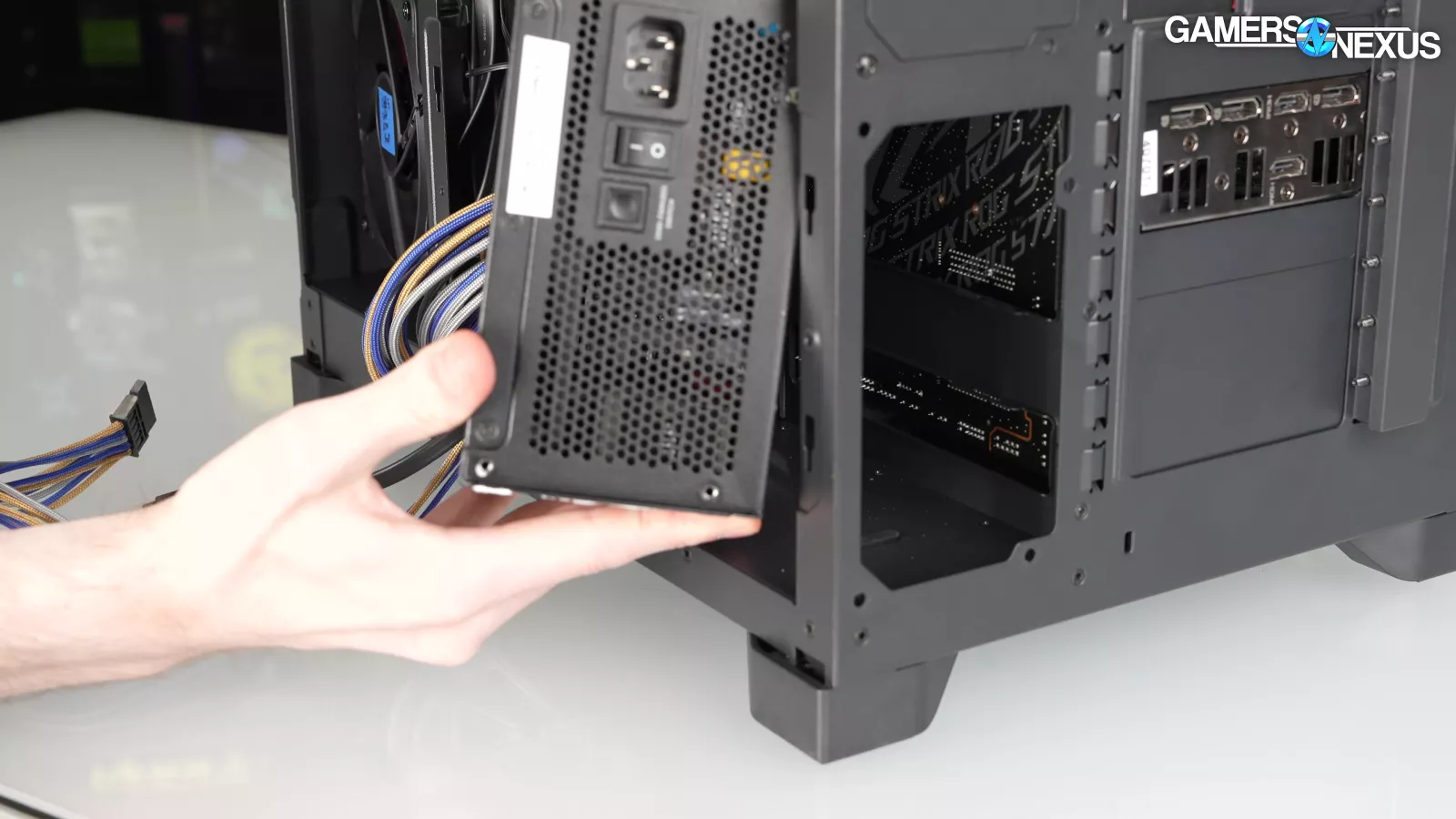
Unfortunately, the main cutout for routing cables to the bottom edge of the motherboard is really hard to reach with a PSU installed, especially if it's a large PSU.
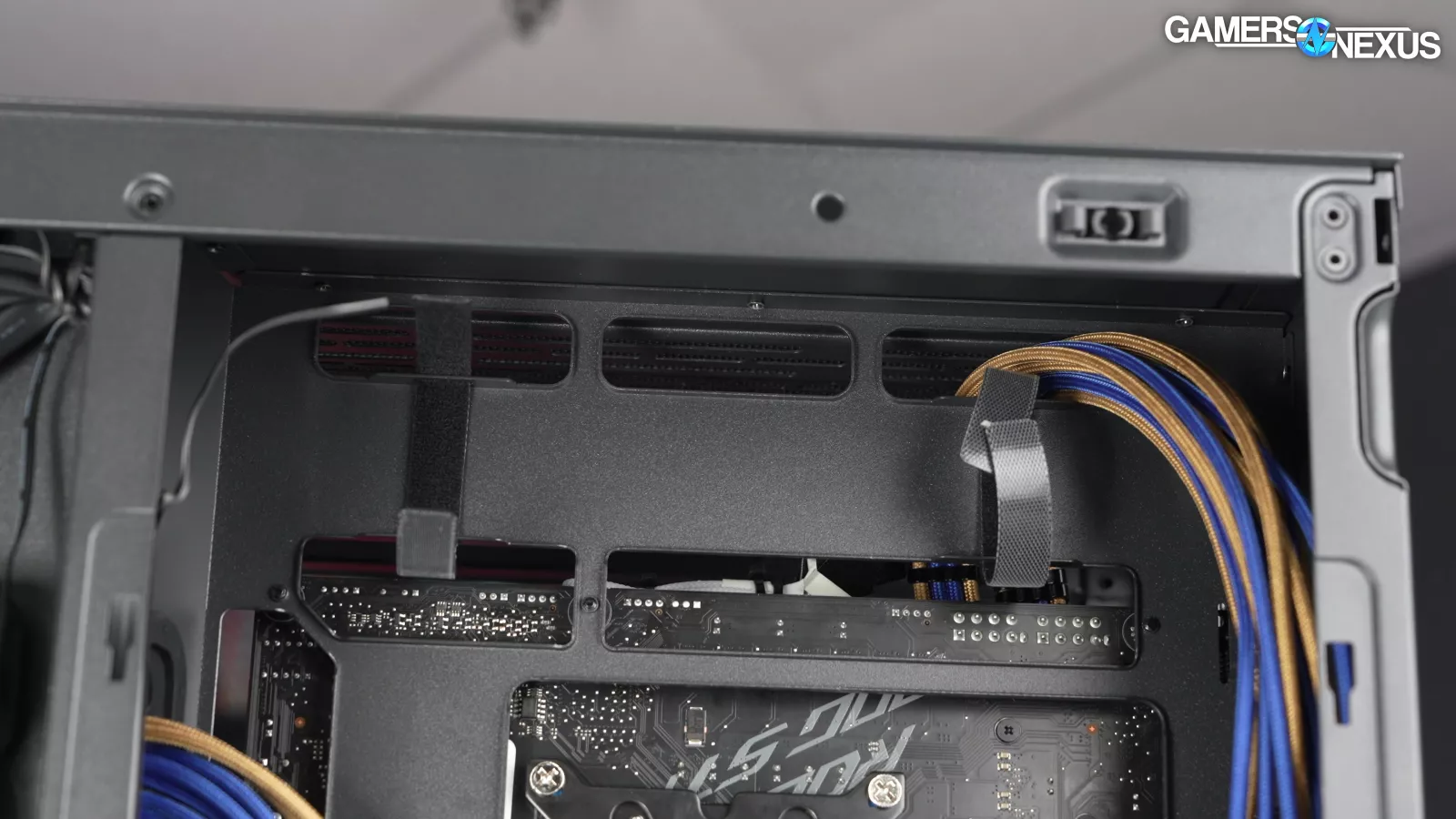
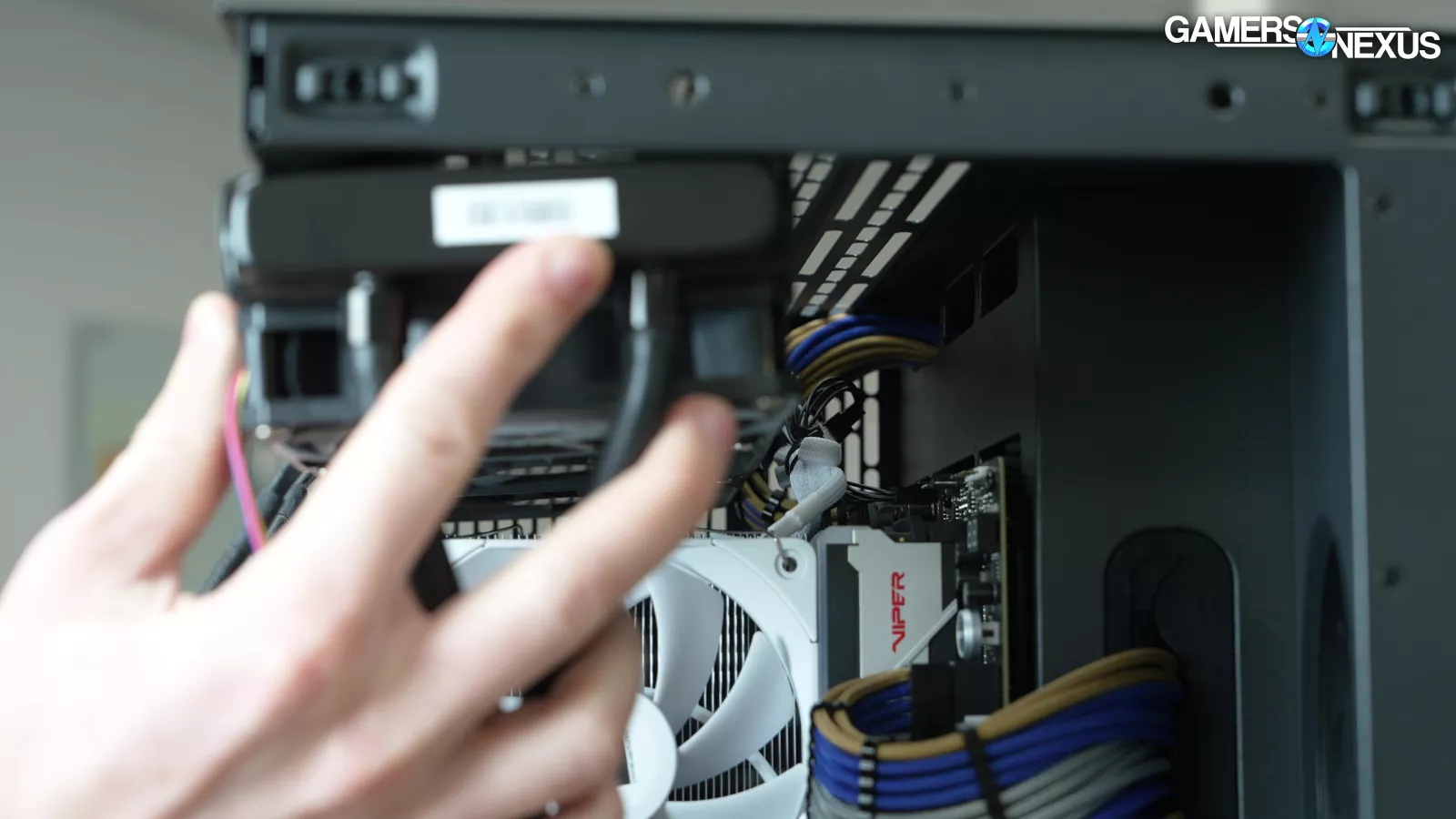
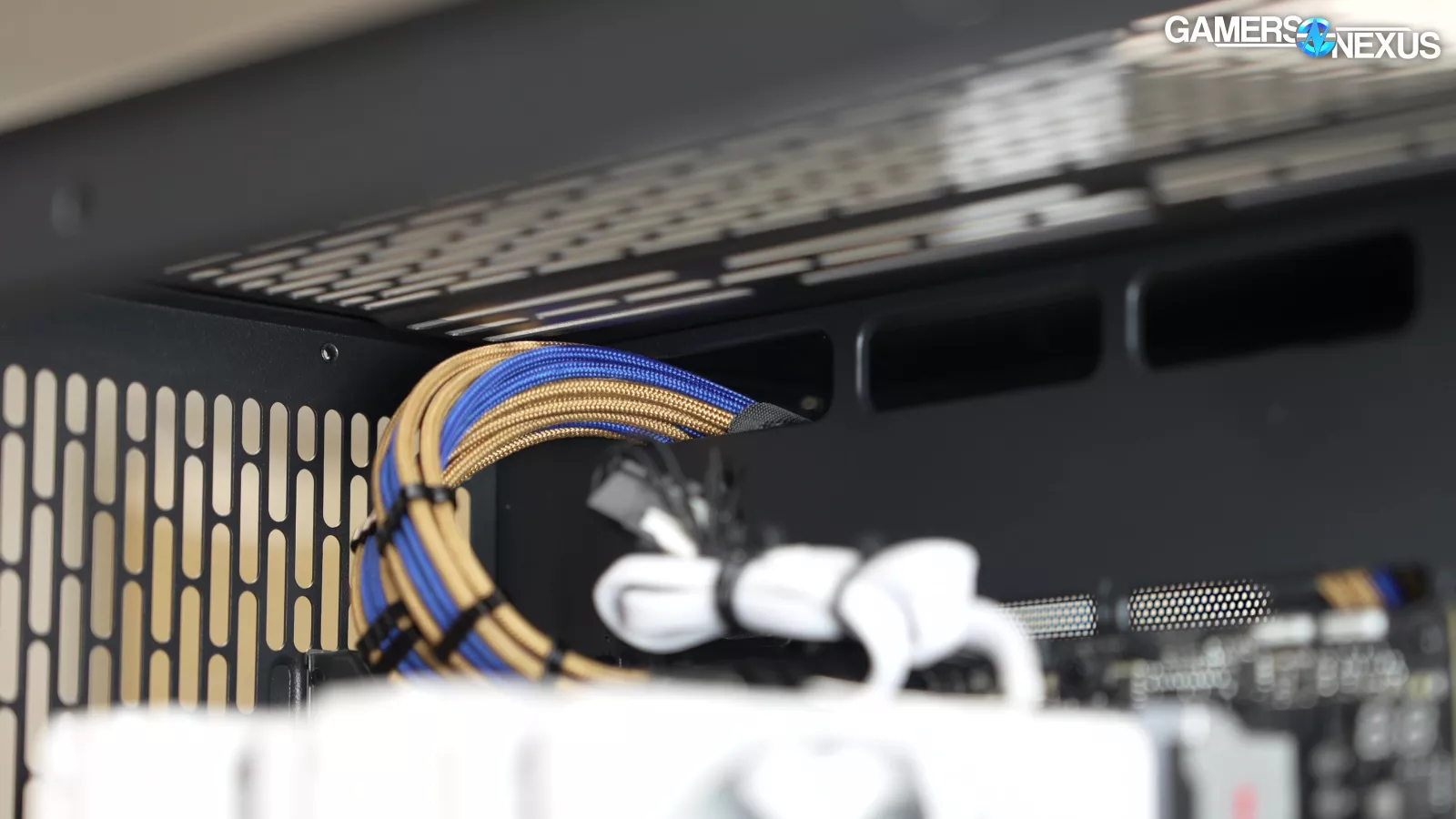
The CPU power cutouts for normal (non back-connect) motherboards are high up towards the roof of the case, which puts them in conflict with any top-mounted fans or radiators. This is one of the weakest aspects of the case, especially since the top mount is the only good location for radiators. We think Fractal tucked the cutouts away to maintain the flat-and-featureless aesthetic, but we'd rather be able to actually reach them.
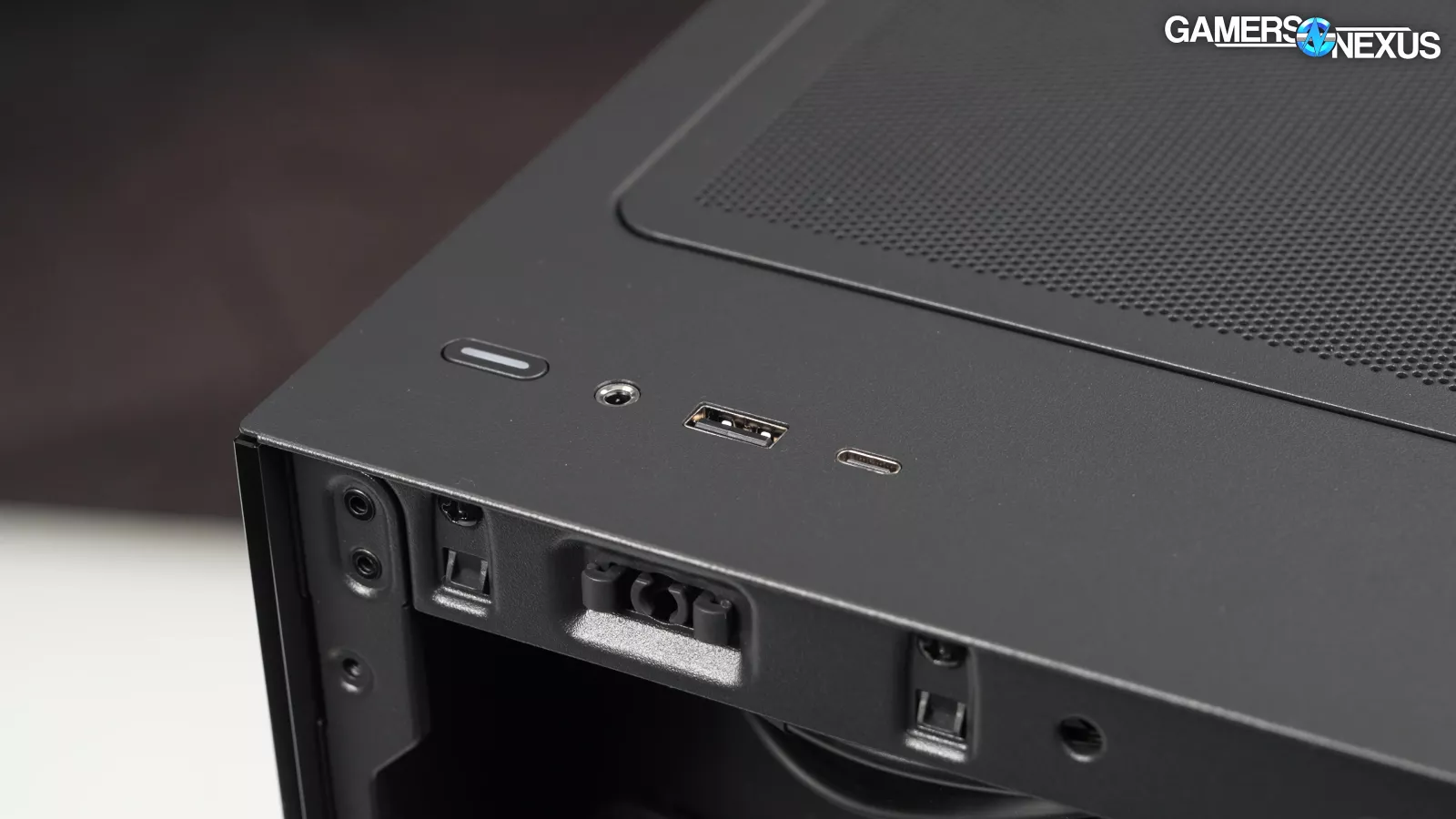
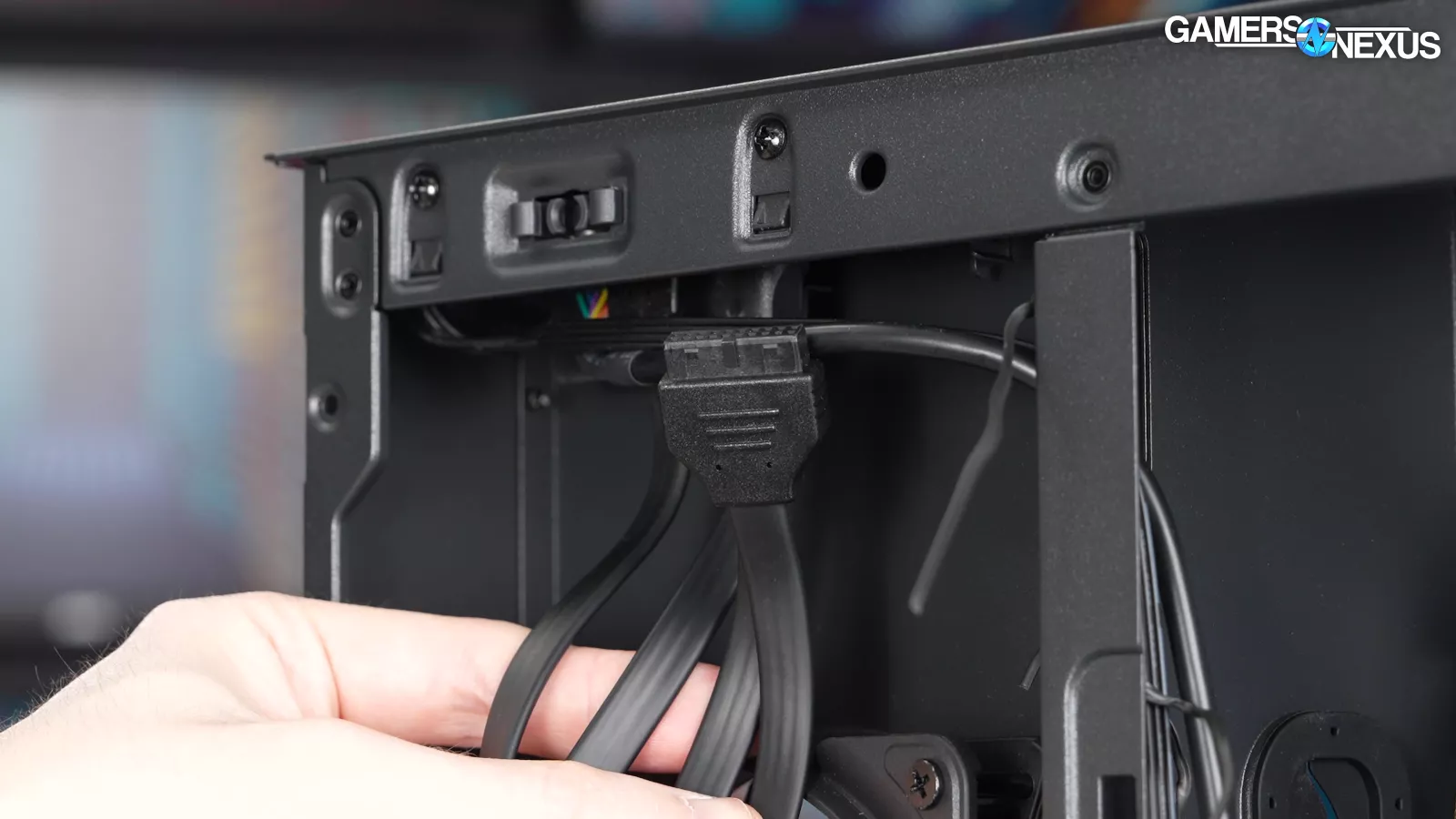
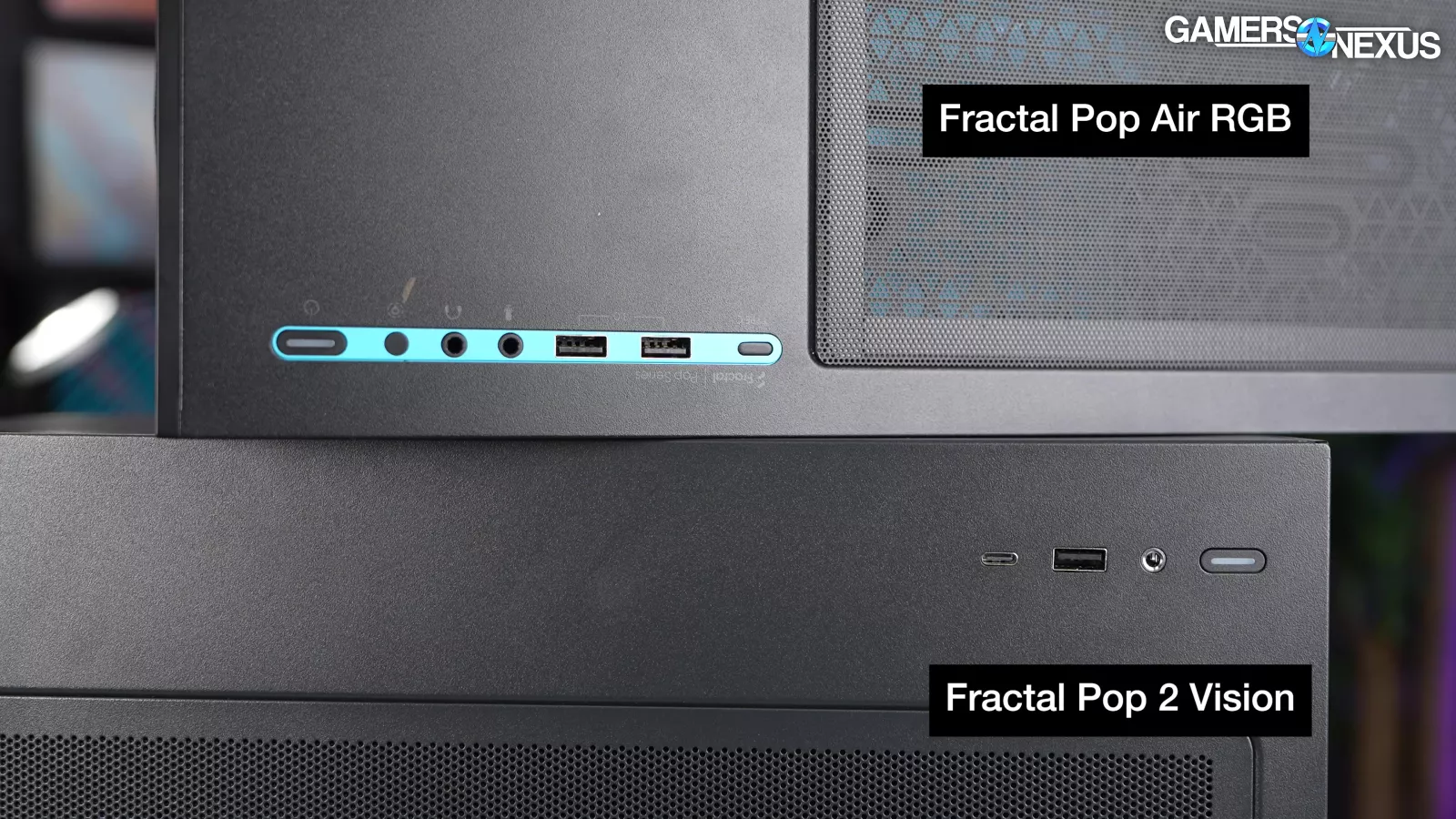
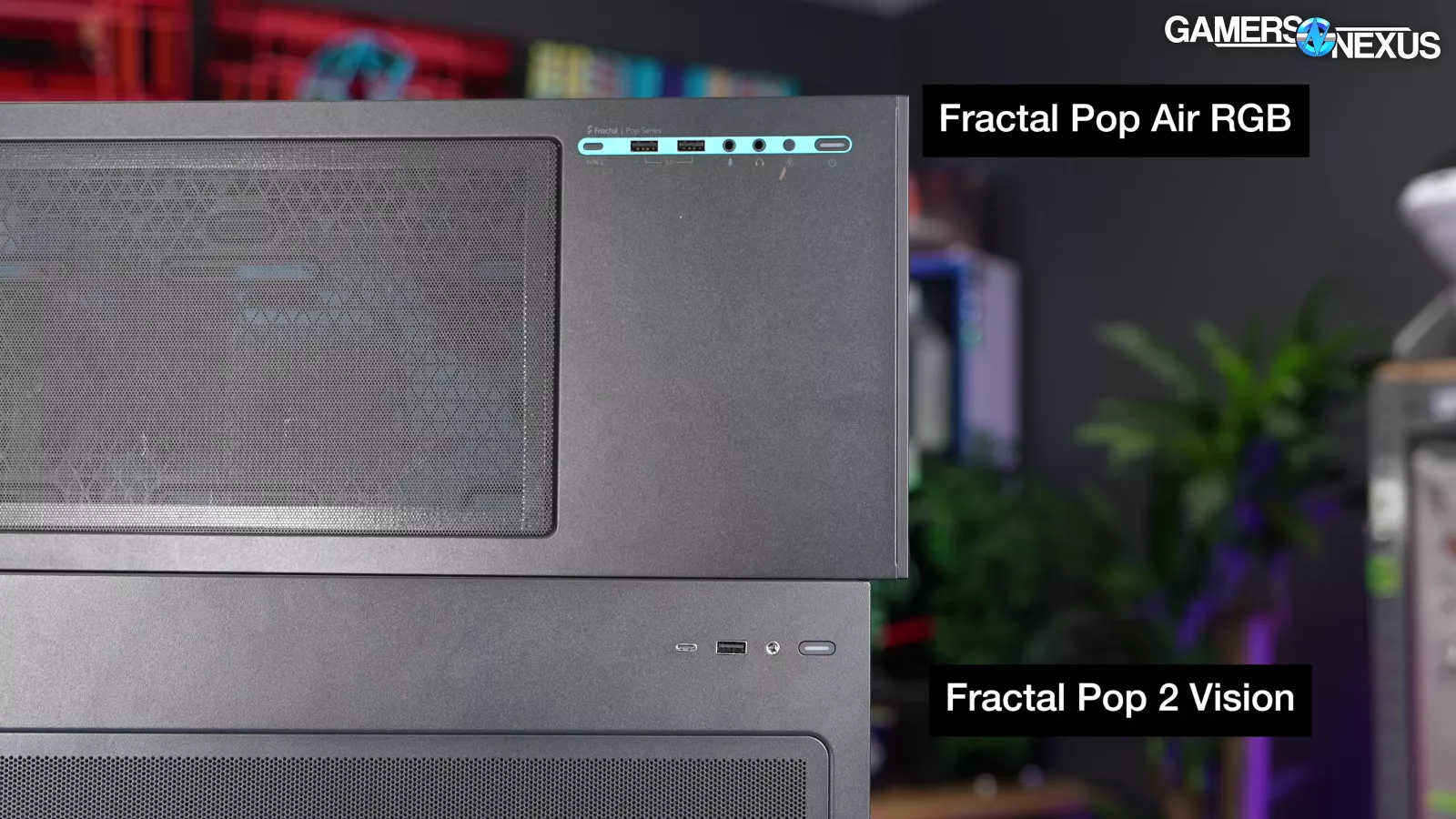
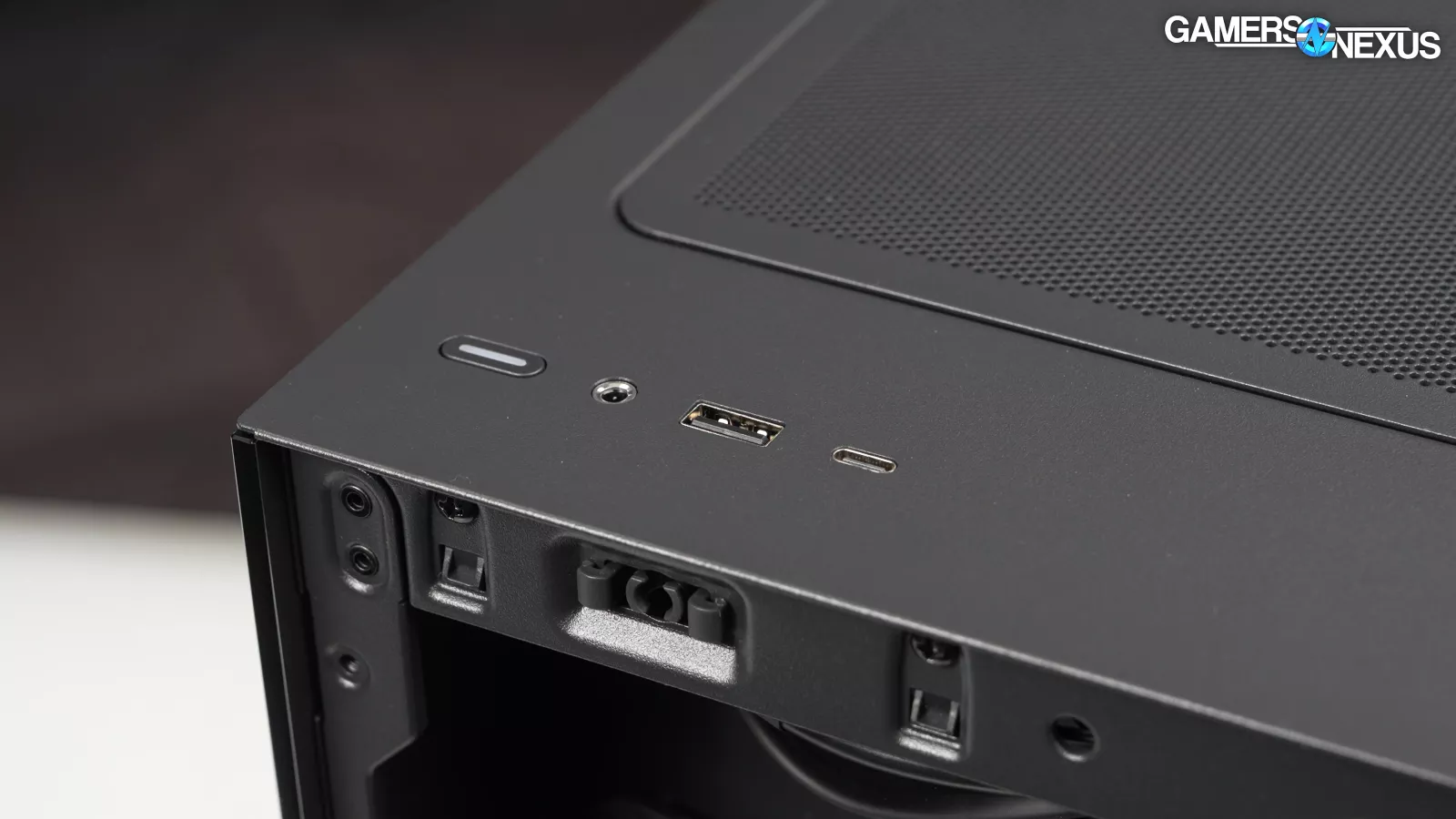
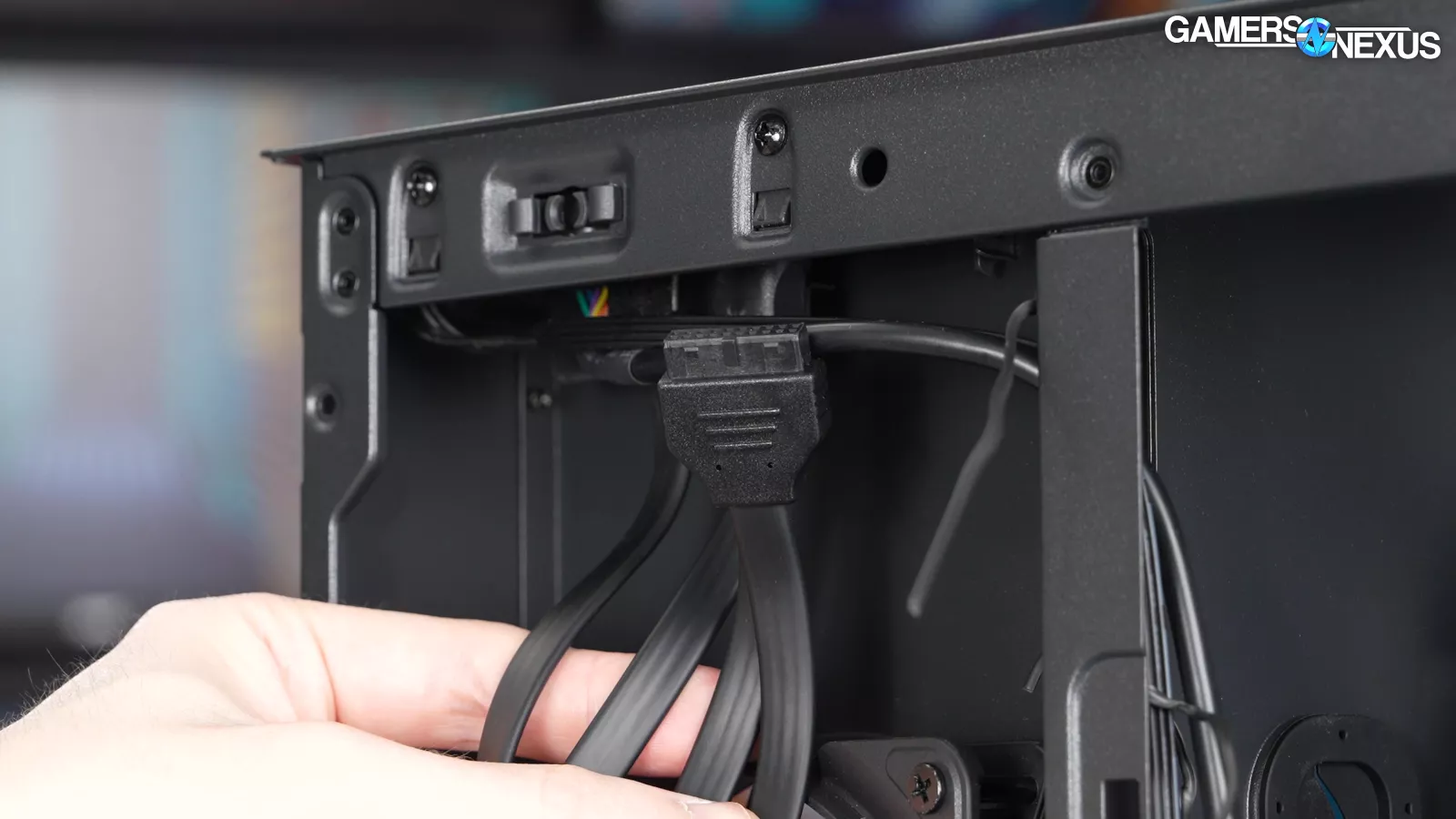
There's one Type-C and one Type-A port among the front I/O, but both are routed from a single internal USB 3 header. In the original Pop Air, Fractal's cost-cutting solution was to include two Type-A ports and a blank spot for an optional $10 Type-C add-on kit. At least the new Pop 2 Visions have a Type-C port by default, but we honestly prefer the original Pop Air's I/O.
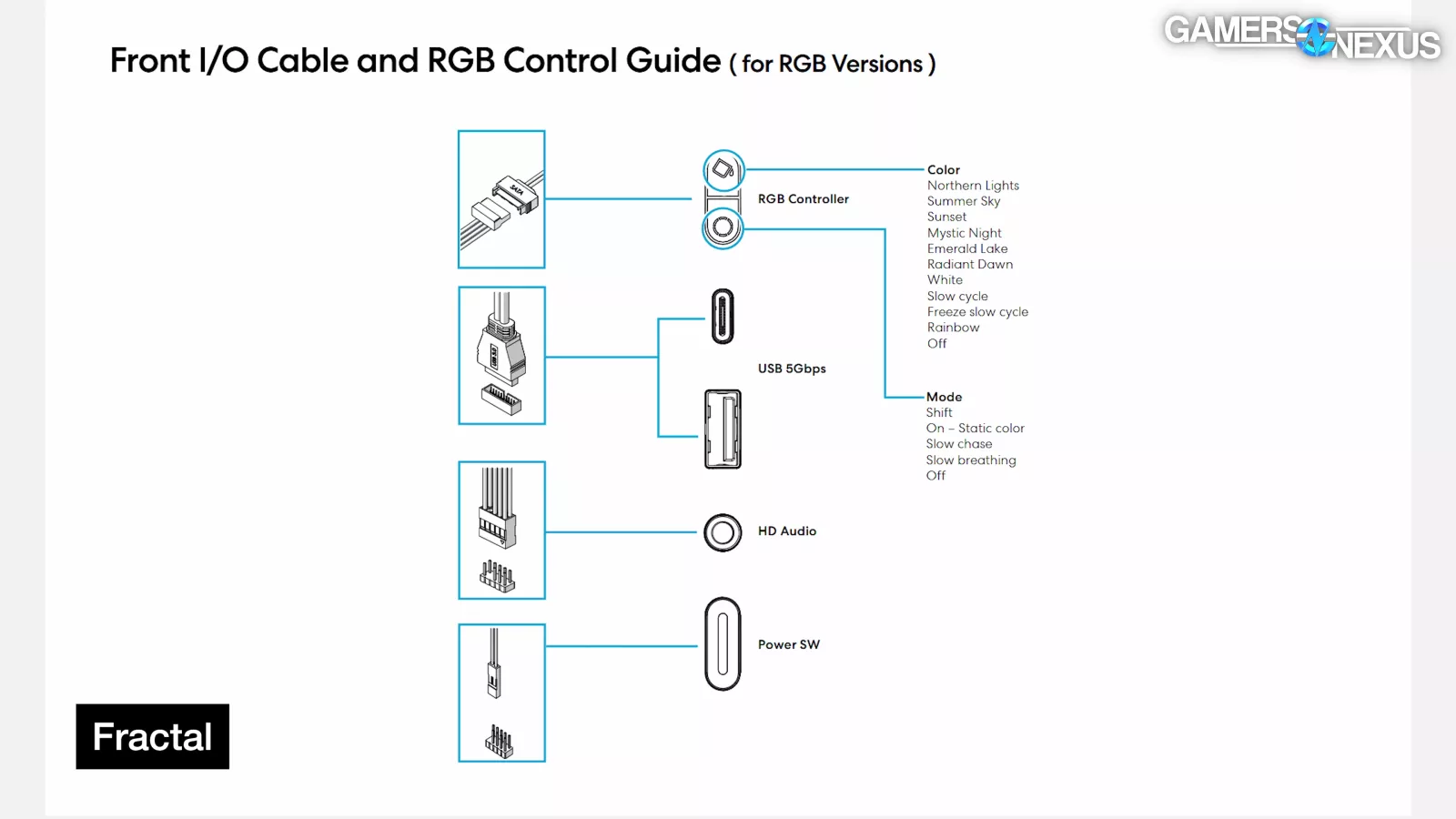
The more expensive RGB SKU of the Vision also includes RGB control buttons, which helps to fill in the IO more similarly to the Pop Air.
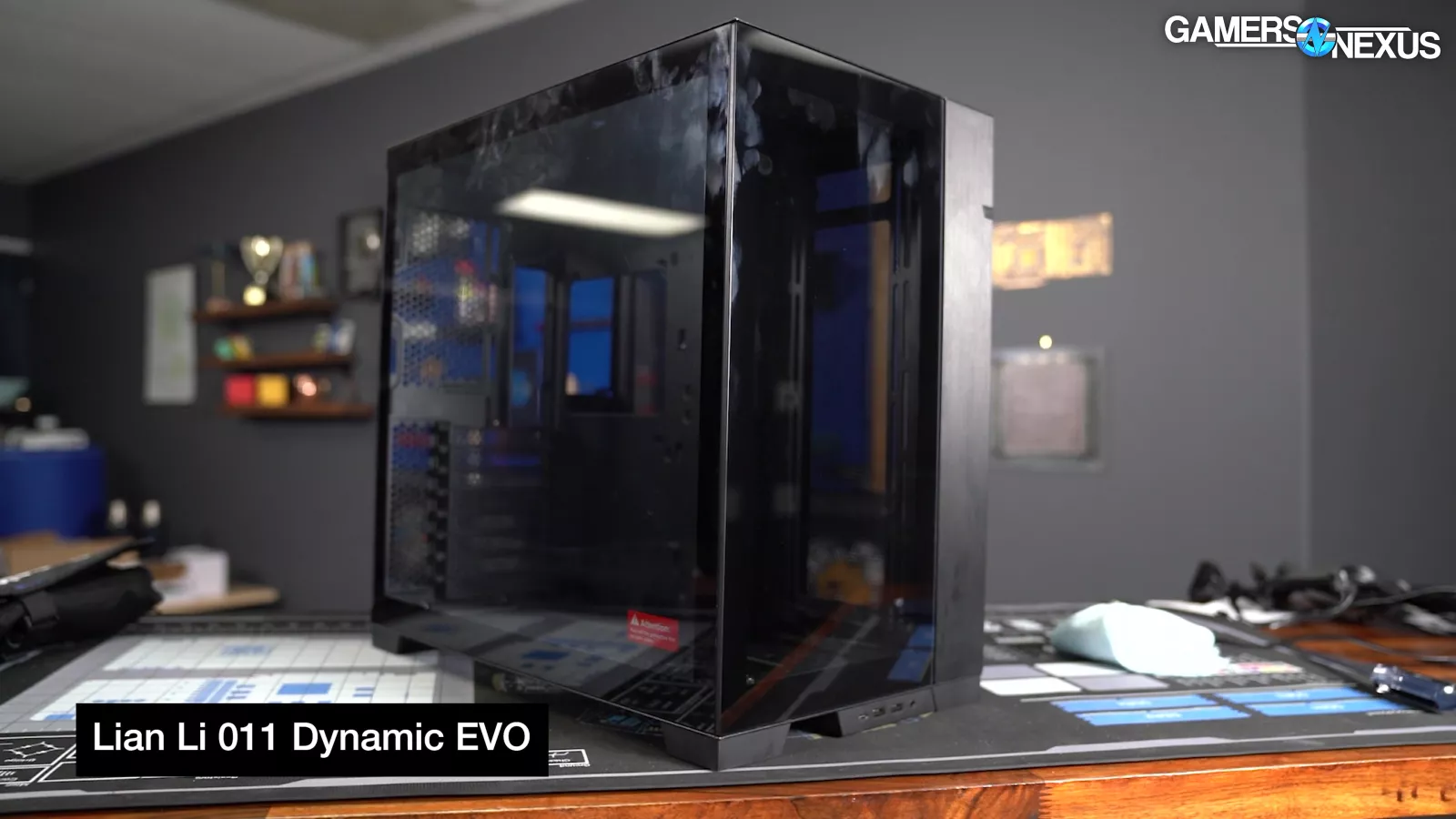
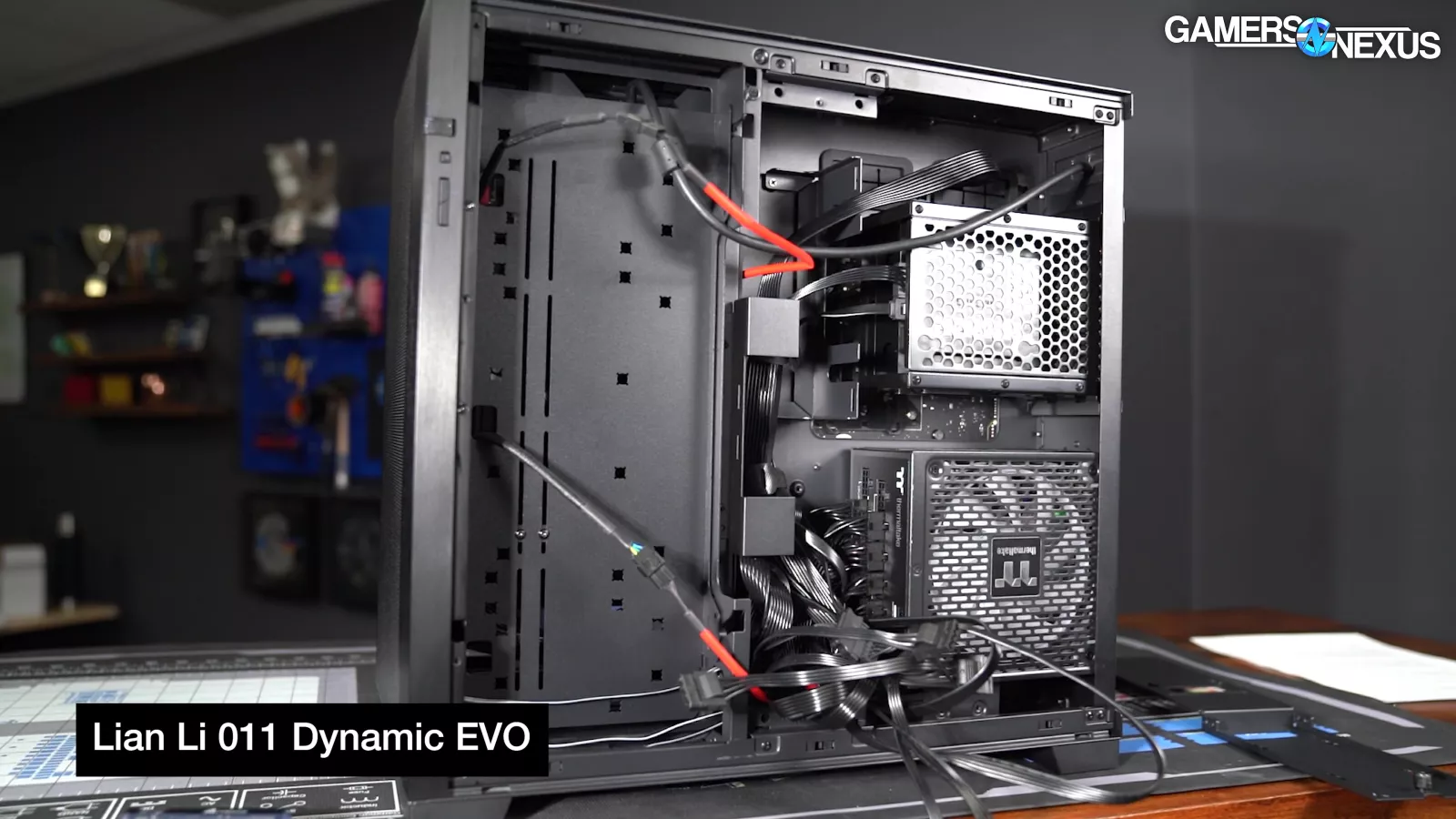
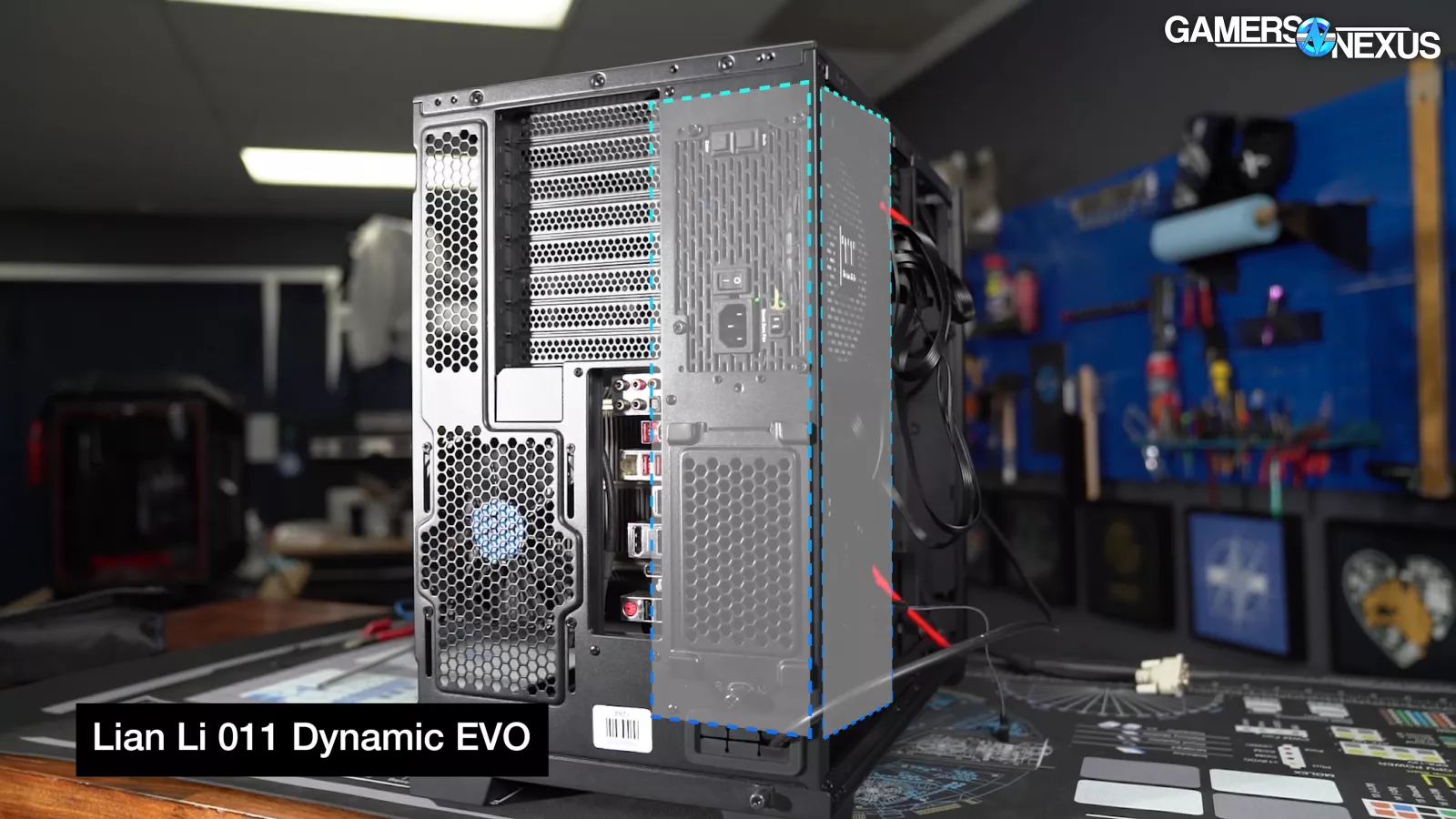
The Vision comes directly from the Lian Li O11 Dynamic school of dual-chamber cases, even down to the alternate PSU mounting location above the stock mount.
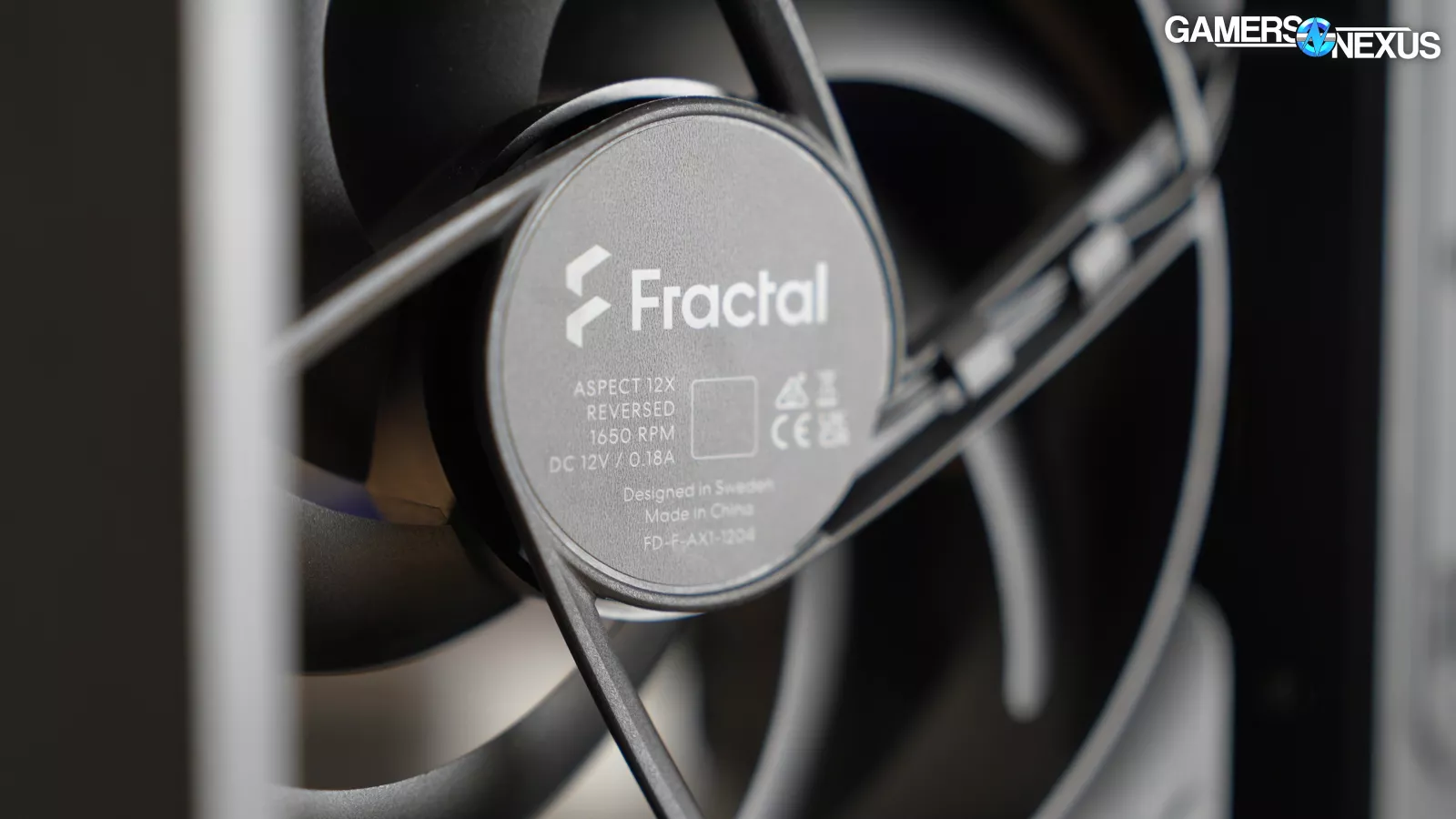
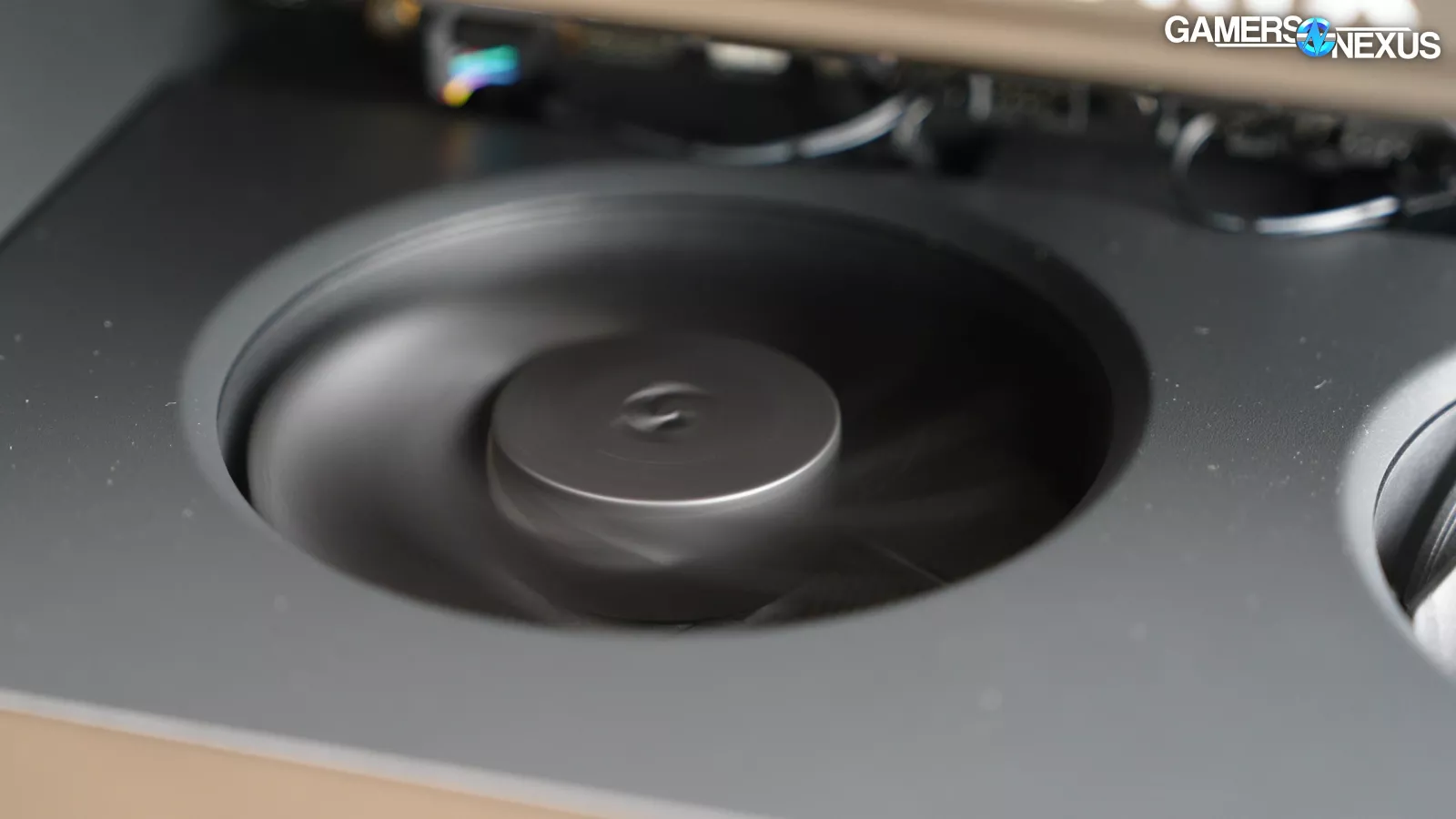
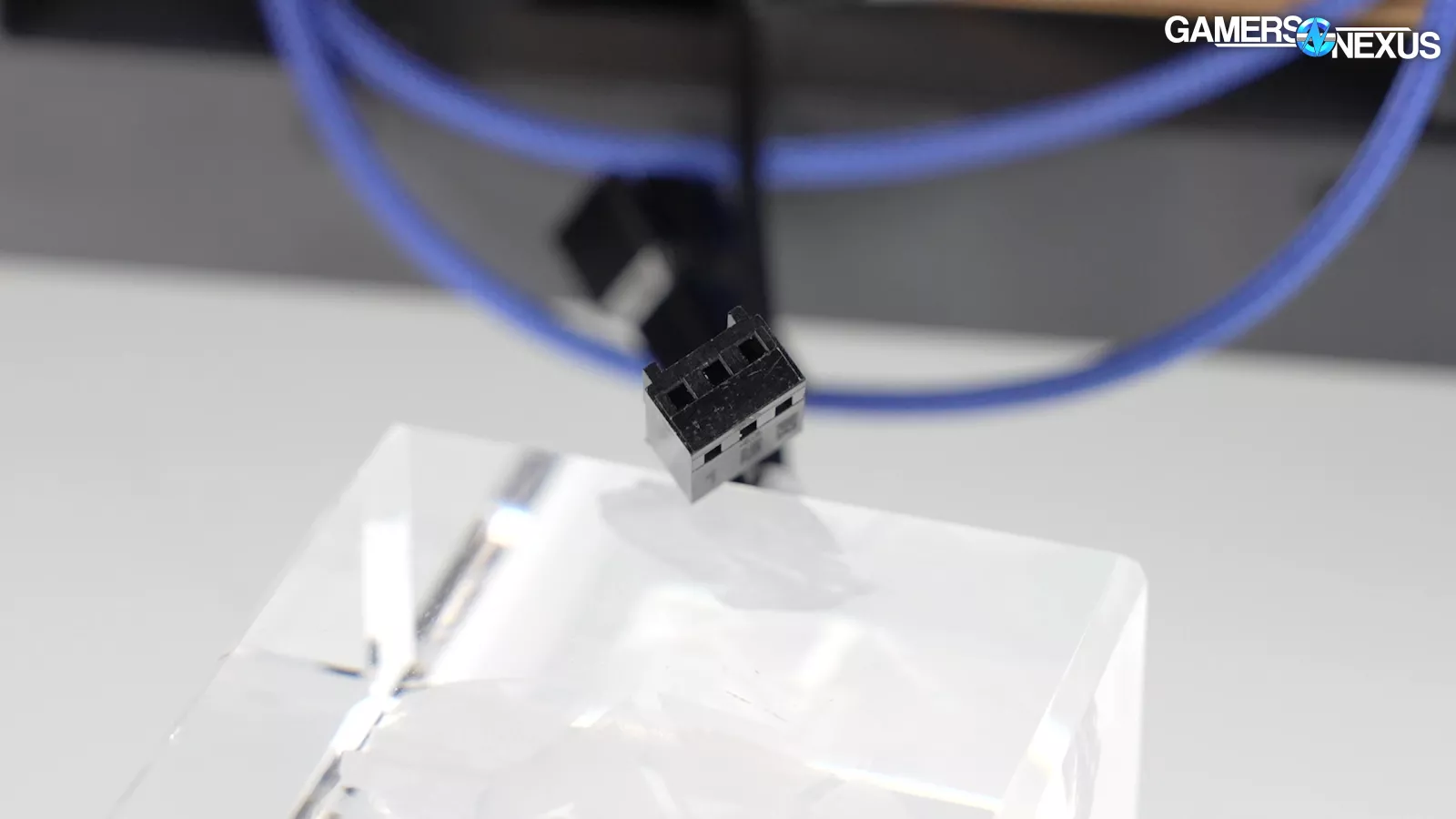
One of the biggest tells of cost-cutting is the fact that all of the case fans are 3-pin DC controlled. They work fine, but it's weird to see reverse-blade fans (which typically are more expensive due to low production volume) paired with 3-pin headers. The fans in the original Pop Air were 3-pin as well, so at least this isn't a downgrade.
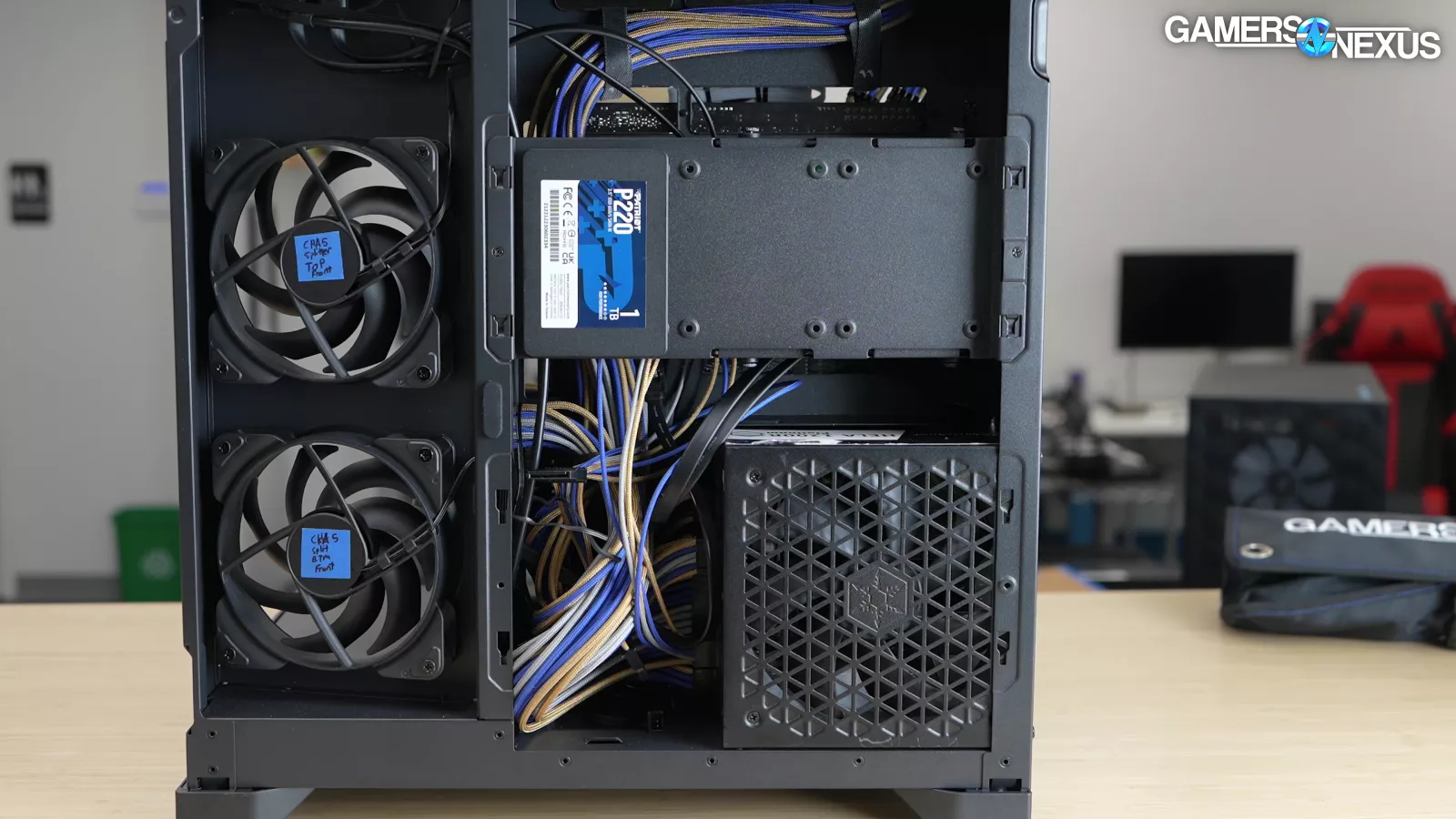
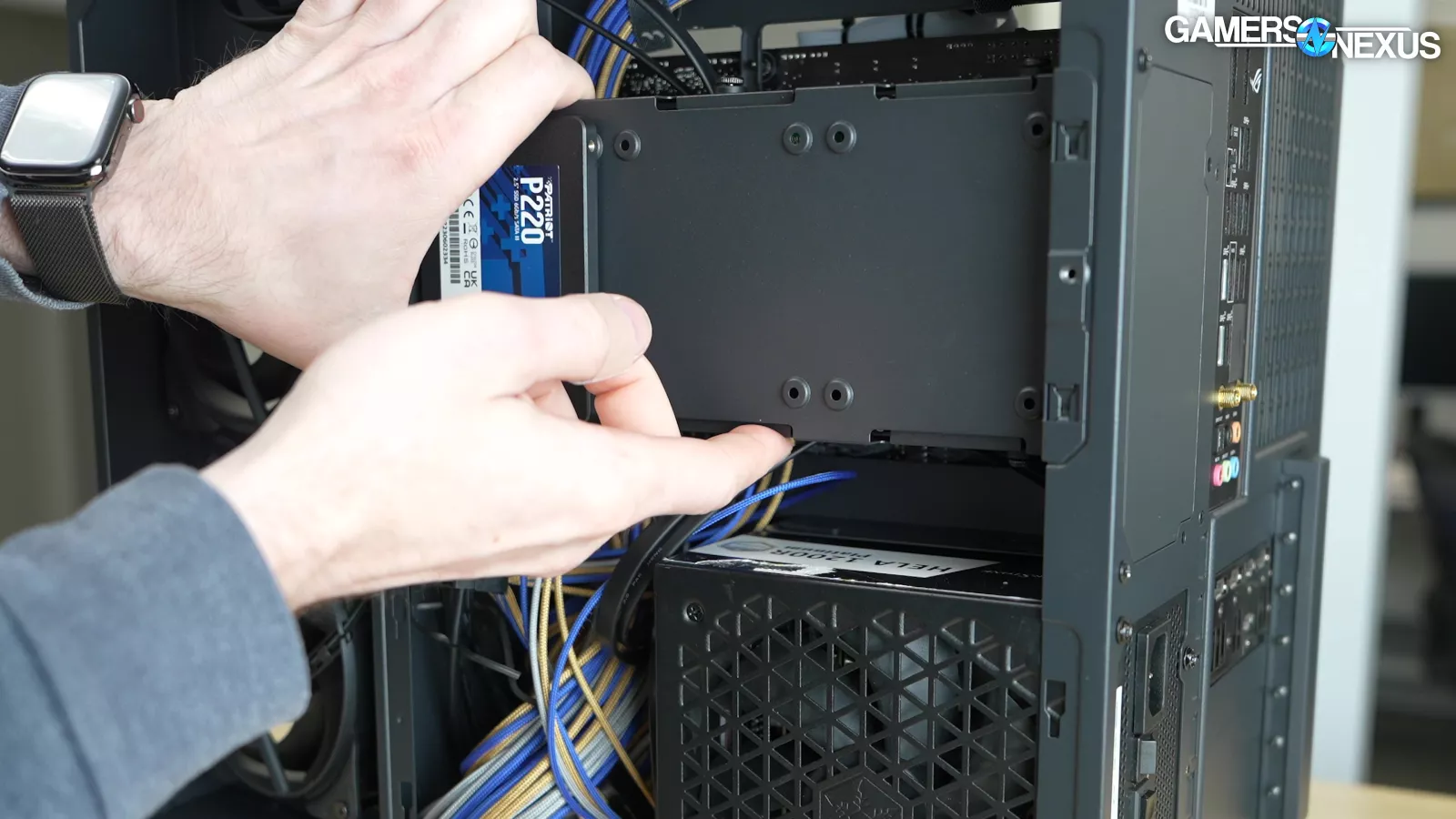
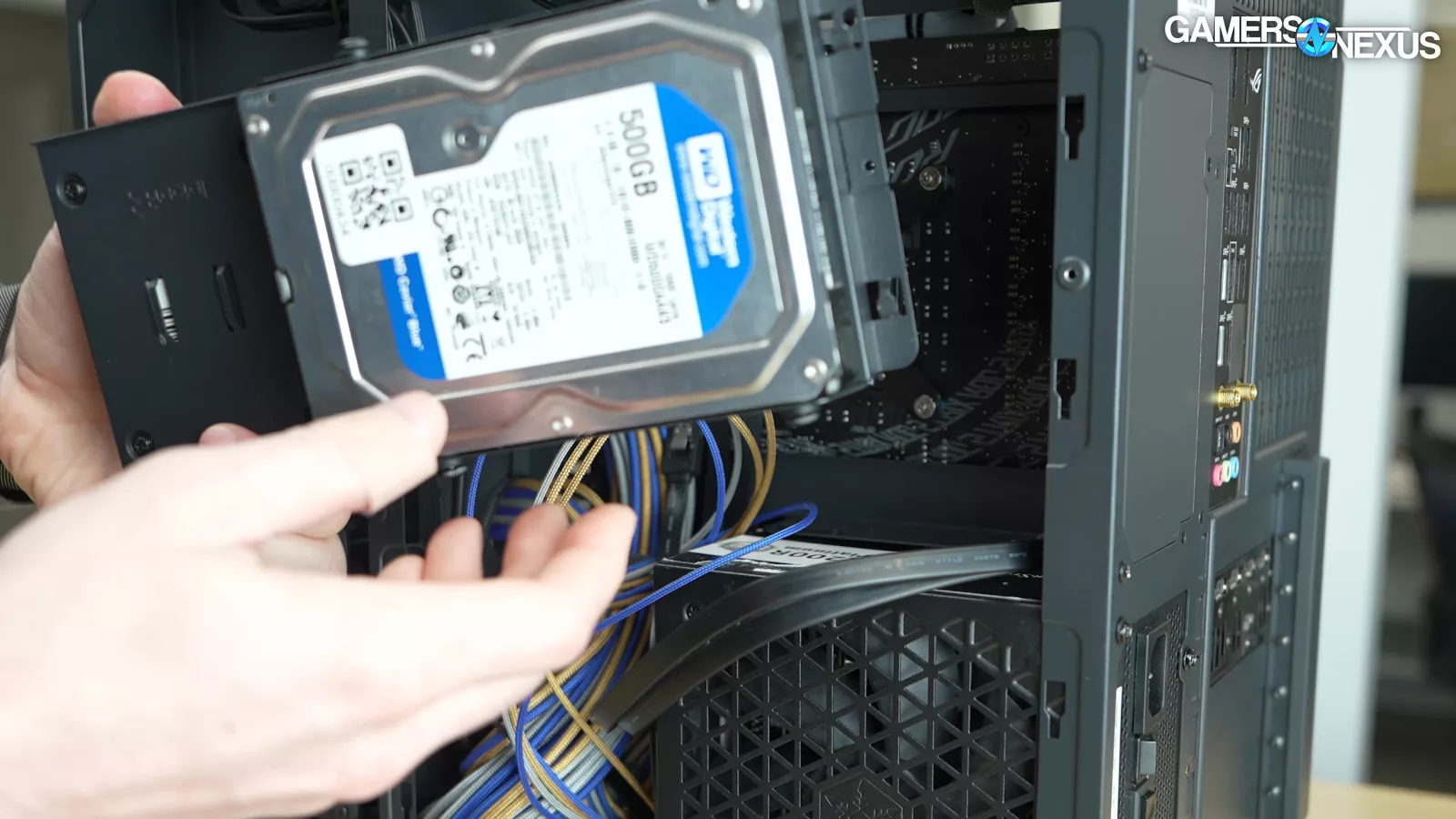
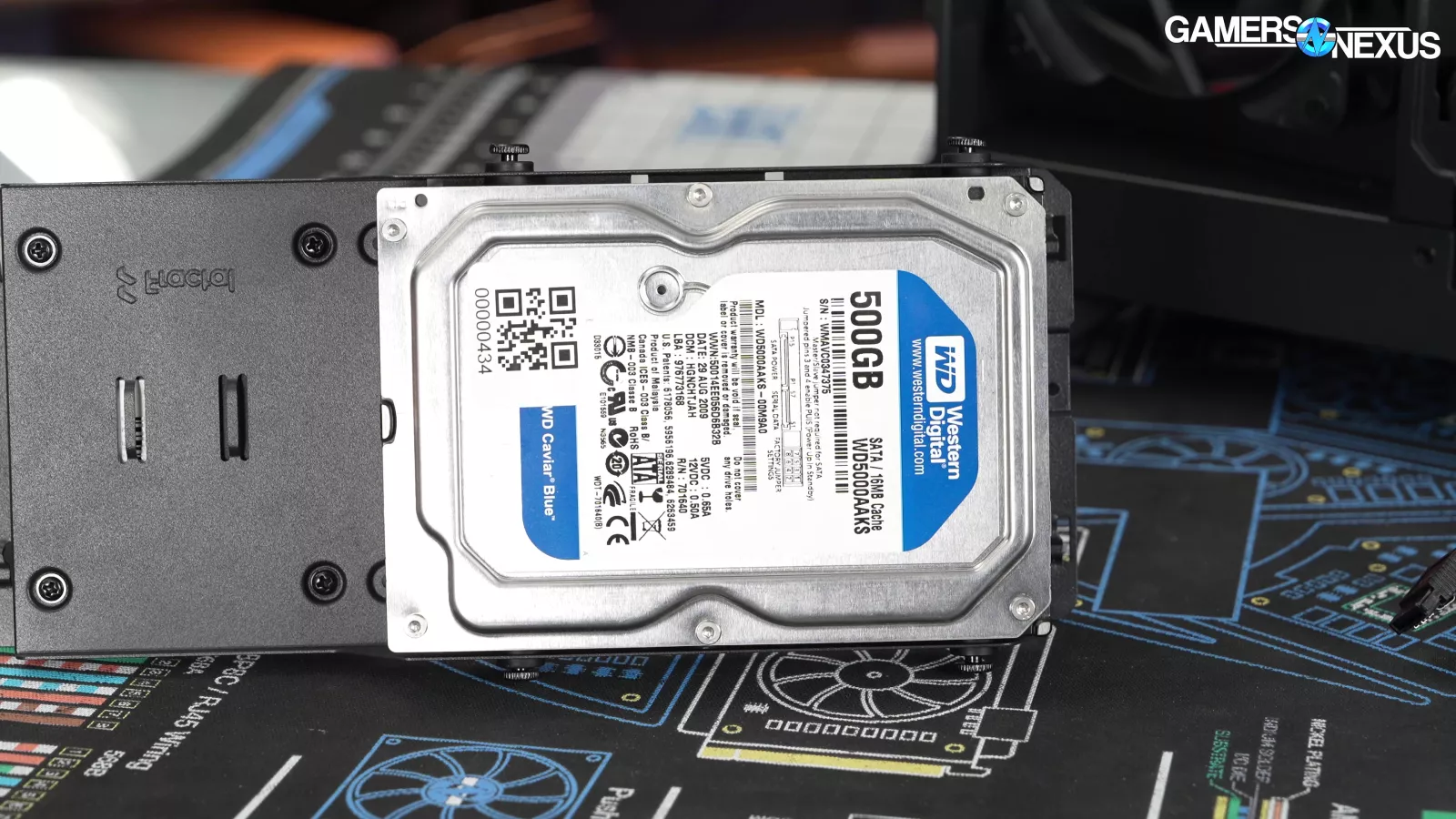
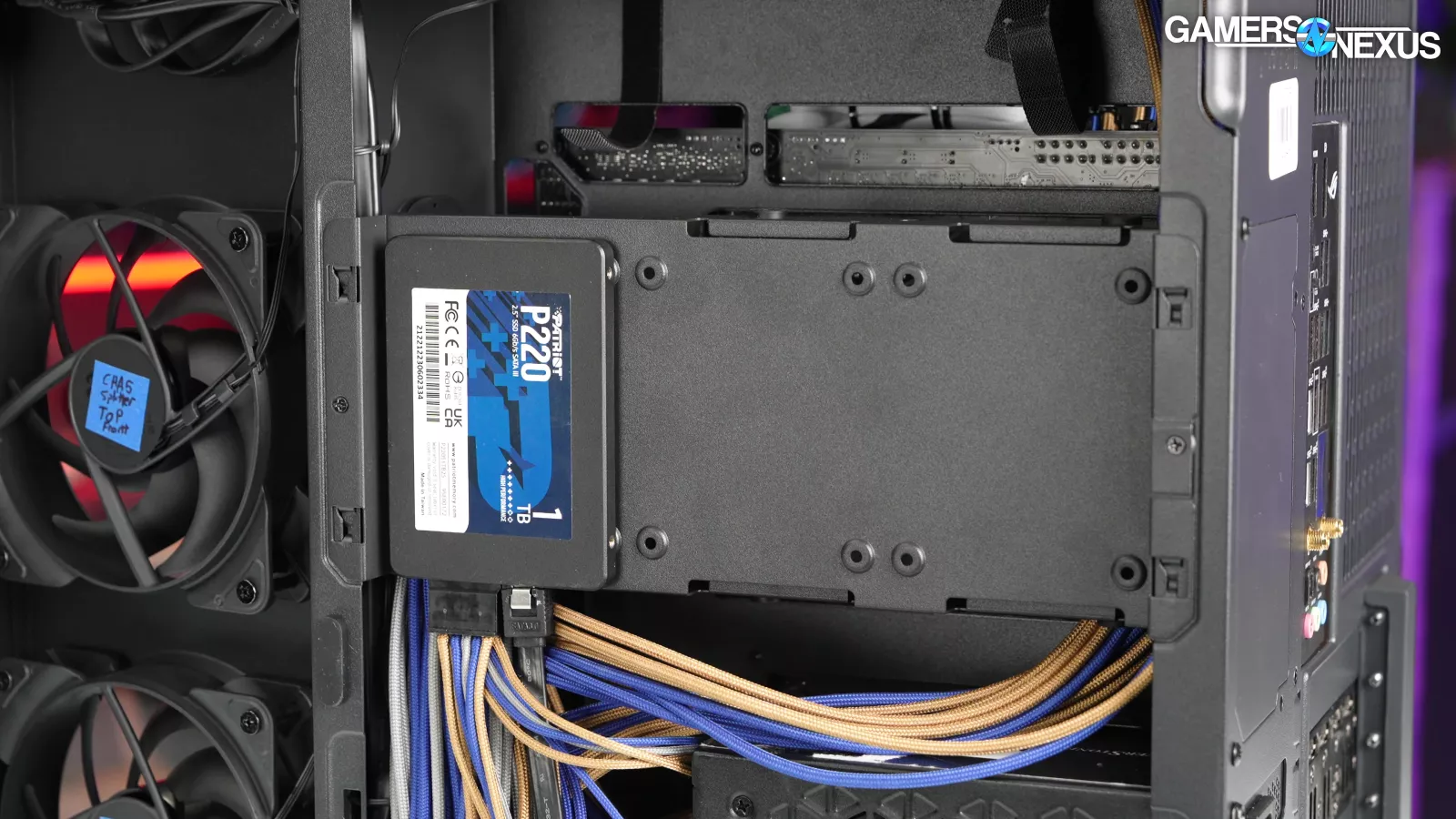
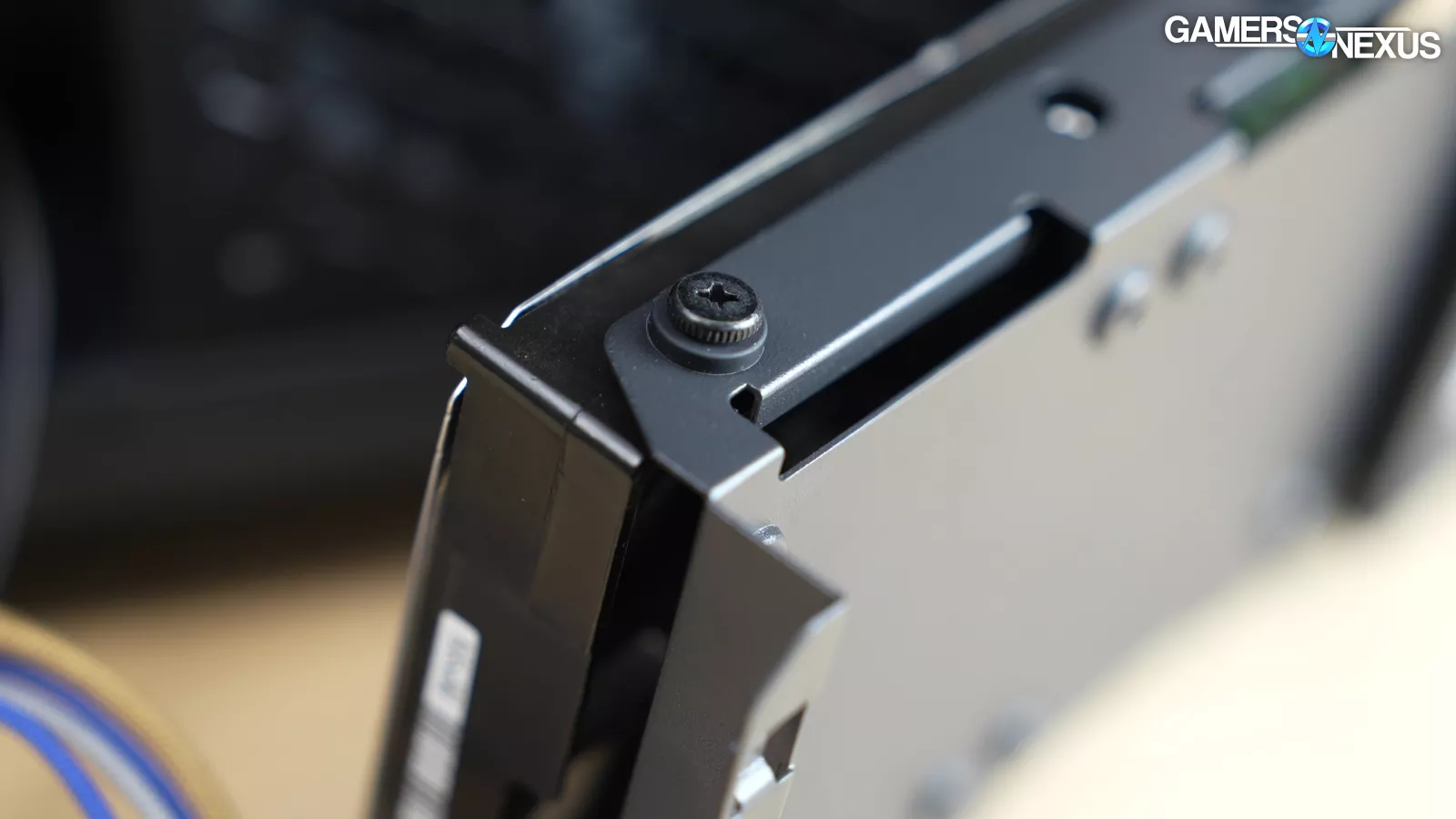
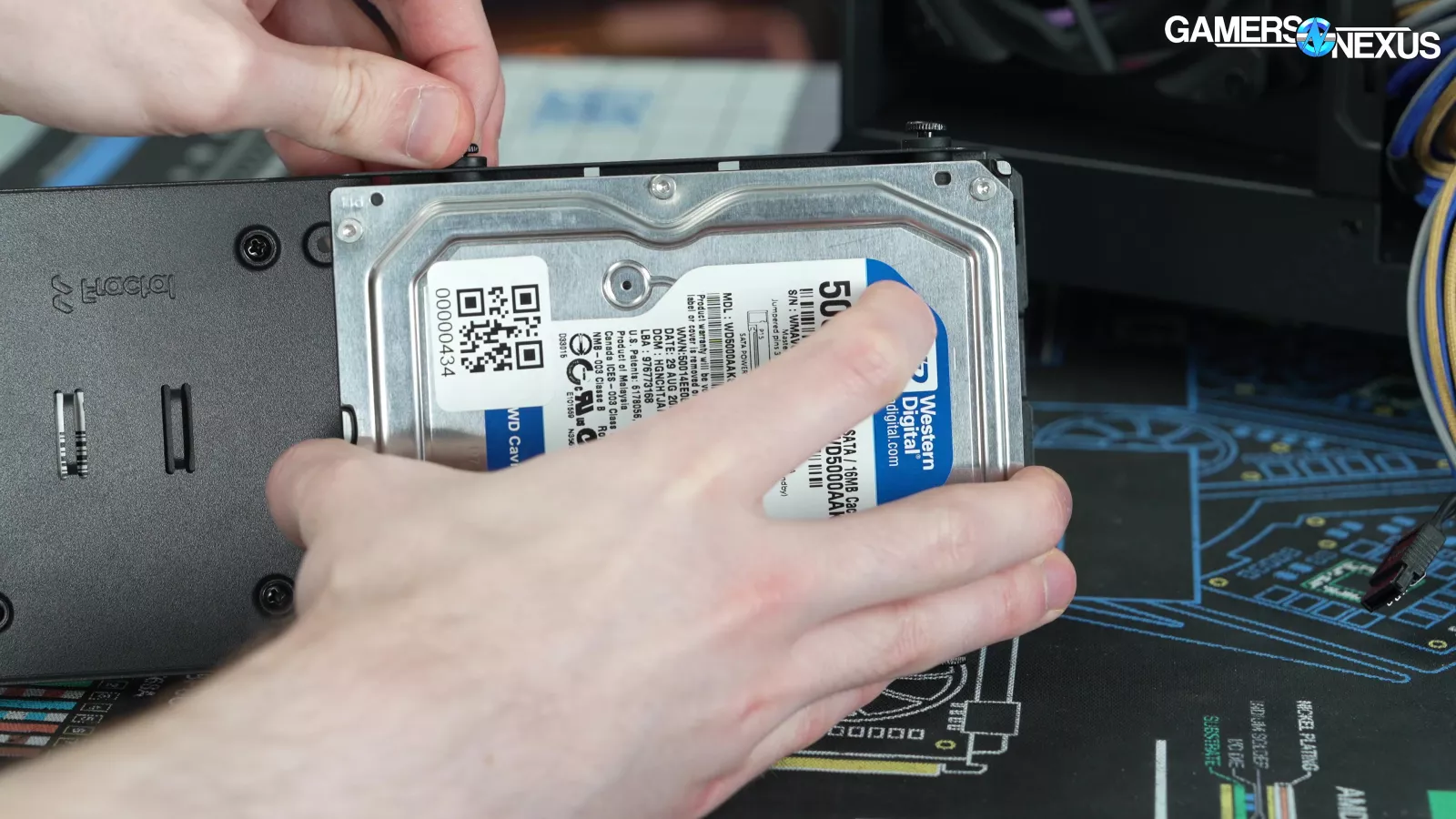
The drive bracket and the PSU can trade places. There’s not much reason to do this aside from using a back-connect board, but it doesn’t hurt anything to have the extra option. The drive bracket can also keep stray cables in place, which is useful. We appreciate its simplicity: it's a single piece of metal that can fit one 3.5" drive and three 2.5" drives simultaneously while also helping with cable management. The hard drive mount has rubber vibration dampers, so they didn’t skimp there, and the hard drive screws are knurled for hand-tightening -- another nice and unexpected touch on an otherwise simple case.
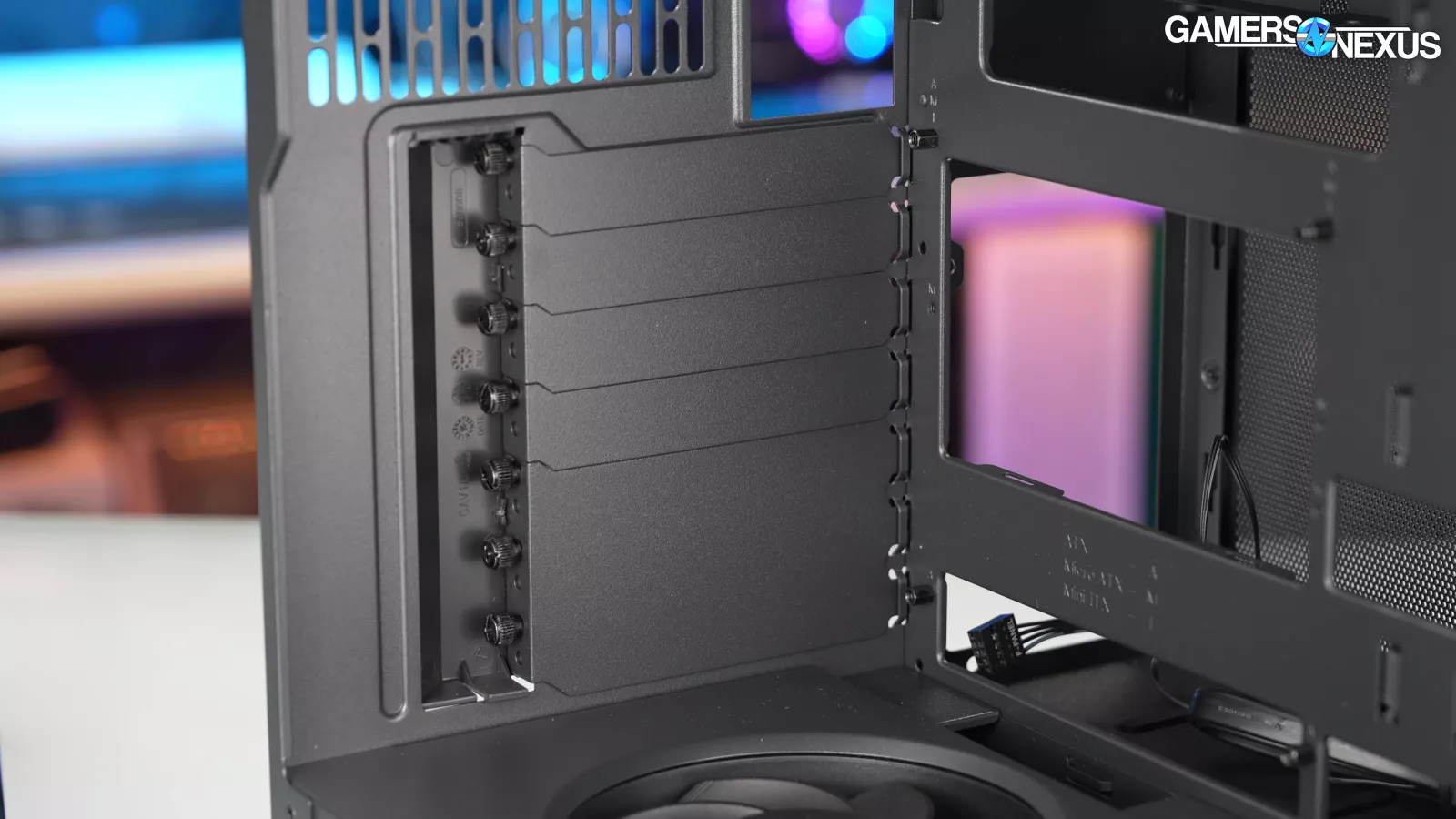
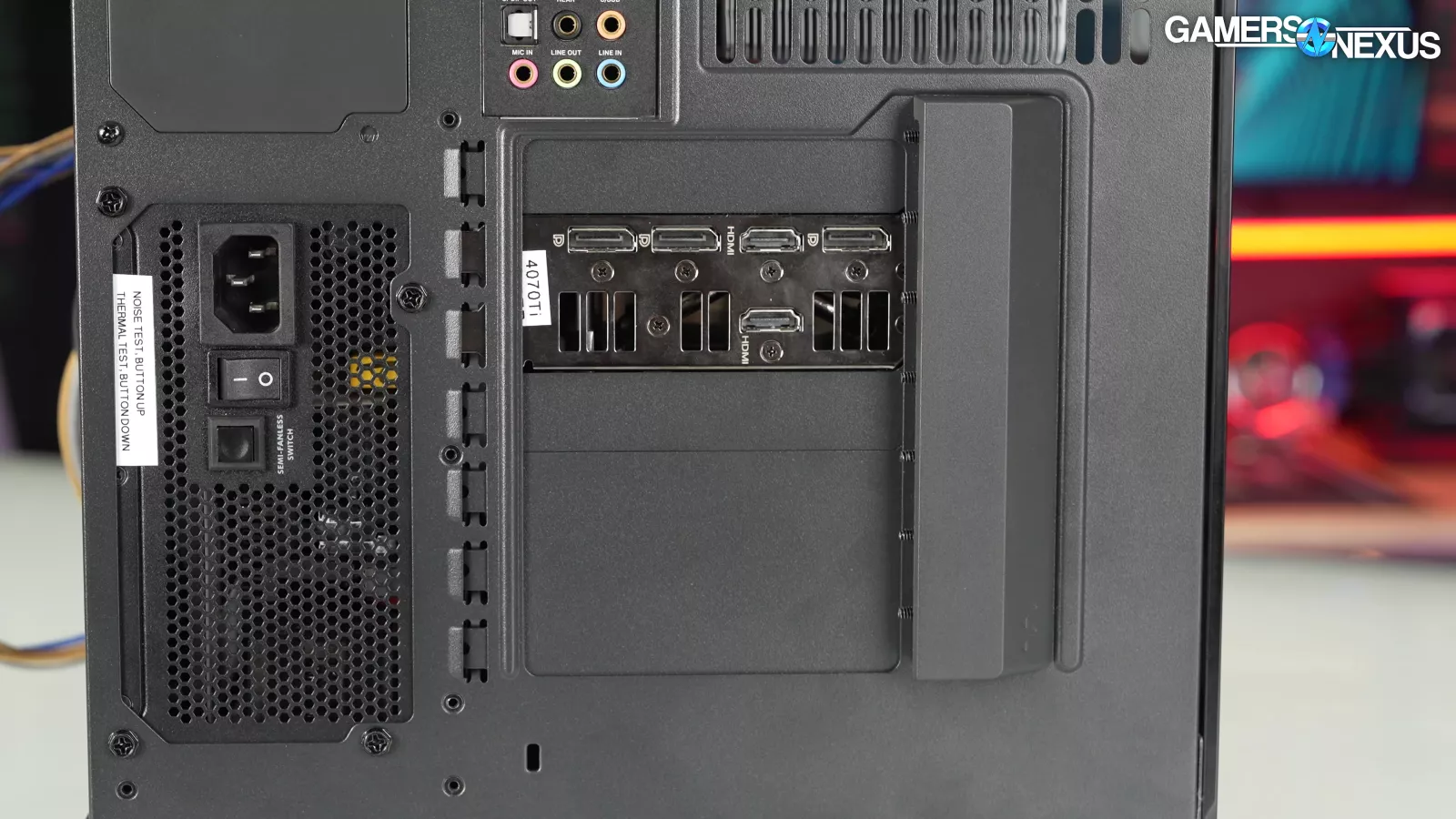
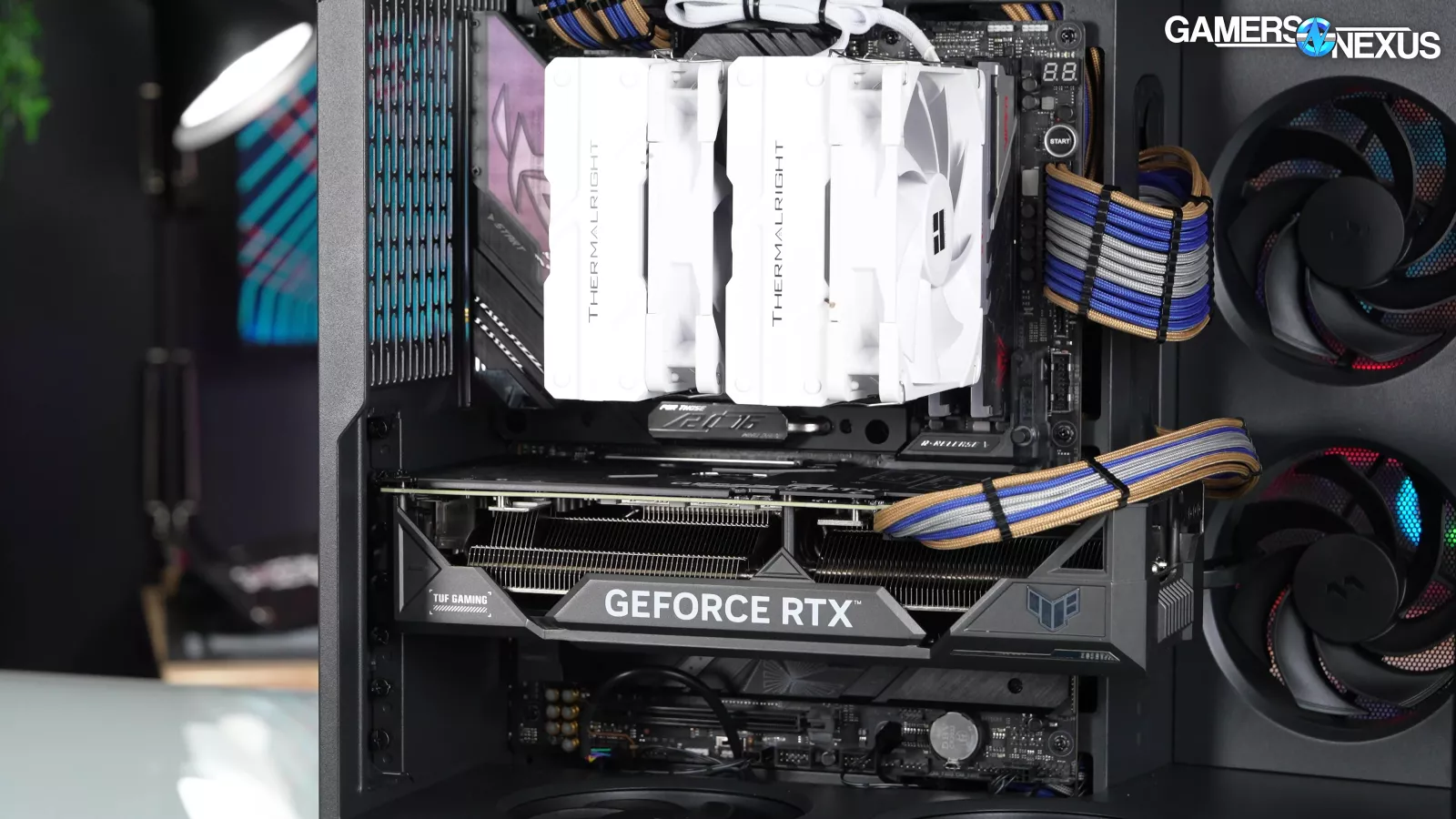
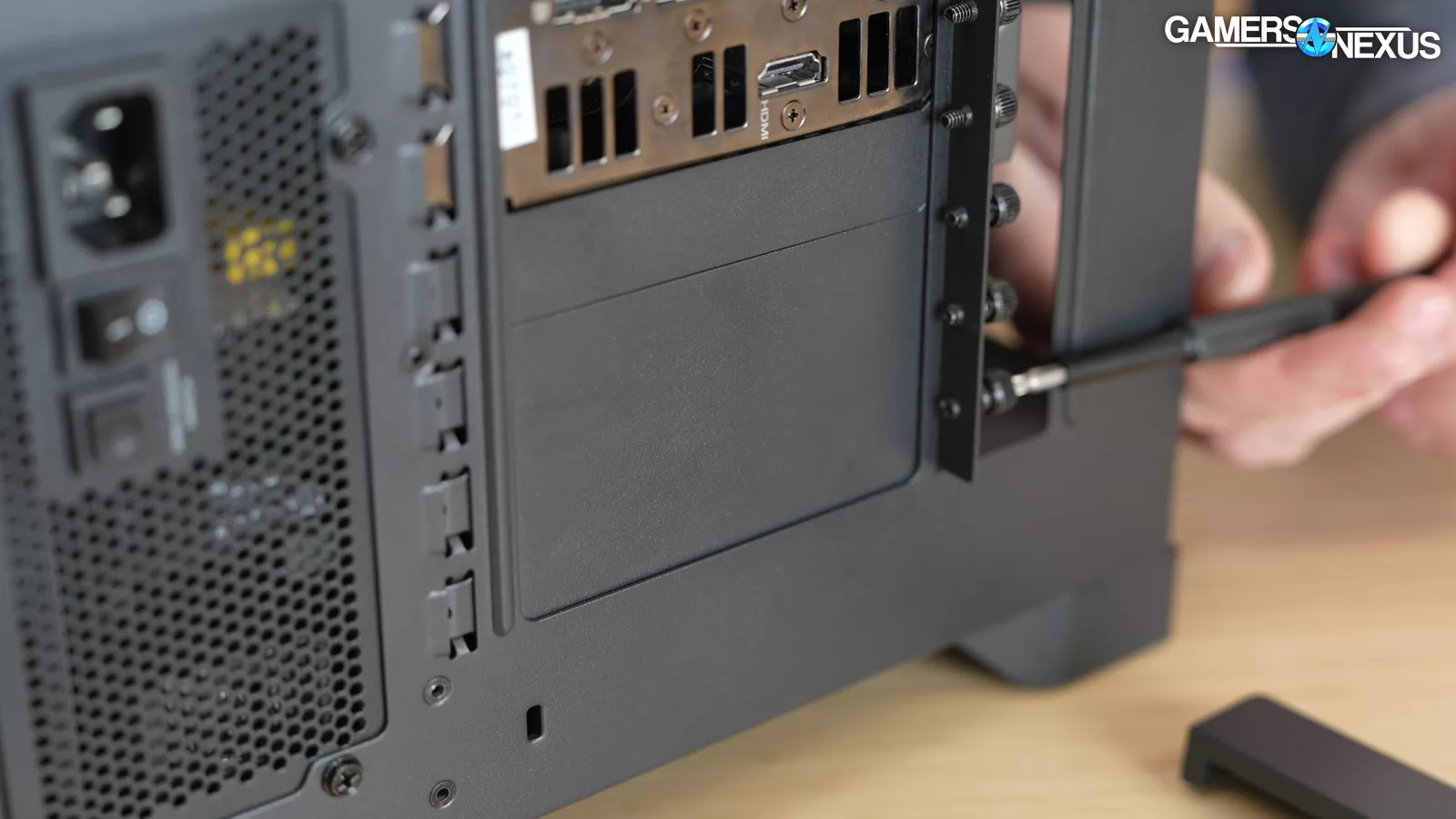
The expansion slot covers are unventilated, which usually has a negative effect on air-cooled GPU thermals since air can't enter the case from that location; although, in this positive pressure setup, it’d more likely act as an exhaust. Three of the slot covers are merged together into one big plate. If you want to install add-in cards beyond a GPU, odds are you'll have to remove the big plate and leave some gaps.
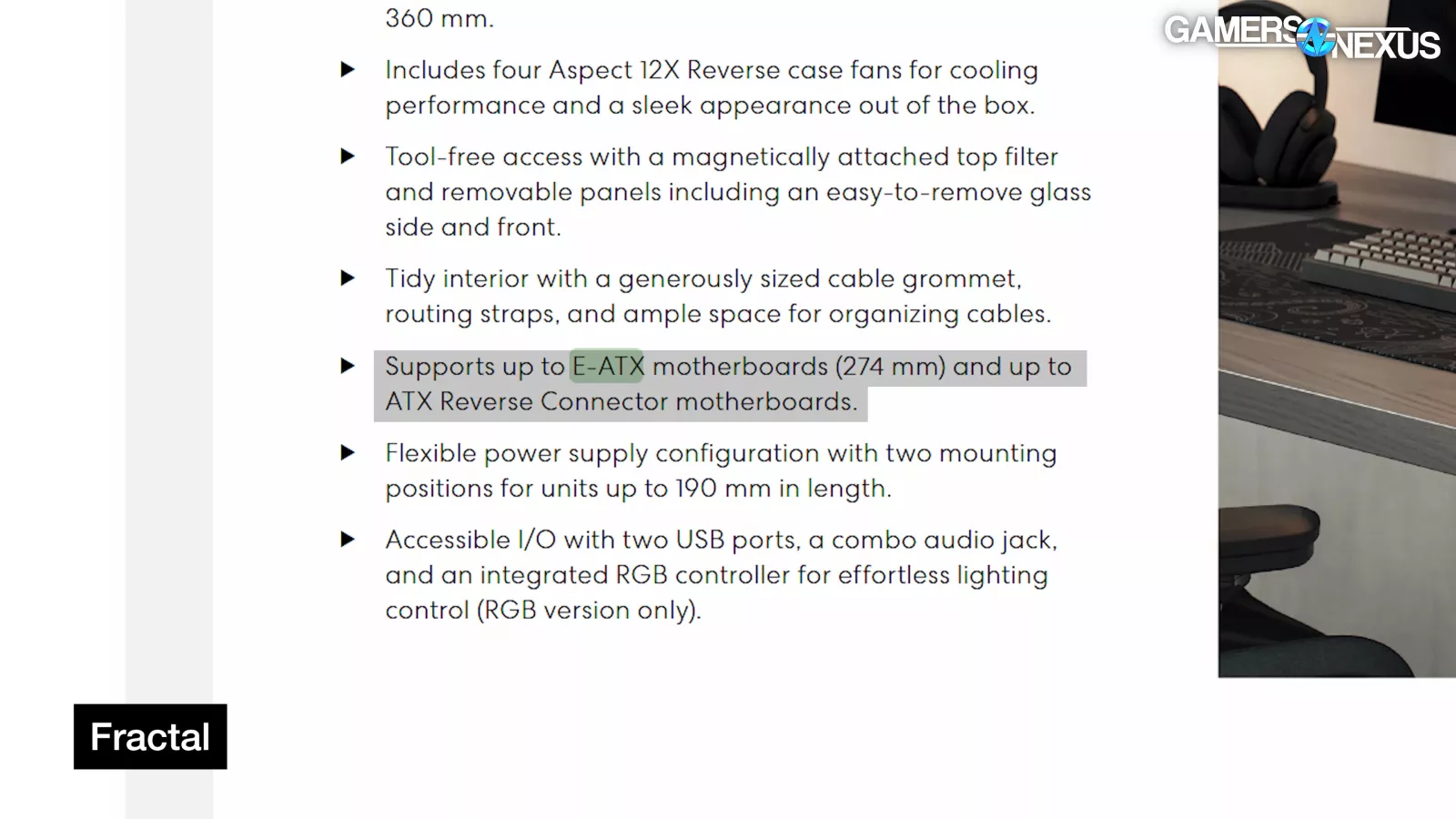
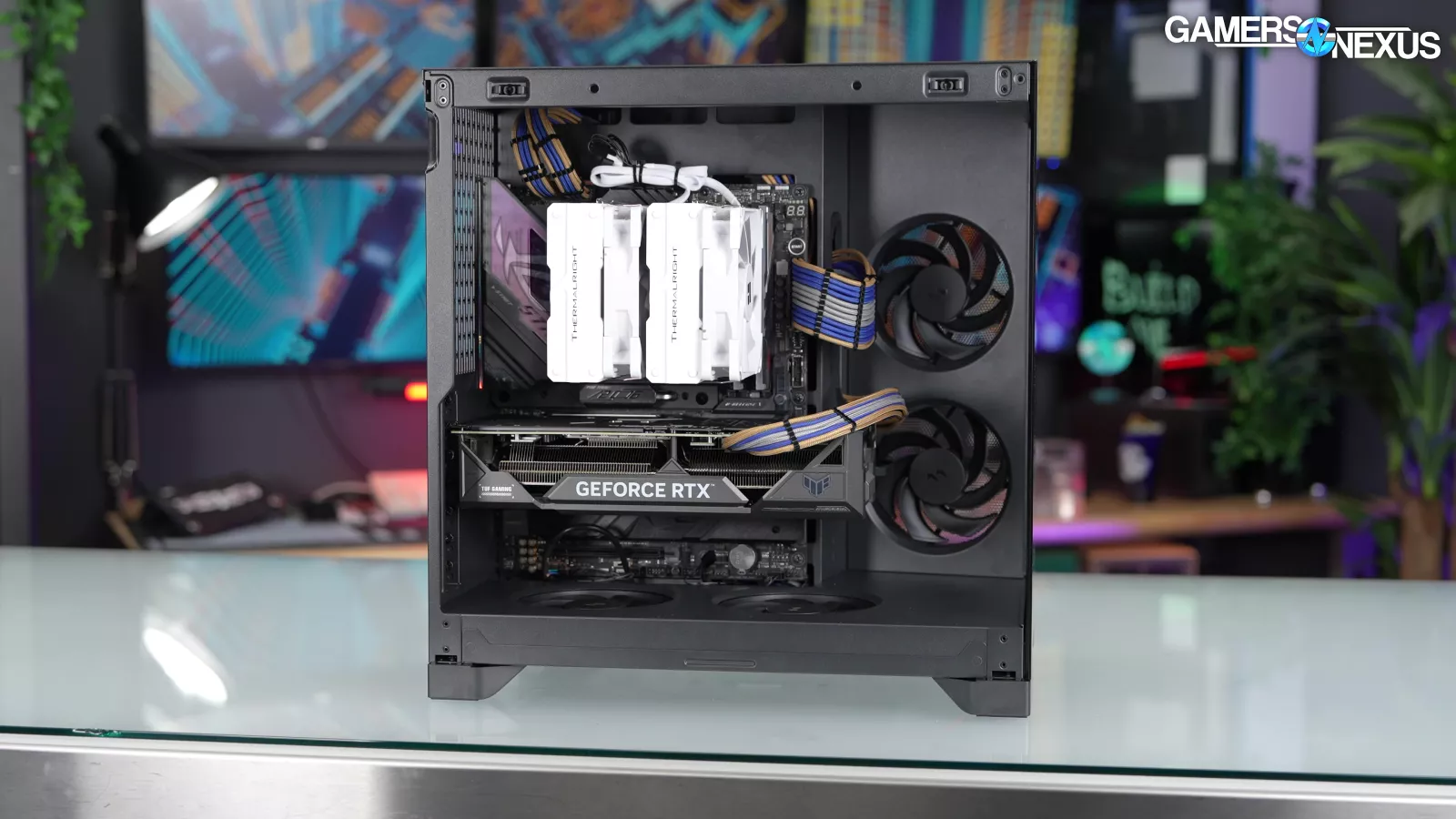
So-called “E-ATX” clearance is claimed up to 274mm, but that's an arbitrary number. There's nothing to obstruct larger boards, but anything >1cm beyond normal ATX will overhang the edge of the motherboard tray without support. You will, however, be able to install the board.
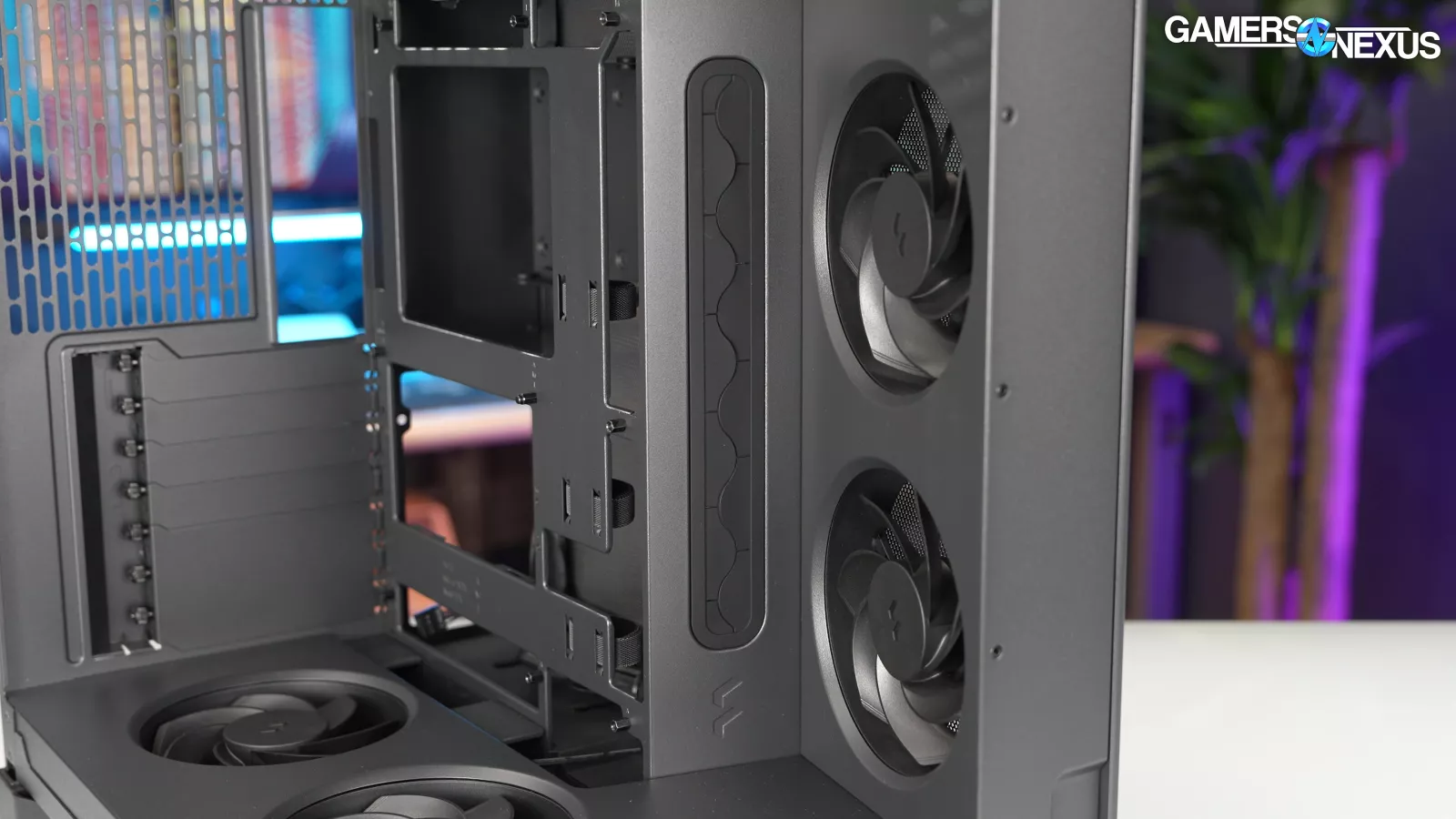
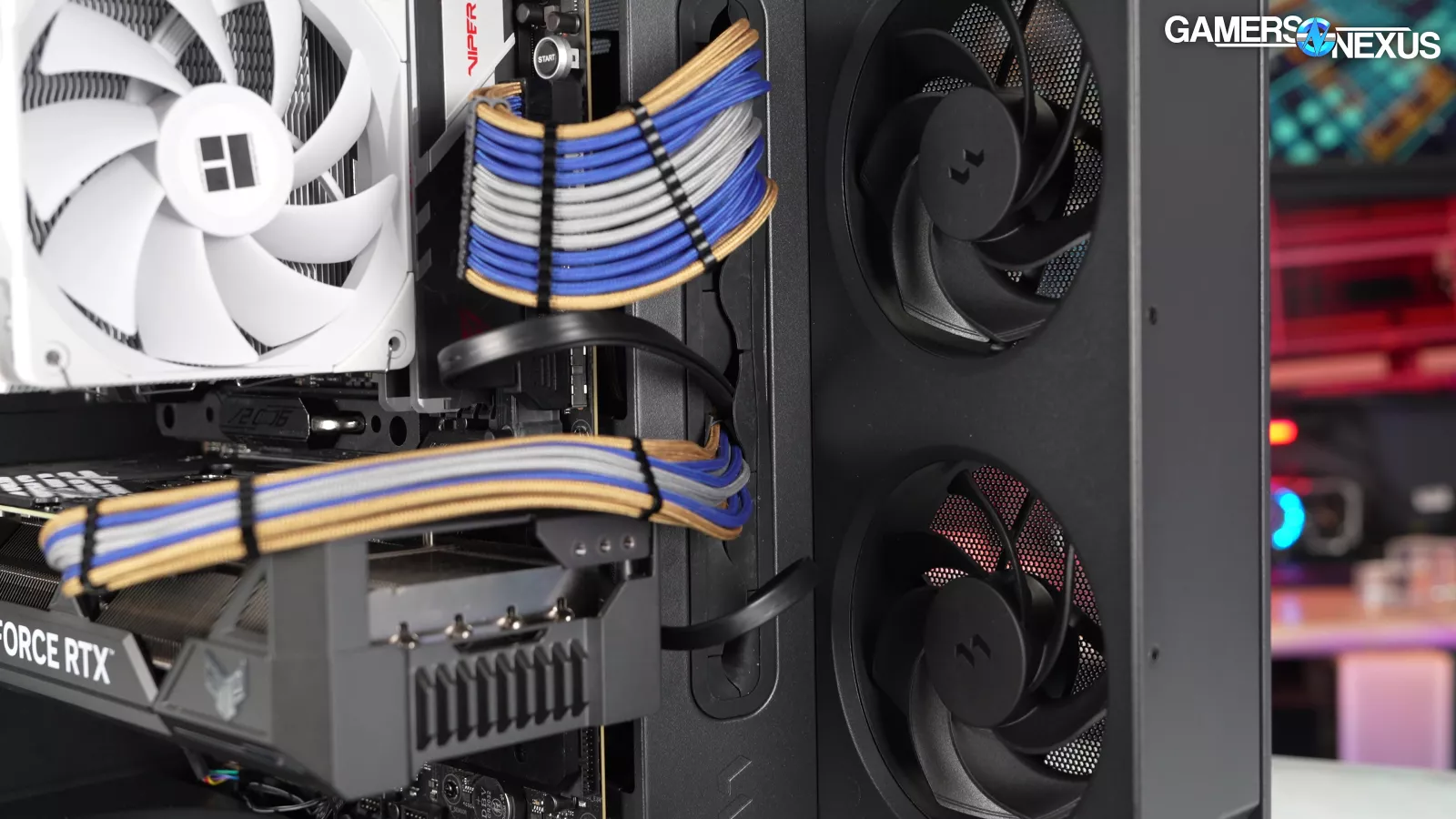
Normally we might not bother mentioning the Vision's rubber cable grommet, but it's an unexpected touch in a case that's fighting hard to stay below $100.
Thermals & Noise

We kept thermal testing extremely simple for this review, since the Vision comes with a full set of stock fans and limited options for reconfiguration. We performed our usual standardized fan test, but we're skipping those results since the limited mounting locations forced us into a nonsensical fan layout.
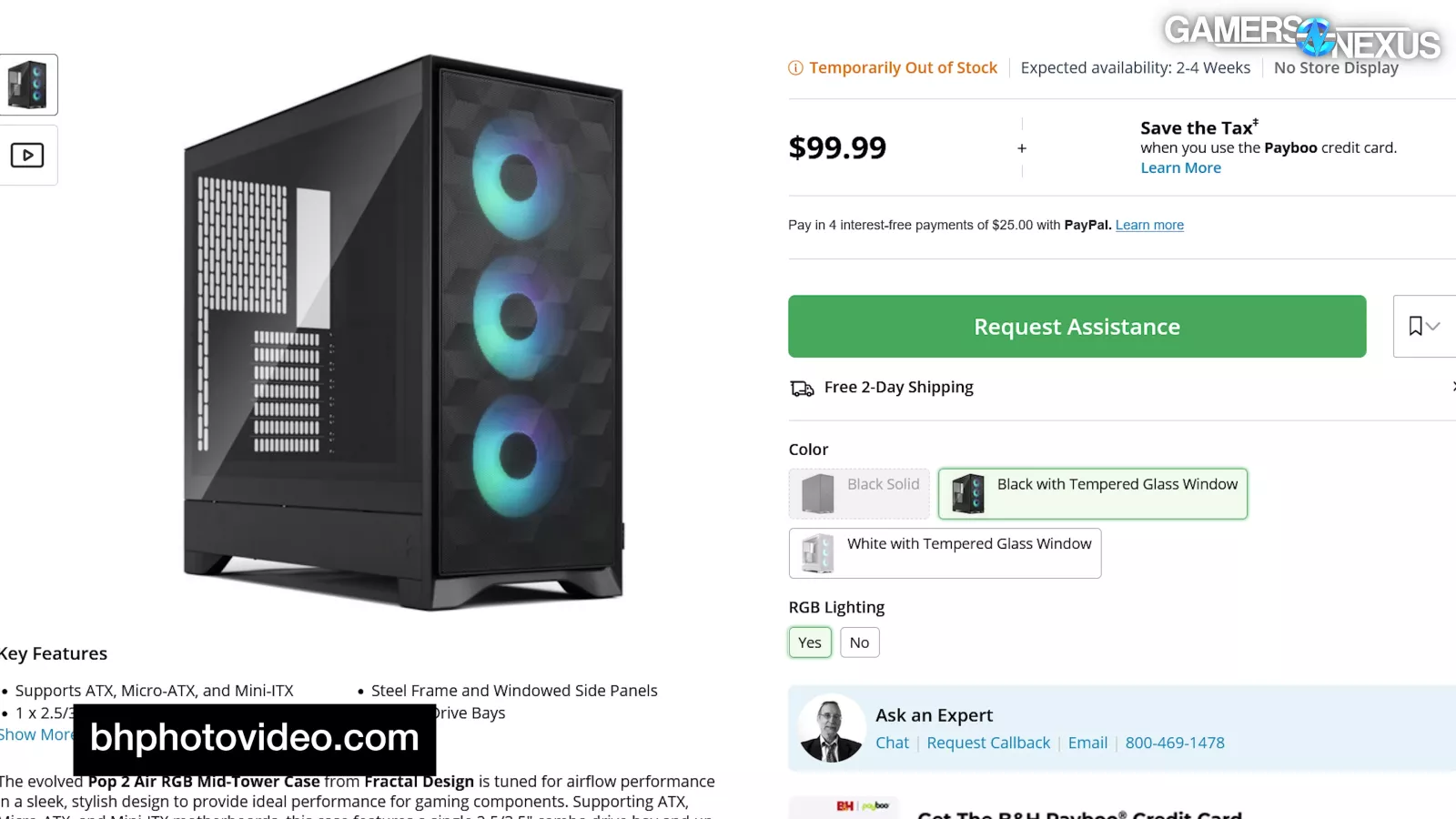
We're going to compare the Pop 2 Vision to the Pop 2 Air because they're similar prices and are presented to consumers as part of the same line, but again, they really have nothing to do with each other. More logical comparisons are budget fishtank cases like the Montech HS02 PRO (read our review), as well as more expensive options like the Antec C8 ARGB (read our review) and HYTE Y60 (watch our review). Corsair also has some options like the AIR 5400 and 6500D (read our review). And obviously there's the Lian Li O11 family (which also includes a Vision), but those are in another price class. With fans, the Pop 2 Vision is cheaper than every one of those cases at $90 for the non-RGB.
CPU Full Load Thermals - Noise-Normalized
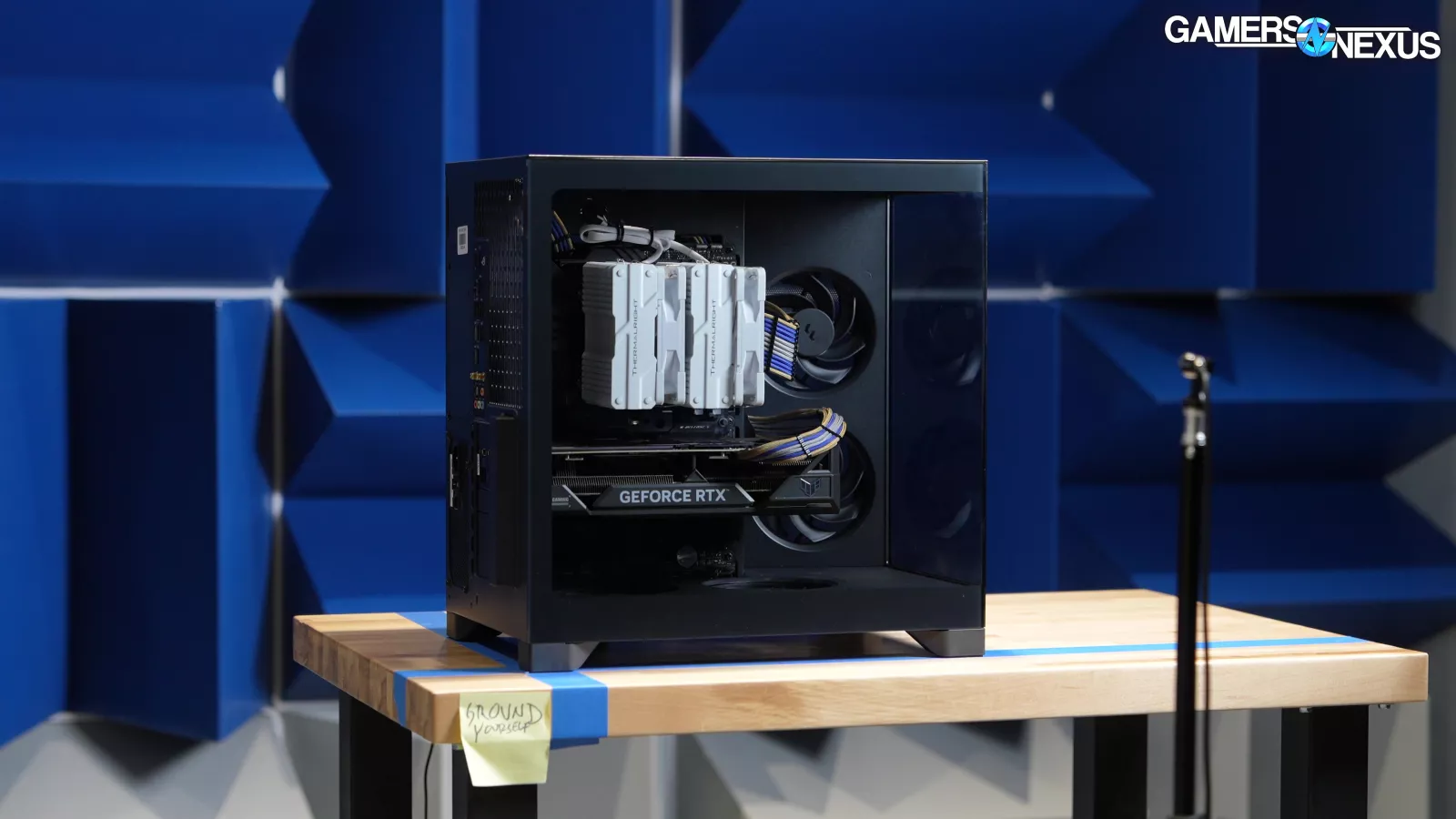
We’ll start our thermal testing with noise-normalized benchmarks, where we use our hemi-anechoic chamber to measure noise levels at 1 meter, then adjust down the fan speeds to hit a total 27 dBA system noise level target.
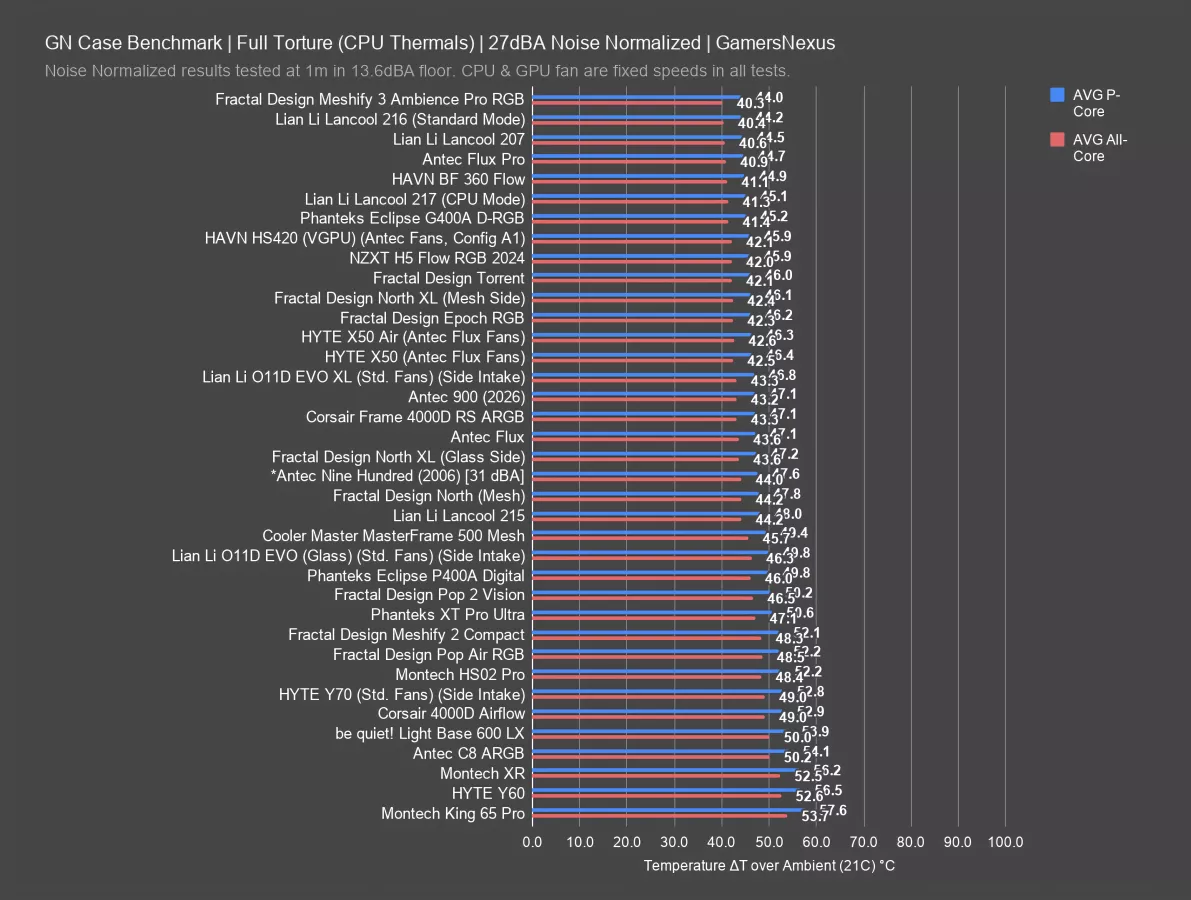
CPU temperatures averaged 50 degrees Celsius over ambient on the P-cores and 47 degrees overall for the Pop 2 Vision. That's not good placement on the chart overall, but other bottom-intake fishtank cases usually don't perform well here.
The side intake should help the CPU, and does, which is why the Pop 2 Vision is ahead of some competitors: the HS02 PRO averaged 52 on the P-Cores, the C8 ARGB was at 54, and the Y60 was at 57.
The Fractal case is OK, but other similarly priced cases include the $83 Lancool 207, which is both cheaper and better performing at 44.5 degrees on the P-cores. That’s a significant improvement. It has downsides, like cable management complaints from us in the review, and obviously the 207 isn’t dual-chamber. The Corsair Frame 4000D RS (read our review) also isn’t dual-chamber, but it’s $90, though, has great build quality and runs at 47 degrees over ambient. If you want dual-chamber, the Pop 2 Vision remains one of the best options on the chart at its price -- possibly the best at its price overall.
GPU Full Load Thermals - Noise-Normalized
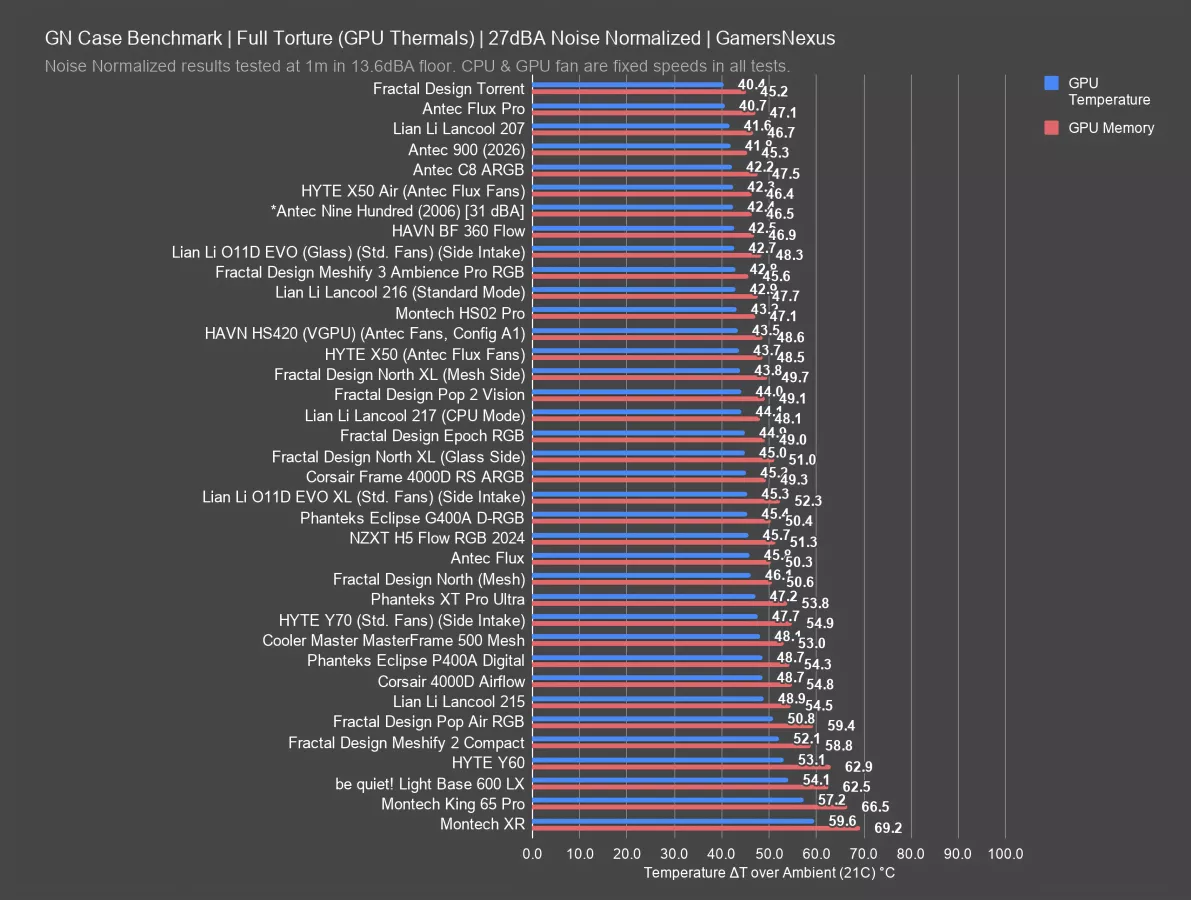
GPU thermals are next, still noise-normalized.
The Pop 2 Vision's layout is better suited to GPU cooling. It averaged 44 degrees Celsius above ambient for the GPU itself, while the VRAM averaged 49. Its competitors have the same advantage in GPU cooling and put up more of a fight here, with the HS02 PRO at 43 degrees on the GPU and the C8 ARGB at 42 over ambient, although the Y60's stock performance was comparatively abysmal at 53. The two reverse-blade 120s do an adequate job of GPU cooling, but not great, and this isn't a case where swapping the fans makes a lot of sense.
Again, the non-dual-chamber 207 for slightly cheaper did better: The Lancool 207 (read our review) is nearly the best on the chart. The Frame 4000D falls slightly below the Pop 2 Vision in this one, as does the Antec non-Pro Flux.
CPU Full Load Thermals - Full Speed
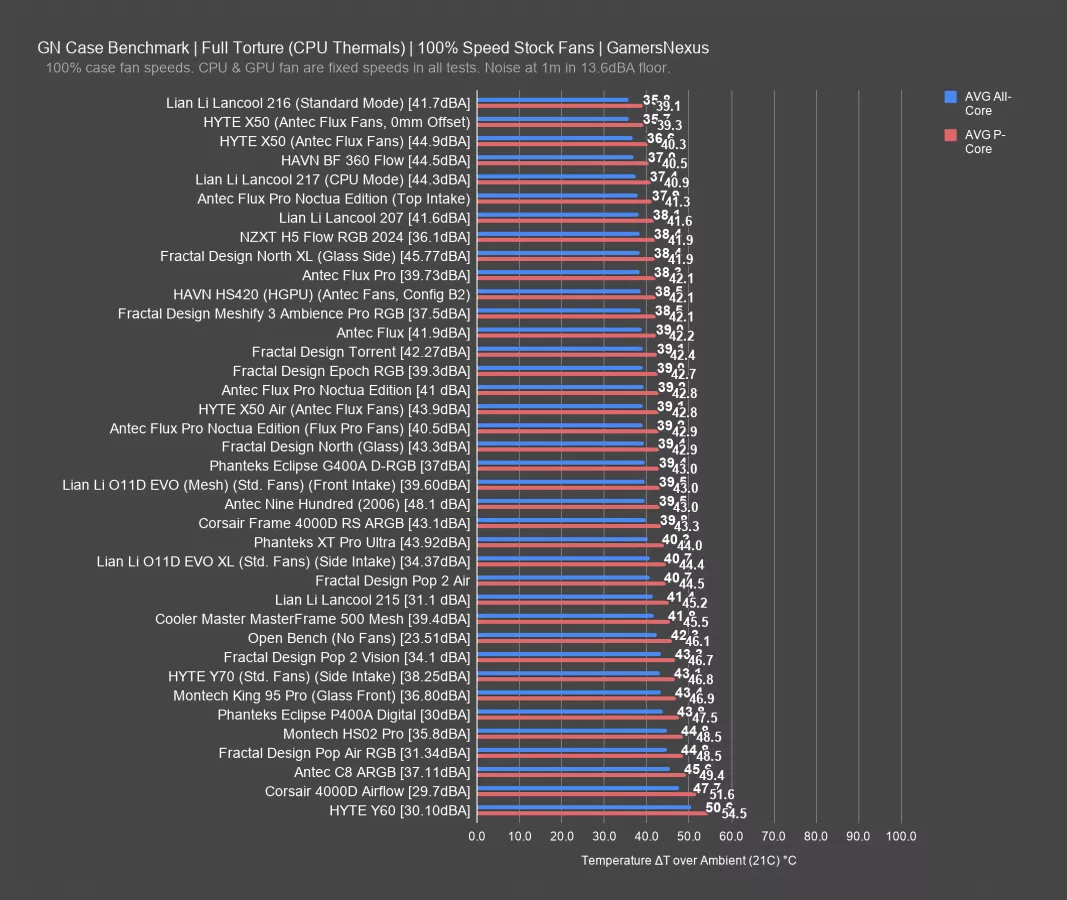
Moving on now to full speed case fans, the Pop 2 Vision was fairly quiet for a case with four stock fans at 34 dBA. This is a major positive for Fractal. The four Aspect 12X Reverse fans included with the case are rated for 1650RPM, and in testing, we observed speeds well within tolerances between 1600-1700RPM. Its competitors were louder and hotter for the most part, with the HS02 PRO at 36dBA and 49 degrees above ambient on the P-cores, and the C8 ARGB at 37dBA and 49 degrees as well. The Y60 was quieter at 30dBA, but still the hottest on the entire chart at 55 degrees. We don't have a noise number for the Pop 2 Air right now, but it did manage a 45 degree average dT for the P-cores.
For a dual-chamber case at this price, the Pop 2 Vision is doing well overall. Again, more standard towers remain competitive: The Antec Flux non-Pro runs louder at 41.9 dBA, but also cooler. The Lancool 207 is also louder (at 41.6 dBA), but way cooler at 41.6 degrees over ambient. We already know it’s better noise-normalized, too.
The Frame 4000D only outdoes the Pop 2 Vision by a few degrees here and is significantly louder, so overall, the Pop 2 Vision is relatively well-positioned. The 207 is somewhat of an outlier in its price category. Lian Li is ruthless competition at the budget side of cases and we see that here.
GPU Full Load Thermals - Full Speed
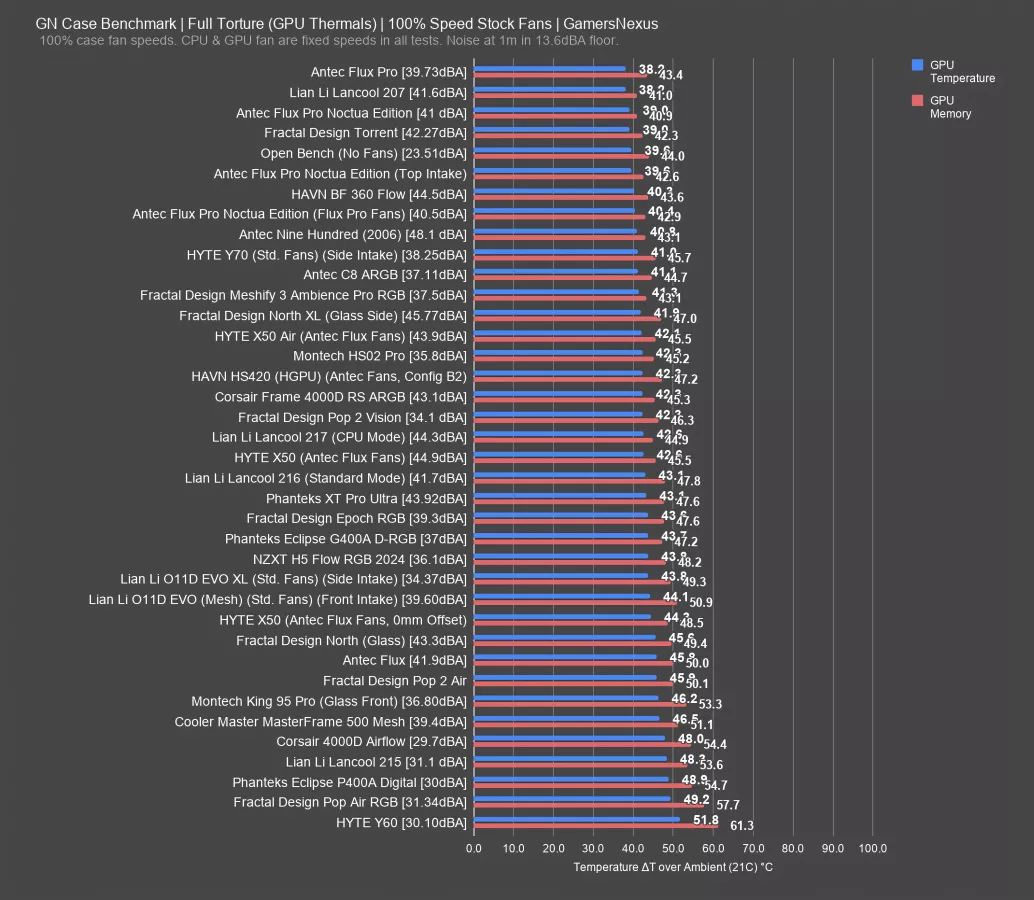
Again, also at full speed, GPU thermals are a stronger competitive point for a bottom-intake configuration like the Vision's. The GPU averaged 42 degrees above ambient, and the VRAM averaged 46. It effectively tied the HS02 PRO and C8 ARGB, with the C8 performing just a little better, although both of those cases also had slightly better VRAM temperatures at 45 degrees. The Y60 is completely out of the running at 52 on the GPU.
The Pop 2 Air actually had significantly warmer GPU temperatures than the Vision at 46 degrees. That makes some sense with the Vision's bottom intake configuration, but it also means that the Air doesn't have much of an overall thermal advantage versus the Vision (at least with the stock fans at full speed).
For standard layout cases: The 207 remains at the top, the Frame 4000D ties the Pop 2 Vision, and the Antec non-Pro falls below it.
VRM & SPD Hub Thermals - Noise Normalized
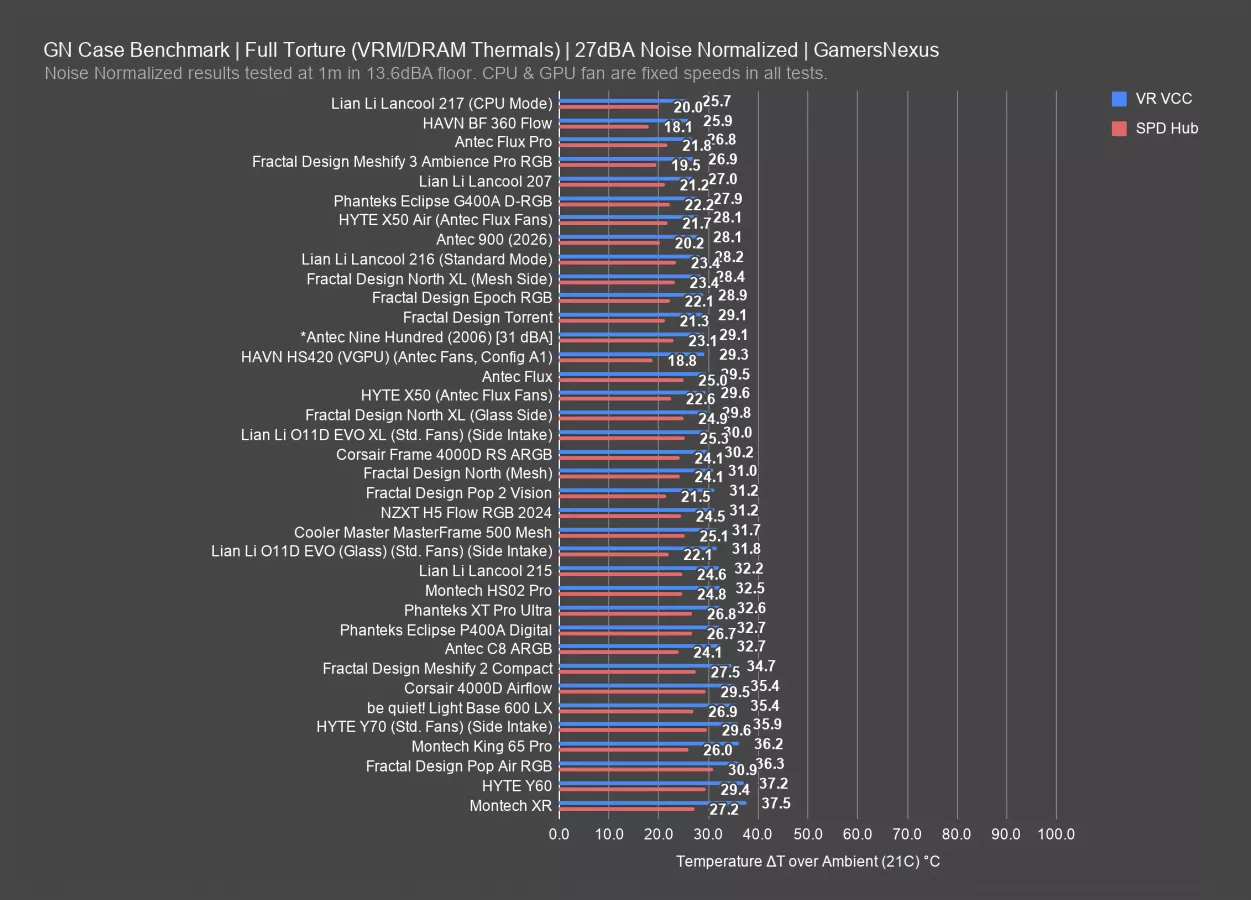
Returning briefly to the noise-normalized testing, the Pop 2 Vision had unusually good VRM and DRAM temperature readings for a layout with active intake at the bottom of the case. The VRM averaged 31 degrees above ambient, which places it in the middle of the chart.
As for the SPD Hub average, it was 22 degrees above ambient, matching the Torrent (watch our review) and the Flux Pro. There's an unusually large gap between the top of the motherboard and the roof of the case, which may contribute to better thermals among components in that area.
Conclusion
We went back and forth with this case. When Fractal asked us if we were interested, we almost said no, because in renders, it looks like a boring dual-chamber case, which we’ve reviewed a lot of.
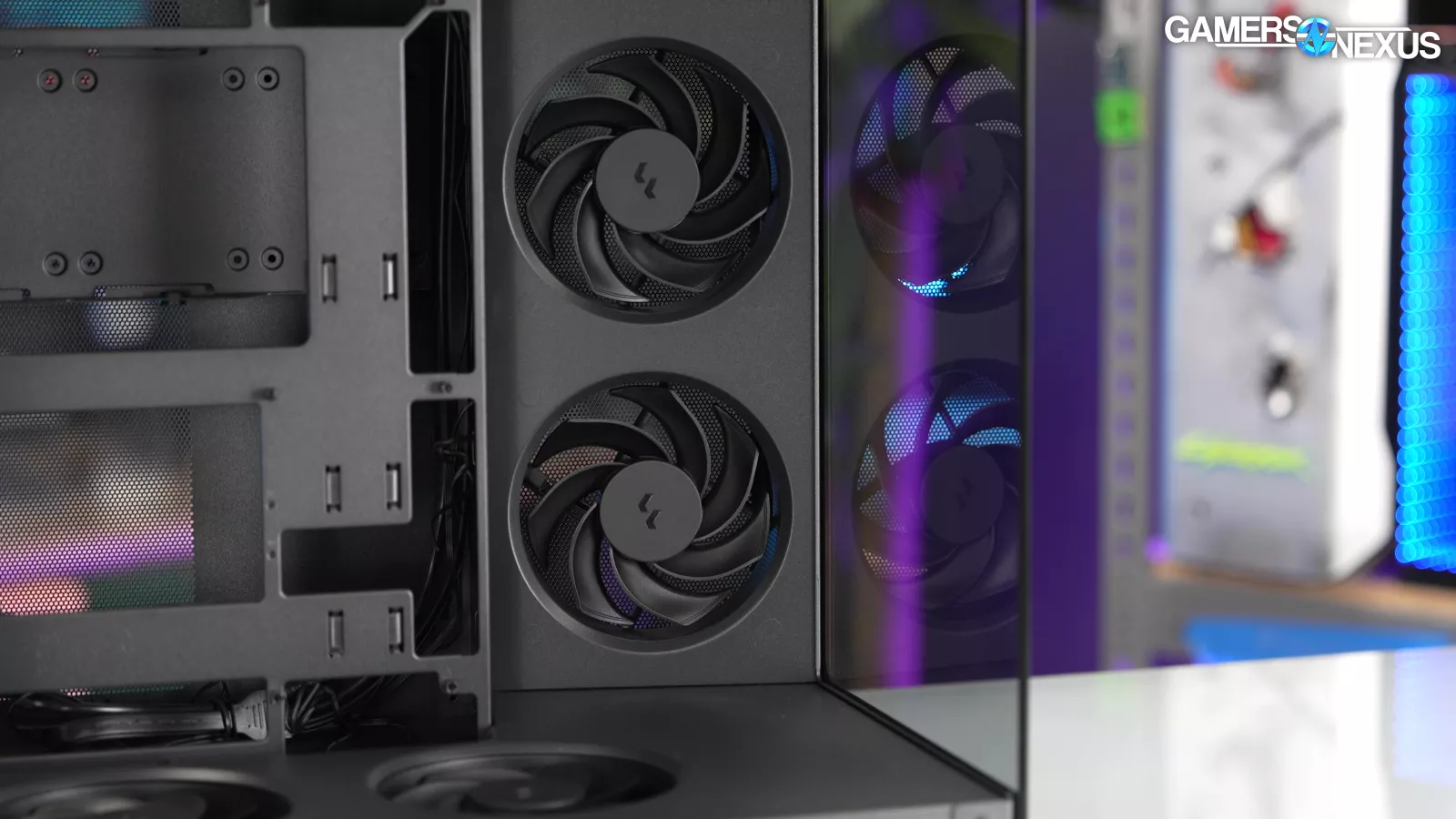
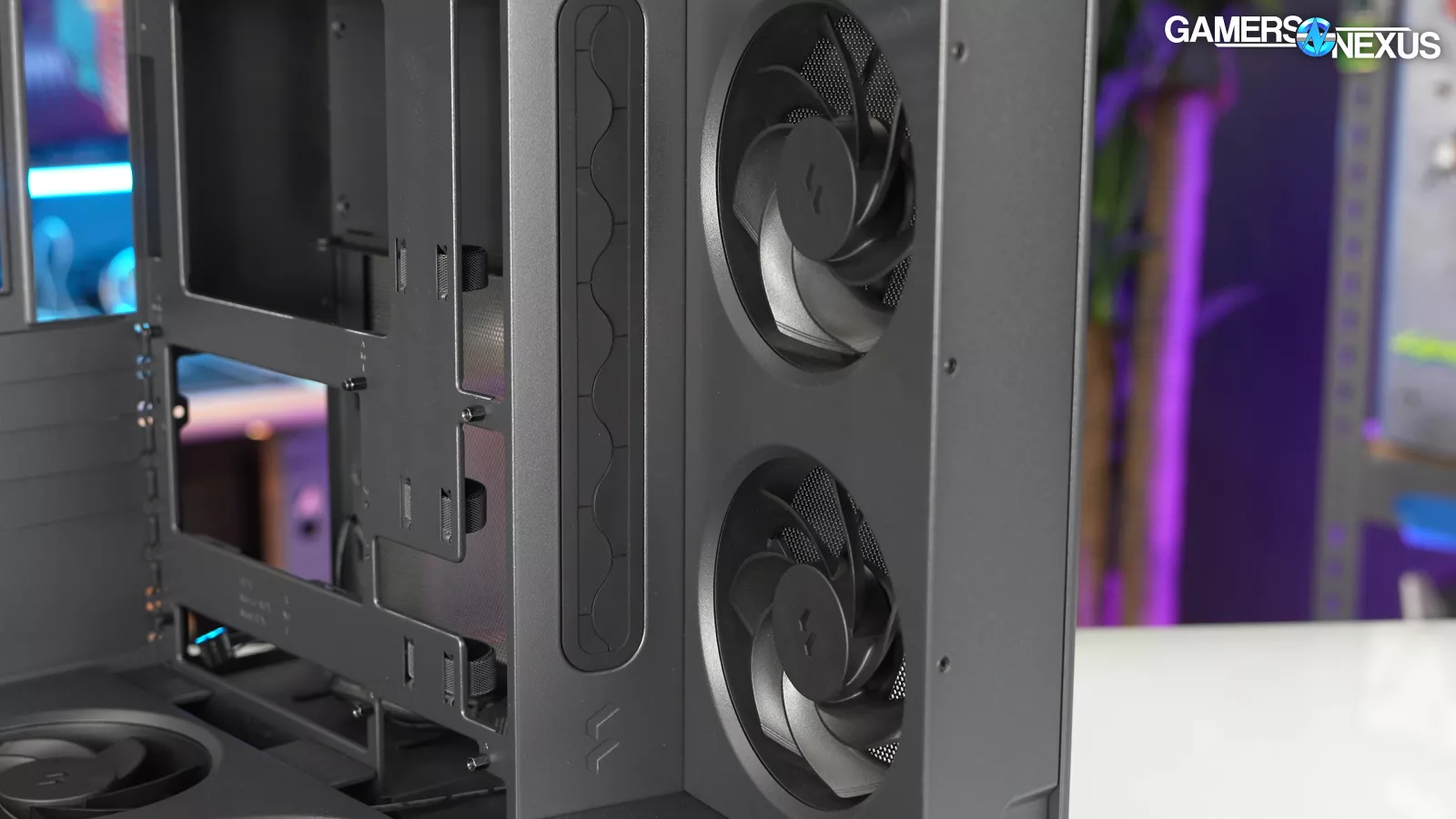
We decided to get it anyway and when we first opened it, the angled fans and interior style looked much better in person, and we were optimistic about the four stock fans. Then we saw the middling thermal results. It’s not impressive. It’s OK, but maybe for $90, that’s what you could expect.
Our final opinion is that this is one of the best options out there for a budget dual-chamber ATX fishtank. There are airflow cases with better performance at the same price, like the Antec Flux, but that's almost a given: the Vision has a sealed glass front. There are also nicer glass cases with much better liquid cooling support like Lian Li's O11 family, but many of them are significantly more expensive. Other options include the Corsair FRAME 4000D, which is an excellent case for thermals and it’s often available for around the same price. There’s also the Lancool 207, which is one of the best performing cases on the charts, period. And it’s stupid cheap for what it is, but it’s also way different than Fractal’s case here.
Back to dual-chamber cases, the alternatives around this price point are the HS02 PRO or maybe the Corsair 3500X if they're on sale, and Fractal's sturdy build quality makes it our main choice among those 3. Corsair also has its new 3200D, which poses serious competition in the non dual-chamber case area -- but we haven’t tested that one yet.
We didn't test the RGB version of the Pop 2 Vision, but this is the first time in a long time that we think the RGB tax could be worth it. For $10 more, it includes an RGB controller with baked-in lighting patterns, external controls, four RGB fans, and the RGB case is also available in white. We still wish the Pop 2 generation included some of the weird colors that the first one did.
Overall, there's things that impressed us with the case that we didn't expect to be impressed by. There are also way better cooling options on the market for about the same price so it depends on what you're looking for. If you have your heart set on a dual-chamber case, then it's fine.